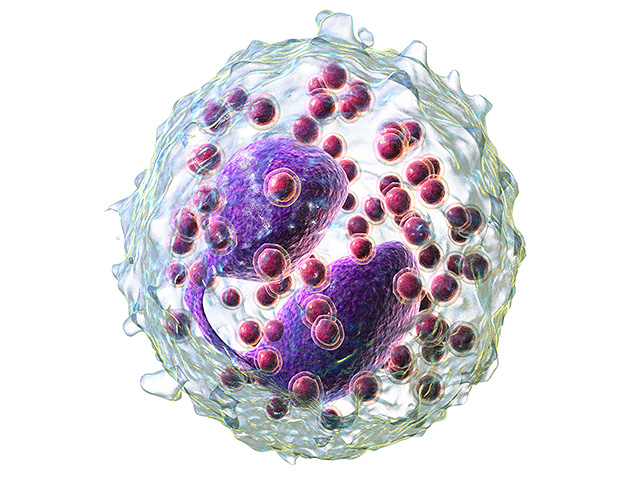
Scientists from the Hebrew University of Jerusalem have found that a special type of white blood cell – eosinophils – can fight dangerous fungal infections.
Eosinophils are white blood cells that make up only 1-5% of all leukocytes. Evolutionarily, they arose to combat multicellular parasites, especially helminths (worms). These parasites were one of the main dangers to our ancestors. In the modern world, the situation has changed, but eosinophils did not have time to rebuild.
Today, these cells are strongly associated with allergies and asthma, conditions in which the immune system mistakes harmless substances like pollen or dust for a parasitic threat and launches a powerful eosinophil attack against the body’s own tissues.
A new study published in Nature Communications reveals an unexpected side of eosinophils. It turned out that they are able to recognize and attack the fungus Candida albicans, which causes deadly infections in people with weakened immune systems.
The CD48 receptor on the surface of eosinophils plays a key role. It binds to the fungal protein Als6, helping immune cells recognize infection. This interaction triggers the release of toxic proteins that attack and suppress the fungus.
Fungal infections, including Candida albicans, are extremely difficult to treat and remain a serious threat in hospitals. The discovery of the protective function of eosinophils changes the understanding of these cells and opens the way to new therapeutic strategies.
Scientists believe that harnessing the protective potential of these rare cells will help improve treatments for patients vulnerable to fungal diseases.