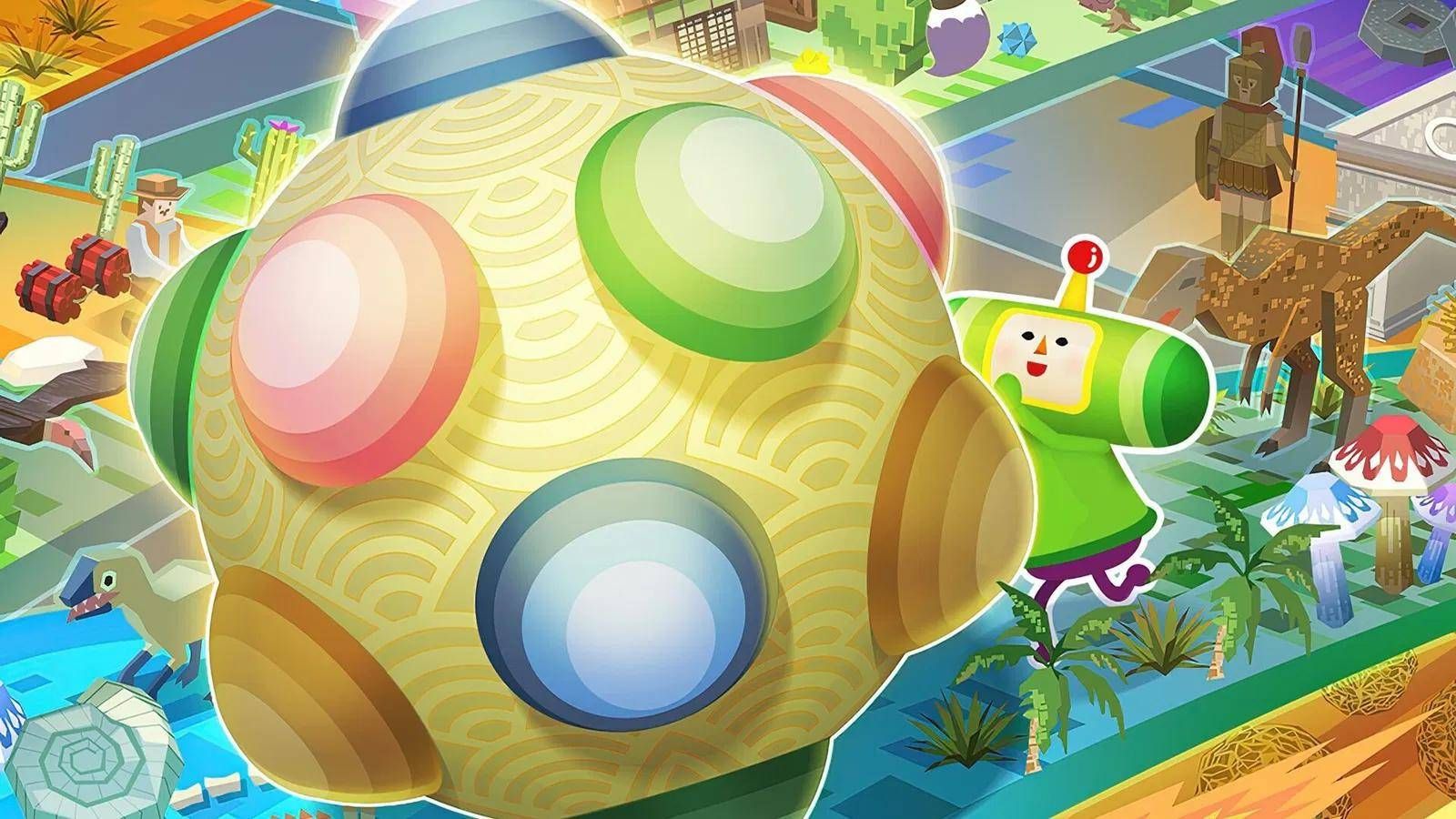
There is a timeless charm in the chaos of Katamari Damacy: the idea of rolling up the world to rebuild it, collecting objects, animals and people in an ever-larger sphere, is both absurd and brilliant. Once Upon A Katamari brings back that mix of surreal lightness and zen depth that made the series a cult, but it does so with a more direct, immediate and content-rich approach.
The premise is as simple as it is delirious: the King of all cosmos, in an attempt to do some “spring cleaning” together with his family, accidentally opens an ancient arcane manuscript and destroys the universe. To put the pieces back together, literally, it is once again up to the Prince, who sets off on a journey through ten thematic biomes, from western saloons to the depths of the sea, armed only with his trusty Katamari and a hypnotic soundtrack.
The animated sequences that introduce each world are long and well-finished, but the game soon abandons the narrative to make room for pure gameplay. It’s an intelligent choice: Once Upon A Katamari focuses entirely on rhythm and immediacy, restoring the feeling of freedom and experimentation that has always characterized the series.
Each level offers different objectives: collect a certain type of objects, reach a specific weight, or find hidden crowns that require skill and planning. To complicate matters, Freebies arrive, new temporary enhancements that make the experience more dynamic and accessible. Magnets to attract objects, stopwatches that stop time and mini rockets for sudden shots: tools that, especially in the more challenging levels, really make the difference.
The learning curve remains faithful to the original spirit: at the beginning you stumble, you bump into walls, you waste precious time, but then that magical moment occurs in which everything flows and you become an unstoppable force of nature. Two control modes, classic and simplified, allow both veterans and newcomers to find the right confidence with the movement, always fluid and precise thanks to a stable frame rate even in the most crowded situations.
The real surprise of Once Upon A Katamari is KatamariBall, the new online and local multiplayer mode for up to four players. Here, contemplative philosophy gives way to adrenaline: you compete to accumulate items, avoid larger opponents and deposit your loot in designated spots. The result is a mix between sport and cosmic delirium, a bit Rocket League, a bit Mario Kart, but with all the stylistic nonsense typical of Katamari. To make everything even more irresistible there are 68 unlockable cousins and a myriad of cosmetic items to customize your look: a progression system that encourages you to play again and again, even just to show off a new style.
From a visual point of view, the title remains faithful to its unmistakable low-poly style, updated with cleaner textures and an impressive amount of objects on screen. It is a deliberately retro aesthetic, which still manages to be fresh, ironic and recognizable today. But it is the soundtrack, as always, that steals the show: an eclectic mix of J-Pop, electronic, jazz and techno that accompanies every roll with contagious energy. Some editions of the game also include historical traces of the saga, a perfect gift for long-time fans.
Once Upon A Katamari doesn’t revolutionize the formula, but refines and expands it with intelligence. It’s a title that manages to be welcoming to newcomers and rewarding to veterans, with a rare balance between nostalgia and modernity. It’s not a game that tries to impress with graphics or narrative, but one that invites you to get lost in the flow of movement, in the childlike joy of seeing an entire city roll up into a ball of color.