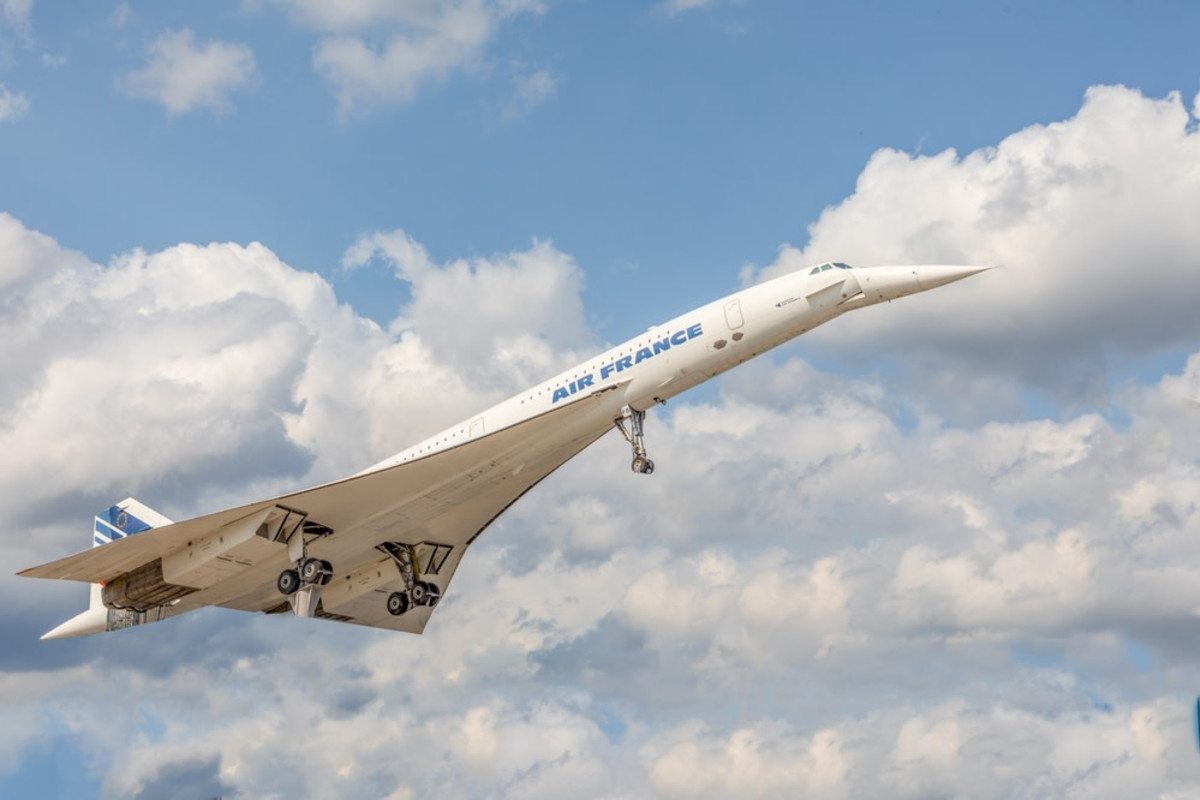
The sound that disappeared from the sky: After more than two decades since the Concorde descended from the runways, this week NASA conducted a maiden flight for the X-59 supersonic experimental plane, which is capable of breaking the speed of sound but without shaking the ground with the well-known boom noise. This is a first step towards the possible return of passenger flights twice as fast as normal planes, in a revolution that until now was considered almost impossible.
The historic flight took place on Tuesday morning, when the test plane took off from Flamedale Airport in California, flew in a circular pattern over Edwards Air Force Base and landed about an hour later. Although the plane is able to reach a speed of about 1.4 times the speed of sound, about 1,480 km/h, it maintained a moderate speed of only about 385 km/h on its maiden flight.
The term “supersonic” refers to the passing of the speed of an aircraft over the speed of sound in the air, that is, crossing a barrier of about 1,235 km/h at sea level. When crossing the sound barrier, a compressed wave front is created that causes a “supersonic boom”, a loud noise reminiscent of an explosion, created by the air pressure released behind the plane. This is the main reason why supersonic flights have been banned over land since 1973, after thousands of residents In Oklahoma, they complained about damage and vibrations as a result of flight tests by the US Air Force.
NASA and the aircraft manufacturer Lockheed Martin tried to solve exactly this problem. The new plane was designed with an extremely long and narrow body shape, almost 30 meters long, which disperses the sound waves in a different way and weakens the intensity of the noise. Instead of a thunderous boom, it produces a “supersonic clap”, a dull noise reminiscent of a distant knock on the door. The purpose of the experiment is to test how residents in selected communities across the United States will react to the sound This, and to examine whether it will be possible to cancel the ban on supersonic flight over land in the future.
Although the X-59 is only a single-seater plane, without a passenger cabin or the intention of becoming a commercial plane, it is a critical step in the development of technology that will enable silent supersonic flights for passengers in the future. In the first flight, NASA engineers measured over 20,000 different parameters, from engine behavior to aerodynamic stability, as part of a long test process that will continue in the coming years.
If the experiment is crowned with success, commercial flights at these speeds may completely change the way we fly. According to NASA calculations, a passenger plane operating on the basis of the same technology would be able to fly from New York to Los Angeles in less than three hours, and from Washington to London in only four hours, half the time required today.
The British-French Concorde, which operated between 1976 and 2003, was the last to fly at supersonic speed and managed to carry passengers at more than twice the speed of sound. But the high operating costs, the huge consumption of fuel and the thundering booms that were heard in the distance caused heavy losses and the final closure of the project. Since then, no commercial supersonic passenger plane has operated in the world.
In recent months, the former president of the United States, Donald Trump, signed a presidential order that canceled the historic ban on supersonic flights over the country’s territory, claiming that new noise reduction technologies made these flights safe and sustainable. NASA sees the X-59 plane as the first step to a new era in which supersonic flights will be able to return to the skies – but this time, without anyone on the ground noticing.
The X-59, also known as “Quiet Supersonic Technology” (QueSST), is expected to make a series of additional flights over selected communities in the United States in the coming years, to collect data from the public and scientists about the intensity of the noise and the residents’ reactions. If it is proven that the noise produced is really significantly lower, it is possible that in the next decade we will see the first silent supersonic aircraft on commercial flight routes.
And if such a plane is indeed created, these are the expected flight times from Israel to various destinations in the world:
From Tel Aviv to New York: 6 hours and 35 minutes (instead of a 12 and a half hour flight today)
From Tel Aviv to Orlando: 7 hours and 5 minutes (instead: 12 hours today)
From Tel Aviv to Abu Dhabi: 1 hour and 55 minutes (instead: 3 and a half hours today)
From Tel Aviv to Tokyo: 6 hours and 40 minutes (instead: 15 hours flight today)
From Tel Aviv to Budapest: 1 hour and 55 minutes (instead: 3 hours and 45 minutes)
From Tel Aviv to Sydney: 10 hours (instead of 18 hours)