The most serious threat to the world in the near term: the spread of false information. This is what the World Economic Forum states, for the second year in a row. Today, with artificial intelligence and the ability to buy cheap bot armies, it is easy to spread false information on social media.
And the legislation? It cannot keep up with the pace of technological development. The speed of the “information” distribution on the one hand and the slowness of the governmental mechanisms on the other hand – create a gap with a potential damage that cannot be underestimated.
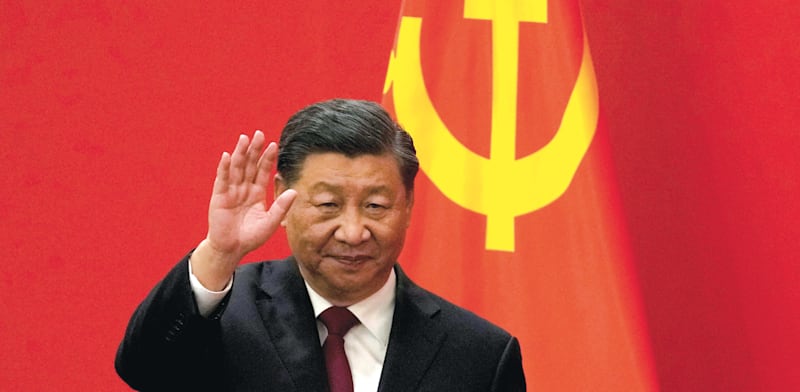
Recently, the Chinese government rolled up its sleeves and launched dramatic measures in an attempt to increase its involvement in social media discourse. What are the moves she is making, how does it look in the world – and what is happening in Israel?
Mandatory training for influencers
The Chinese regulator issued an announcement that made waves all over the world: online influencers must not share advice on medical, financial, legal and educational matters if they do not have the appropriate training. The creators will also have to give references to the sources of their information and give full disclosure if they used artificial intelligence for the creation of the content.
Another interesting point is the imposition of responsibility on the platforms. The new regulation states that the platforms where the content is shared will be responsible for verifying the qualification (degree or any other professional training) and remind users of their obligations. Platforms that do not meet their obligations will be fined 100,000 yuan (about 14,000 dollars) for each violation, and these may pass the fine on to the offending users.
While there were those who welcomed the decision, arguing that it would make the Internet safer in areas that directly affect human life, there were also those who were less enthusiastic. According to the cartels, this will allow the Chinese government to control who gets permission to deal with sensitive issues, thus effectively controlling the discourse.
It seems that this is a global precedent. The closest example that can be found is Spain, which defined by law who are considered network influencers and imposed duties on them such as flagging marketing content. But unlike China, Spain did not limit the content they could engage in.
Naturally, China is of course an important case, but not one that serves as an example and model for a country that aspires to be liberal. Therefore, we tried to understand what is happening in the Western world. To do this, we used the ongoing reviews and monitoring published by the Israeli Internet Association over the years on regulation around the world designed to deal with the phenomenon of disinformation and false information.
Who is responsible?
It turns out that this phenomenon poses a difficult challenge when it comes to the field of legislation and regulation. Dr. Assaf Viner, Head of Research and Policy at the Israel Internet Association and a lecturer at the Faculty of Law at Tel Aviv University, points out the problem of the frontal collision between a vague criminal prohibition on expression that is “disinformation” or “false information”, and freedom of expression as a constitutional right and a democratic value (as opposed to enforcement against illegal content or expression offenses such as incitement or fraud).
From the point of view of liberal democracy and also of the social networks themselves, disinformation or false information is considered “harmful but legal content”. This means that the content is not treated as a crime, but there is justification for limiting its distribution. In practice, the definitions of what is considered false information are not uniform and sometimes too vague to serve as a basis for criminal or regulatory enforcement.
All this, of course, does not mean that there are no legal means in liberal democracies to fight the phenomenon, and some have already transferred it to the criminal level. In France, for example, they did not wait for social networks or even the Internet, and the Freedom of the Press Act of 1881 (which is not criminal) prohibits the distribution of false news in bad faith in a way that harmed or might harm public peace, with the sanction of a fine of tens of thousands of euros. In Slovakia, spreading false information that may “create real concern among a part of the population in a certain place” will already cost you two years in prison.
In general, the various legislations include several key elements: false information, which is disseminated with intent (maliciousness or bad faith) and causes certain damages. Sometimes there are special laws against spreading false information during an election period, assuming it is spread to influence the democratic process.
Dr. Wiener warns: “Criminal legislation against disinformation or false information that does not define these actions in a precise and delimited manner significantly endangers democratic values and citizens’ rights. Such expression restrictions in relation to vague or elusive concepts give the state and its authorities excessive discretion to determine what is false and what is true in the world.
“The trend of criminalizing disinformation and false information in state legislation, with significant gaps between the legislative provisions of the various countries, is alarming and dangerous. The current definitions of disinformation in the European arena are too broad and vague to function as a legal definition, so anchoring them at the state level (including in Israel) will harm the values of legal certainty, effectiveness and freedom of expression.”
Could it be that the right thing is to focus less on users and more on platforms, like Facebook or X? This is the direction China is going, but according to Dr. Wiener’s review method, placing the responsibility on the social networks themselves could lead to “excessive enforcement by the platforms that will harm the freedom of expression of the users”, and the high costs will harm new social networks.
This is not far-fetched, as a different but similar example shows: in 2023, the British government passed the Internet Safety Act, designed to make surfing the Internet safer. Last July, a new phase of the law came into effect, which requires social networks to verify the age of users, block certain content for minors (such as pornography or encouraging eating disorders) and reduce others (for example, encouraging online bullying or dangerous stunts).
On the ground, this resulted in some networks blocking access to legitimate content from minors out of an abundance of caution, and taking networks without huge resources to allow age verification (such as an independent network for Alcoholics Anonymous) off the air. Although the regulation does not deal with false information, it is not unreasonable to assume that insufficiently careful legislation towards the platforms will have a similar effect.
The demand from the Israelis
It is possible that during our journey, you remembered a recent Israeli example that caused a stir when it was published. Last summer, the Securities Authority began promoting a bill that would require those who publish general financial information without a license to do so with full identification and full disclosure, which would affect bloggers who deal with financial content.
As an examination by our colleague Amiram Gil shows, this is a stricter legislation than other Western countries, either because of the possibility of anonymity (the United States) or because of the greater flexibility in the types of content that are not considered advice (the European Union). In any case, this proposal is very far from the draconian Chinese regulation, since there is no requirement for special training to write advice.
At the moment, the authority has opened for public participation a proposal to update the law, so that general investment advice without a license will be conditioned on it being without personalization for the investor; will include a clear disclosure that this is counseling without a license; Will be given only if there is no financial interest that could affect it.
It is still too early to know what kind of regulation we will get in the end, but so far we have learned that it is difficult for governments to fight the false information with legal tools. Should the idea be abandoned? Dr. Wiener thinks not, and explains that in some cases it is possible to use the existing legal tools (damage to public health, fraud, harassment, etc.) instead of a general criminalization of “disinformation”. According to him, this will be possible thanks to “an effective legislative or regulatory response that differentiates between different types of false information that it is justified to limit, according to the social damages involved and the question of the motivation of those who publish false information.” Such a response should Distinguish between different contexts of “fakes”: medical and health, politics and elections or those that violate protected individual rights (for example, a deepfake of a naked person).
For further reading:
Legislative initiatives against disinformation and fake news: an international review – Israel Internet Association
For your attention: The Globes system strives for a diverse, relevant and respectful discourse in accordance with the code of ethics that appears in the trust report according to which we operate. Expressions of violence, racism, incitement or any other inappropriate discourse are filtered out automatically and will not be published on the site.