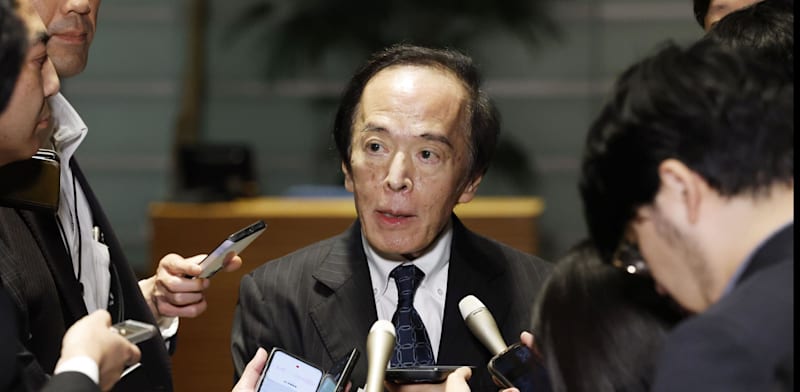
The Bank of Japan (BOJ) is currently facing one of the most dramatic monetary decisions in recent decades.
The consensus in the market is that on June 15-16 Governor Kazuo Ueda and the top brass of the central bank are expected to raise the interest rate by 25 basis points, from its current level of 0.75% to 1%. While these are low interest rates relative to the US and the European Central Bank, this would be the highest level in Japan since 1995, a move that may signal the death of the “cheap money” era that characterized the country.
● Japan and Europe at the expense of the USA: the global debt is at a peak, and these are the consequences
● This is how Japan turned from an exotic destination into a mainstream one, and how much will it cost you to fly?
In the financial markets of the world, interest rate developments in Japan are followed with concern. Not only out of local concern, but mainly because of the waves of the page that may hit the whole world. The main concern is about dramatic financial shocks that will quickly leave Tokyo and land on the stock exchanges in New York, shaking the world’s leading stock indices.
To raise interest rates or not?
On the one hand, the data supporting the interest rate hike is quite unequivocal. The local currency experienced a significant devaluation when the yen once again crossed the 160 yen level to the dollar. In addition, not raising interest rates will leave the interest rate gap with the US unchanged, will result in the continued crushing of the yen, and will dramatically increase the cost of importing energy and food to Japan – which creates unbearable inflationary pressure on the local citizen.
On the other hand, raising interest rates could complicate Japan’s internal financial situation. The country has one of the highest debt-to-product ratios in the western world, which stands at 249%. This means that any official increase in interest rates by the central bank automatically and immediately increases the cost of the debt of the Japanese government itself, which could burden the national budget and undermine internal economic stability.
The equation is reversed
For over three decades, Japan has effectively served as the “bank of the world”. Institutional investors, huge hedge funds, investment banks and private traders took advantage of the zero (and previously negative) interest rates in Japan to execute a simple but highly leveraged trading strategy known as the Carry Trade.
The basic idea behind the strategy is taking credit in a currency that carries a low interest rate and investing the money in a currency that carries a higher interest rate than it. Thus, the investor tries to take advantage of the gap between the interest rate of the currency in which he borrows the money and the interest rate of the currency he buys to generate a return.
This is the role that the Japanese market has played for investors. To raise cheap credit, investors borrow huge amounts of Japanese yen at zero interest. They convert the yen into dollars, euros, or other high-yielding currencies, and with the converted money they purchase large Wall Street technology stocks, high-yielding US government bonds, and even digital assets.
The financial profit is derived from the gap (The Carry) between the minimal interest rate paid in Japan and the high yield yielded by the assets purchased abroad. As long as the yen remains weak and the interest rate in Japan is zero, this method generates huge guaranteed profits. But when the interest rate in Japan rises and the local currency strengthens, the equation suddenly reverses: Japanese debt becomes significantly more expensive, and the positions are all at risk of rapid loss.
Escape from Wall Street?
Following the recent increase in financing costs in Tokyo and the strengthening of the yen against the dollar, international investors are in need of more dollars to buy back their debt to Japanese banks. To avoid heavy capital losses and collateral requirements (margin calls) from the lenders, the investors are forced to quickly sell assets on Wall Street, convert the dollars back to lin, and close the open credit in Japan.
The clearest and most painful warning sign of this effect occurred in August 2024. An unexpected 0.25% interest rate hike in Japan ignited a panicked selloff in the world’s stock markets, wiping trillions of dollars off global market capitalization in a single trading day. Now, with interest rates climbing towards 1%, the fear of a similar event – but with a much higher intensity – is paralyzing large parts of the capital market.
How big is the damage potential? It is very difficult to estimate precisely, because the carry trade is a market of a decentralized nature, due, among other things, to the fact that a significant part of it is managed in private contracts (OTC).
Half a trillion dollars at stake
When the crisis broke out about two years ago, analysts tried to give a certain estimate to a “pure” carry trade in the Japanese currency in its narrowest definition. One indication they used was the extent of short-term external borrowing by Japanese banks. At the time, these amounted to approximately 350 billion dollars.
On the other hand, an assessment by the Bank for International Settlements (BIS) shows that bank claims for interloan loans given to foreign corporations amount to about 500 billion dollars.
Those who actually manage this money are not ordinary small investors, but sophisticated end entities. Data from the US Futures Trading Commission (CFTC) indicate that the speculative short positions on the yen recently stood at approximately 114,667 negative contracts. That is, the number of short contracts (bets on a decline in the value of the yen) is significantly greater than the number of long contracts (bets on the rise of the yen).
Behind these numbers stand thousands of hedge fund managers, international institutional asset managers and leading algo-trading traders. If the upcoming interest rate decision leads to a sharp jump in the yen exchange rate, these contracts will be caught in a forced “short squeeze” (short squeeze), which will trigger automatic sell orders of US stocks in volumes of tens of billions of dollars every day.
Days of decision
For the global financial markets, the decision of the Bank of Japan headed by Kazuo Ueda is a critical event that can dictate the trend for the coming months. It is possible that the days of cheap, leveraged and unlimited financing that came from Tokyo and fed quite a bit of the rally of the technology stocks in New York – will come to an official end.
In the coming days, we will know whether the Bank of Japan’s interest rate decision will indeed be the match that ignites the next wave of realizations in the global markets, in what may completely change the map of global capital flows for years to come.
For your attention: The Globes system strives for a diverse, relevant and respectful discourse in accordance with the code of ethics that appears in the trust report according to which we operate. Expressions of violence, racism, incitement or any other inappropriate discourse are filtered out automatically and will not be published on the site.
https://FosterLandscaping.us/yard-clean-up/tree-removal
https://FosterLandscaping.us/yard-clean-up/junk-removal
https://NewShorehamLandscaping.us/
https://NewShorehamLandscaping.us/lawn-care
https://NewShorehamLandscaping.us/lawn-care/lawn-renovation
https://NewShorehamLandscaping.us/lawn-care/lawn-aeration
https://NewShorehamLandscaping.us/lawn-care/dethatching-lawn
https://NewShorehamLandscaping.us/lawn-care/lawn-seeding
https://NewShorehamLandscaping.us/lawn-care/artificial-grass-installation
https://NewShorehamLandscaping.us/lawn-care/lawn-mowing
https://NewShorehamLandscaping.us/lawn-care/weed-control
https://NewShorehamLandscaping.us/lawn-care/lawn-grubs-control
https://NewShorehamLandscaping.us/lawn-care/lawn-leveling
https://NewShorehamLandscaping.us/lawn-care/hydroseeding
https://NewShorehamLandscaping.us/lawn-care/sod-installation
https://NewShorehamLandscaping.us/lawn-care/lawn-installation
https://NewShorehamLandscaping.us/lawn-care/lawn-edging
https://NewShorehamLandscaping.us/lawn-care/fertilizing-lawn
https://NewShorehamLandscaping.us/gardening
https://NewShorehamLandscaping.us/gardening/hedging
https://NewShorehamLandscaping.us/gardening/pruning
https://NewShorehamLandscaping.us/gardening/brush-removal
https://NewShorehamLandscaping.us/gardening/plant-removal
https://NewShorehamLandscaping.us/gardening/flower-bed-maintenance
https://NewShorehamLandscaping.us/gardening/mulching