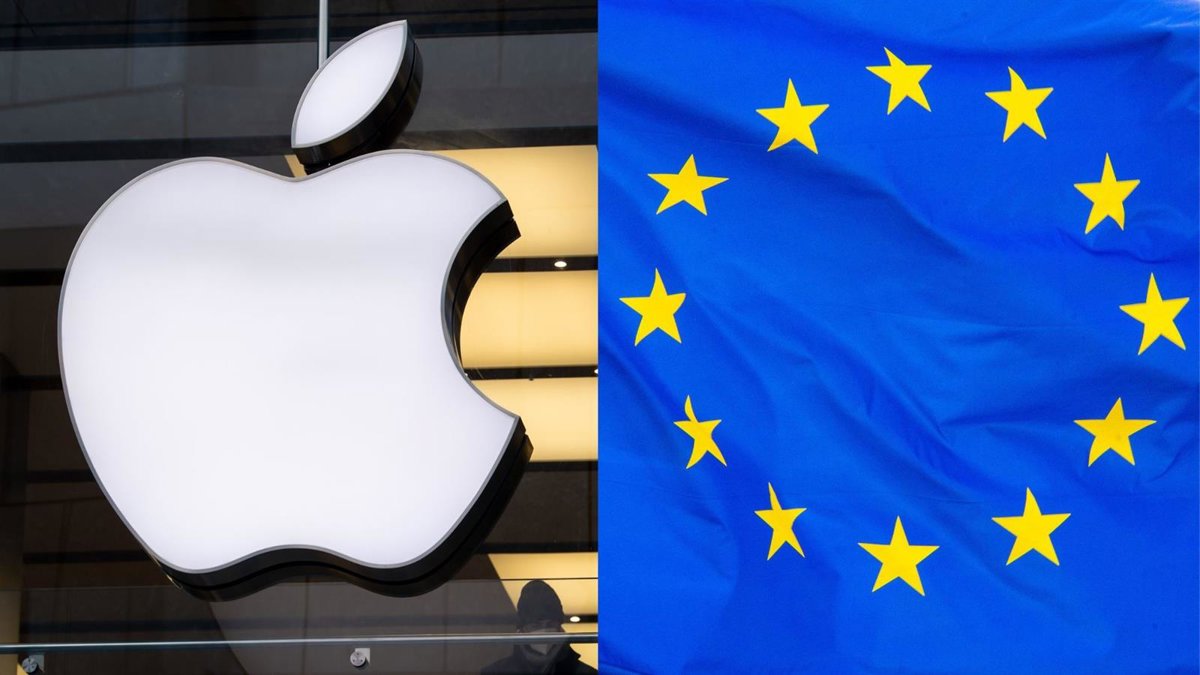
The European Commission ha denied that the Digital Markets Act (DMA) be the reason why Apple will not launch its renewed version of Siri AI on iOS, iPadOS and watchOS 27 in the European Unionclaiming that it was the technology company’s own decision and that “there is nothing in the DMA” that prohibits introducing new products into the EU.
The iPhone manufacturer presented this Monday within the framework of WWDC 26 its new renewed Siri AI assistantwhich is driven by the renewed capabilities of the ecosystem Apple Intelligence and delivers smarter responses with an experience fully integrated into your devices’ operating systems.
Despite these developments, Apple has clarified that Siri AI will not reach users in the European Union at the time of official launch of iOS, whatchOS and iPadOS 27 scheduled in autumn and has blamed this decision on the DMA requirements.
Now, the European Commission has refuted these accusationsclaiming that the decision not to launch Siri AI in the EU “is Apple’s and Apple’s alone”, since “There is absolutely nothing in the DMA that prohibits Apple from introducing new products into the EU.”
This has been clarified by the community spokesperson for Technological Sovereignty, Thomas Regnier, in statements to Europa Press, while clarifying that what the DMA does not allow Apple to do is “close the market” like “any other gatekeeper.”
Specifically, Regnier has referred to the fact that Apple can’t decide “who can innovate”, nor choose which specific AI tools EU citizens can use, which is precisely what the DMA defends and its obligation of interoperability.
“If we want new innovative solutions and more options for our users, we need fair and open competition for developers,” the spokesperson added.
APPLE APPEALS TO SECURITY AGAINST THE REQUIREMENTS OF THE DMA
However, Apple does not agree with these demands y appeals to lack of security which would imply allowing the use of other types of assistants.
This is because Siri AI is designed with privacy in mindthrough on-device processing and Private Cloud Computing, while DMA would require allowing any virtual assistant “had direct access to private data of users” without “the necessary essential protections.
It should be noted that, according to Apple’s Senior Vice President of Software Engineering, Craig Federighi, the technology company continues to work with EU regulators to find a way that makes it possible to launch Siri AI for European users. But Federighi has also disfigured by a lack of willingness on the part of the European powers to “constructively engage in solutions that preserve privacy and security.”
In this regard, he referred to proposed measures previously to the European Commission, as the Trusted System Agentwhich would act as an intermediary for virtual assistants to securely access the same features as Siri AI. He also suggested a plan to implement Siri AI with a gradual 18-month rollout in the EU.
THE EUROPEAN COMMISSION ACCUSES APPLE OF WANTING TO EXEMPT ITSELF
For its part, the European Commission has confirmed that they have maintained contact with Apple in this regard, but that they have not finally reached an agreement because the technology company “was simply unable to develop interoperability solutions that would comply with regulations.
According to Regnier, instead of trying to offer adequate solutions that comply with regulations, Apple “simply asked the Commission to be exempted from its obligations” with respect to interoperability, for at least 18 months.
The spokesperson stated that such a request “is not an option” because, in that case, no other AI agent would have the same chance of being chosen by iPhone users in the EU. Given all this, Regnier has concluded by reaffirming that the EU legislation “is not negotiable”.
“The Commission will not grant any exemptionin the same way that a police officer would not exempt a driver from respecting the speed limit,” he stated.
https://pocitos2bedroom.com/
https://pocitos2bedroom.com/new-apartments
https://pocitos2bedroom.com/resale-apartments
https://pocitos2bedroom.com/for-investors
https://pocitos2bedroom.com/about-pocitos
https://pocitos2bedroom.com/buying-guide
https://pocitos2bedroom.com/faq
https://pocitos3bedroom.com/
https://pocitos3bedroom.com/new-apartments
https://pocitos3bedroom.com/resale-apartments
https://pocitos3bedroom.com/for-investors
https://pocitos3bedroom.com/about-pocitos
https://pocitos3bedroom.com/buying-guide
https://pocitos3bedroom.com/faq
https://pocitos4bedroom.com/
https://pocitos4bedroom.com/new-apartments
https://pocitos4bedroom.com/resale-apartments
https://pocitos4bedroom.com/for-investors
https://pocitos4bedroom.com/about-pocitos
https://pocitos4bedroom.com/buying-guide
https://pocitos4bedroom.com/faq