Mr. Trump can use various authorities to maintain tariff policy, regardless of the unfavorable ruling by the US Supreme Court.
On November 5, the US Supreme Court will open a hearing to consider the legality of President Donald Trump’s global tariff policy, imposing 10% tariffs on most trading partners and 11%-50% on dozens of other economies.
Mr. Trump invoked the Emergency Economic Powers Act (IEEPA), declaring the trade deficit a national “emergency”, even though the US has had a continuous trade imbalance since 1975. In addition, he also used IEEPA to impose tariffs to punish countries for non-trade issues, such as Brazil prosecuting former President Jair Bolsonaro or India buying Russian oil.
Therefore, the Federal Court of Appeals for the Washington Region and the Court of International Trade (CIT) in Manhattan both ruled that these tax policies were illegal, saying that the President had exceeded his authority.
President Trump said he would not attend the hearing, but Treasury Secretary Scott Bessent would be present to “emphasize that this is an economic emergency.” According to him, without tariffs, the US would hardly have national security.
“We have been abused by many other countries, including China, for many years but not anymore. Tariffs have brought us great national security,” he said last weekend.
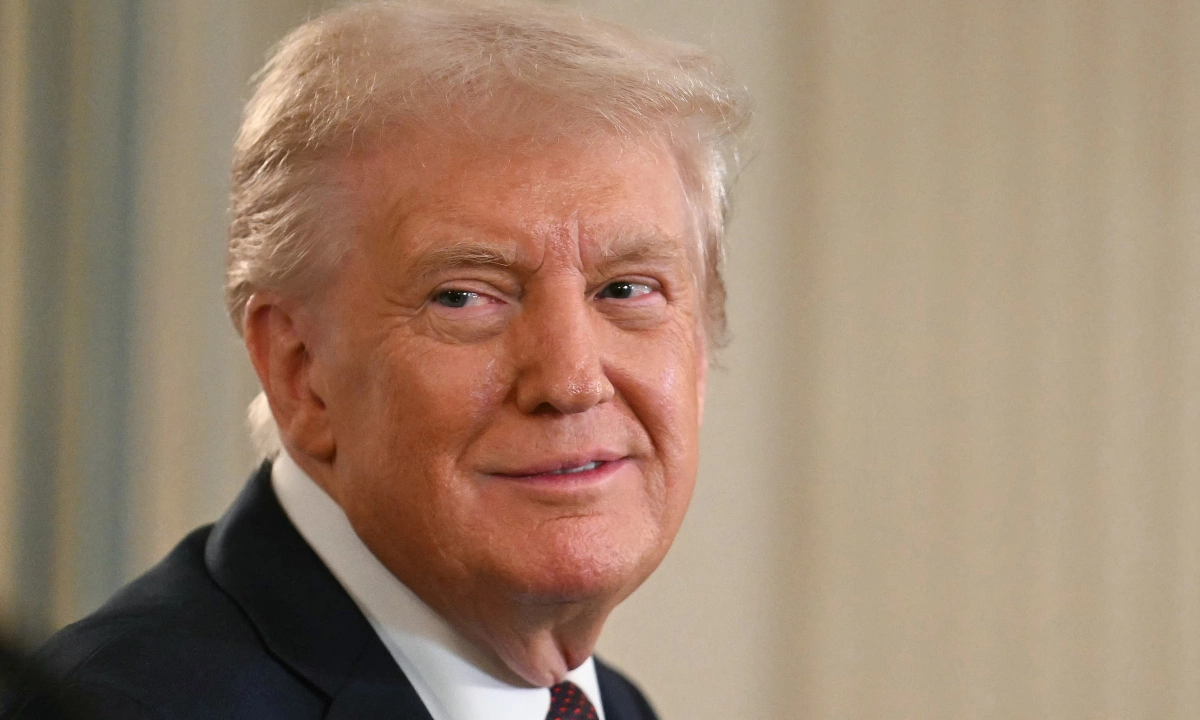
US President Donald Trump at a press conference at the White House, September 29. Image: AFP
Secretary Bessent expects the Supreme Court to uphold IEEPA-based tariffs. If repealed, President Trump could simply turn to invoking other authorities, including Section 122 of the Trade Act of 1974, which allows for a 15% tariff for 150 days to reduce trade imbalances.
Along with that, Mr. Trump can use Section 338 of the Tariff Act of 1930, which allows imposing taxes on up to 50% of countries that discriminate against US trade. “You should know that tariffs are here to stay,” Bessent said.
In addition, the case that the Supreme Court is handling is only part of the tariffs that President Trump issued this year. His administration is still using other authorities to implement separate taxes.
Specifically, he used Section 232 of the Trade Expansion Act of 1962, based on national security reasons, to protect strategic industries such as automobiles, copper, semiconductor chips, pharmaceuticals, robotics and aircraft. Similarly, Section 301 of the Trade Act of 1974 applies to tariff determinations related to investigations of unfair trade practices.
“The government views tariffs as the foundation of economic policy. Companies and industries need to plan accordingly,” said Tim Brightbill, Co-Chair of the commercial legal department of law firm Wiley Rein in Washington.
America’s trading partners also do not wait for the Supreme Court’s decision to decide their next step. The Office of the US Trade Representative (USTR) has announced the completion of a framework agreement with Vietnam, Malaysia, Thailand and Cambodia, with tariffs ranging from 19% to 20%.
South Korea also agreed to a $350 billion investment plan, helping the country only have to pay a 15% tax on cars and many other items. Negotiations with China were once difficult but also cooled down last week, after Mr. Trump’s meeting with Chinese President Xi Jinping in South Korea.
Finance Minister Bessent advised countries that have negotiated with the Trump administration to “respect the agreement”. “Countries that reach a good agreement should comply,” he said.
Currently, White House officials praise tariffs as a driving force for major trading partners like Japan and the European Union to negotiate major concessions, helping to reduce the US trade deficit. They argued that these concessions would remain in effect after any Supreme Court ruling.
Some investors say financial markets – already accustomed to the current tariff situation under Mr. Trump – could be thrown into chaos if the Supreme Court strikes down the tariffs under the IEEPA Act. The biggest concern lies in the Treasury market, with the risk of having to repay more than $100 billion in IEEPA taxes collected and losing hundreds of billions of dollars in revenue each year.
IEEPA taxes collected early this year so far account for the majority of the $118 billion increase in total customs revenue in fiscal 2025, ending September 30. They help offset health care costs, social security, loan interest and military spending, thereby reducing the budget deficit to 1,715 billion USD.
Refunding an amount of this scale is very difficult because it is unprecedented, according to Angela Lewis, global director of customs at Flexport. She said the responsibility would likely be placed on individual importers, requiring them to submit documents to customs authorities in a complex process that could take years and is not worth the effort for small businesses.