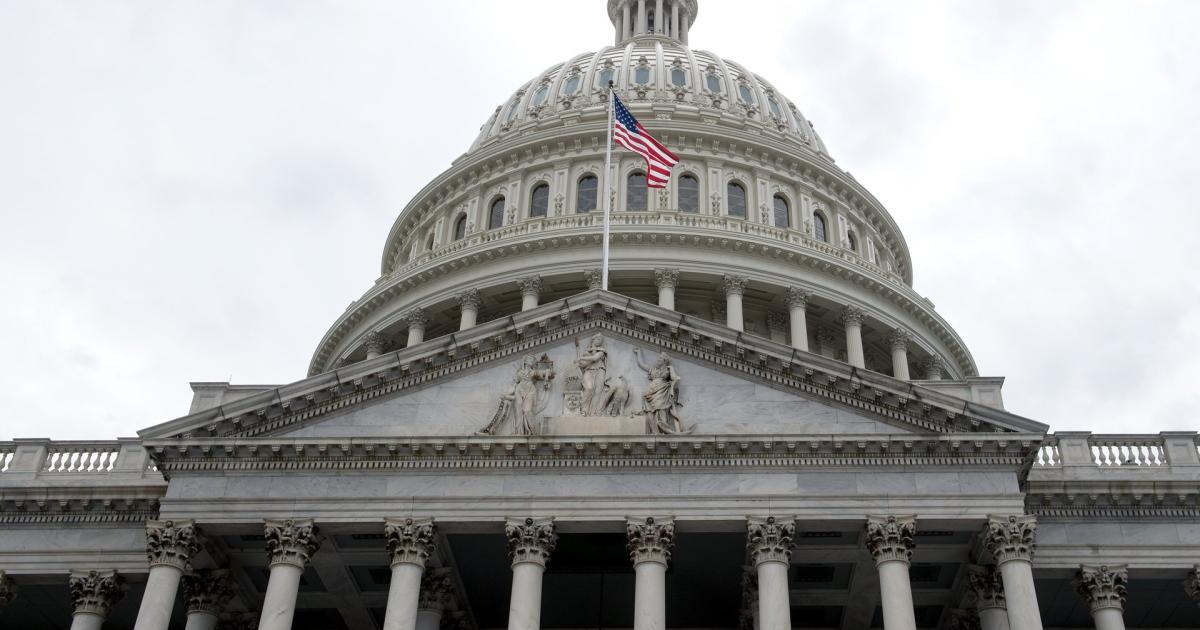
The one at 41 days longest shutdown of US history came to an end on Thursday. With the signature of one transitional budget ended by the end of January Donald Trump the state budget has been blocked since the beginning of October. Hundreds of thousands of federal employees were no longer paid because of the budget freeze and many government services were canceled or scaled back.
Economists see the shutdown as relatively relaxed. “Because salaries are paid in arrears, the overall economic impact is likely to be limited,” says Christoph Balz from Commerzbank. “We continue to expect that the US economy will continue to grow due to the favorable financing conditions Growth rates expanded by two percent. In any case, the weekly initial applications for unemployment assistance do not indicate a wave of layoffs.”
The US stock markets have been similarly calm in recent weeks. They were able to make slight gains. The Dow Jones even managed to collapse at the end of the shutdown Record high.
This stable or positive development is not unusual. According to an analysis by the Carson Group, the average return of the S&P 500 during previous shutdowns, for example 0.3 percent. This time it was 2.4 percent. During the last shutdown, also under President Trump in 2018 and the previous record duration of 35 days, it rose S&P 500 even by more than 10 percent. At the Nasdaq 100 It was now plus 2.9 percent, the Dow Jones even gained 3.9 percent.
“Shutdowns usually act like a obstaclebut rarely like one trigger for strong market corrections,” says the US investment house SimCorp. The main ones Reasons for: On the one hand, it works private economy continue relatively undisturbed (apart from flight cancellations due to a lack of air traffic control personnel). On the other hand, investors have other issues such as: Company results or the Interest policy more in focus. And the company figures for the past third quarter were mostly quite good.
Now that the shutdown has ended, the company’s continued interest rate policy is causing uncertainty US Federal Reserve Bank. According to capital market strategist Jürgen Molnar from broker Robomarkets, hopes of a further interest rate cut are currently dwindling after some cautious statements from Fed members. The market’s priced-in probability of a third rate cut this year has fallen below 50 percent. The uncertainty is further increased by Waiting for economic datawhich will probably be published again soon after the shutdown ends.
Also that one Bitcoin suffers from this uncertainty. On Friday it continued the losses of the previous trading days and fell further below $100,000. At times it was traded at just under 96,000 dollars (82,623 euros) and therefore at the lowest level since May. Over the last trading week, Bitcoin lost around $3,000.
Gold, on the other hand, is usually a bank in unstable times. Same this time. The price rose around 10 percent.