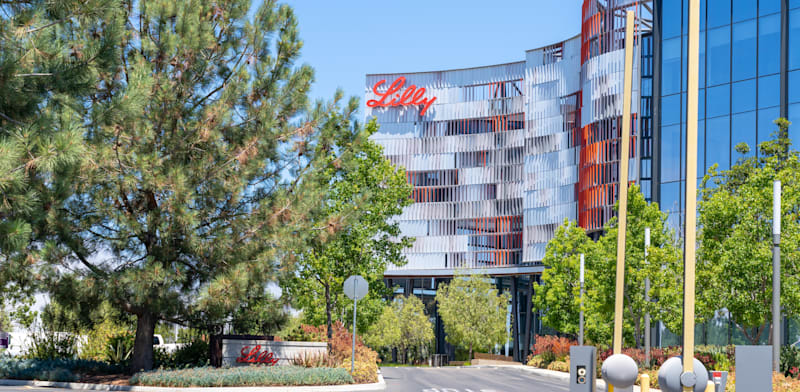
Last weekend the pharmaceutical giant crossed over Eli Lilly the value threshold of one trillion dollars and joined an exclusive club that today includes only a little more than ten companies, most of them technology companies such as Nvidia, Apple and Amazon that are benefiting from the artificial intelligence revolution.
Eli Lilly entered the club after taking the lead in the weight loss market. Is this an anomaly or maybe the pharmaceutical companies are already prepared to take a place at the top next to the giant companies?
Stole the premiere from Novo, and the market rewarded
Eli Lilly’s slimming drugs are expected to break the all-time record for revenue from a single drug this year. As of the beginning of 2025, Munjaro for diabetes and Zepbound for obesity, which are based on the same drug called Terzaptide, were sold for a total amount of more than 24 billion dollars – more than the previous peak drug, Merck’s Keytruda, which brought in 23 billion dollars “only” in that period. While Keytruda faces a looming patent expiration and may have already hit its peak, Trezeptide appears to be just getting started.
Not all companies that have developed obesity drugs enjoy the same success. Competitor Novo Nordisk did record revenues of approximately $5 billion from its obesity drugs in the third quarter of 2025, but its growth in this area is moderate and its stock is in decline, among other things because of an unsuccessful trial of a drug for Alzheimer’s that dashed hopes for a change in the treatment of the disease.
Eli Lilly, who was the second to enter the obesity market, took the lead from Novo Nordisk, with a product that was considered more efficient and a production system that did not suffer from the supply problems that characterized the Nordic company at the beginning. Part of the appreciation for Eli Lilly, which is also expressed in the share price, is also related to the way in which Lenovo stole the premiere.
Now, the two companies are about to bring an oral obesity drug to the market and will once again compete head to head. Both also have next-generation drugs in the pipeline.
As long as the products are patented, the competition in the field is not great. Pfizer, which acquired Metsera after a battle with Novo Nordisk, still needs to go through additional processes to reach the obesity market and prove that it is indeed a competitor. The lack of competition in the US market (many imitation products are sold in China) will allow Eli Lilly to squeeze a lot of cash from its activity in the field of obesity, and the question is what it will do with it. This is actually the question of the entire market.
Deals with Trump push the pharma index up
In recent months, the pharmaceutical market has been on a positive trend of recovery. Contrary to the correction trend in the US, the leading pharma index jumped 8% since the beginning of November.
According to Lior Shahar, partner and head of the high-tech sector at BDO, “The pharma market, which used to be boring, is starting to kick in. The pharma index is always considered defensive, due to the perception that the demand for drugs is rigid, and when the market goes down, it stays where it is or rises slightly, but this does not explain an 8% increase. If we look at other defensive indices such as the index of consumer goods or infrastructure – they did not rise like that.”
Within the general positive trend, each of the major companies behaves a little differently depending on the drugs they have in the pipeline and their success in clinical trials. Today this is the salient feature of pharmaceutical companies – even if they are huge in size, one or two major drugs can rock the ship.
Along with Eli Lilly pulling the market up, it seems that the decrease in regulatory pressures is also having its effect. In the last three election campaigns in the US, the candidates of both parties talked about reducing drug prices as a main goal. Donald Trump increased his actions when he threatened to impose tariffs and reduce drugs by “hundreds if not thousands of percent”, as he said.
However, it is gradually becoming clear that “it is possible to talk” with the Trump administration. Several companies have already signed agreements that allow them to offer prices that look better to the consumer, without dramatically affecting the profit line. Both Eli Lilly and Novo Nordisk recently signed an agreement to reduce the prices of slimming drugs for the consumer, but this agreement also had advantages for the companies: expanding the markets for which the government insurance companies will finance the drug and the possibility of marketing directly to the consumer, also through the government’s direct marketing company TrumpRX.
“The market takes such deals as a sign that Trump’s tariffs and demands are no longer a threat,” claimed Charlie Williams, head of investment bank HB Biotech, in a column he published on the capital market website Live Wire. “On the day when the first such deal was signed, between the government and Pfizer, the highest daily increase in the pharmaceutical company indices in recent decades was recorded – 10% in one day.”
How do the companies manage to sign deals that pay off for them and the customer? The answer is that the official drug prices in the US are not real. The drug companies pay part of their income to intermediaries, some to independent intermediaries and some to the insurance companies. The deals with Trump give them closer access to the consumer.
This approach is classic for weight loss drugs, for which many consumers pay out of pocket, and is less suitable for a cancer drug, for example, which no one can pay for without the insurance companies and their assistants. Therefore, it is not yet clear whether Trump’s agreements will actually succeed in tilting the balance of power in the market even more in favor of the pharmaceutical companies, or if this is a passing trend.
Williams also warns of the political upheavals in the FDA, which approves the drugs for marketing in the US. Regulatory uncertainty, both regarding the approval itself and regarding the timetables, tends to drive away investors. At this point, the FDA continues to work as usual in most areas, but this is a factor that he believes should be kept an eye on.
The AI puzzle: will the dream of the pharmaceutical companies come true
Meanwhile, another factor is pushing the value of pharmaceutical companies higher: artificial intelligence. The big question is what place it will occupy in drug development.
In the current activity model, we probably wouldn’t bet on the fact that another pharmaceutical company would soon enter the trillion club, and we would warn Eli Lilly, because pharmaceuticals are an elusive and uncertain business. Patents expire in about a decade, and a company that developed a hit drug will not necessarily be able to reproduce the success. Moreover, such companies often come under pressure, purchase alternative assets at high prices, and finally lose the priority. This is why the stock of Mark, the maker of Keytruda, has already started to fall, even though the product is currently at a peak.
If the model will change following the promise of AI, that’s another story. “There is an expectation that all pharmaceutical companies will incorporate AI, as Eli Lilly did in its collaboration with Nvidia. This will shorten drug development time and reduce costs. When you introduce something as sexy as AI and technology into a gray market like pharma, it brings beautiful increases and expectations for something we haven’t seen before,” says Shahar.
This is the promise of the new technology for the pharmaceutical sector: a dream where a company that gets its hands on the winning AI tools will be able to deliver the goods again and again, and will not be subject to the capricious ups and downs of the field. In the coming years, we will begin to see signs that will indicate whether this vision is being realized. It seems that it is already having a slight effect on the pricing of pharmaceutical companies.
Even if that happens, there is another limitation that is expected to make it difficult for many pharmaceutical companies to enter the trillion dollar club: most of the funding for health care in the world still comes from government rather than private pockets. And no matter how good the product is, the government pocket has a limit, and also a lot of bargaining power. Thus, in the end, there is a limit to how much this market can grow.
For your attention: The Globes system strives for a diverse, relevant and respectful discourse in accordance with the code of ethics that appears in the trust report according to which we operate. Expressions of violence, racism, incitement or any other inappropriate discourse are filtered out automatically and will not be published on the site.