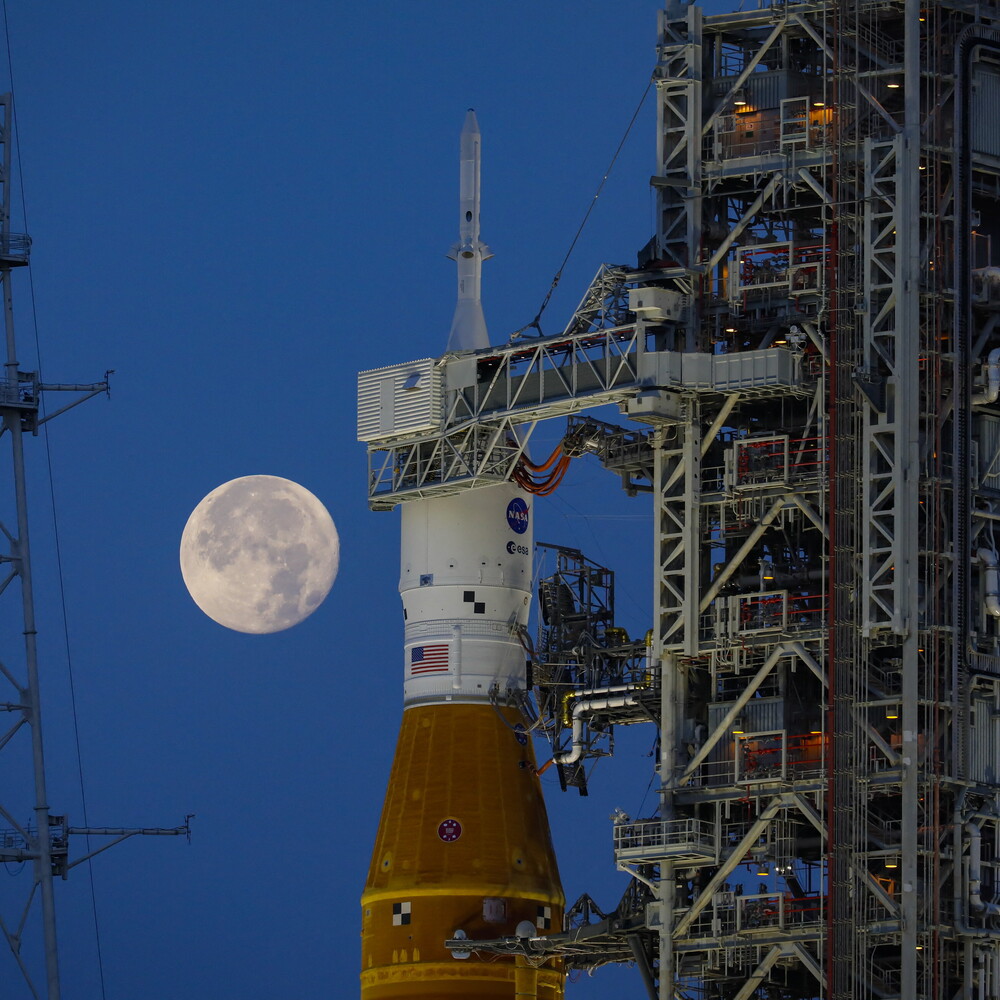
There will also be a Italian astronaut among the three crew members of the the mission of Artemis that will bring the man back to the Moon by 2027. The announcement came during the Agency’s ministerial meeting underway in Bremen, and was then confirmed by ESA’s director general, Josef Aschbacher. The Minister of Business and Made in Italy, Adolfo Urso, commented the decision as “news that first of all confirms the value of our astronautsalready established internationally, and the ever-increasing role ofItaly in space“.
Urso then underlined how Italy “has returned to being a protagonist together with France and Germany”, marking “the relaunch of Europe, which can finally look to the future with greater certainty, cohesion and determination”. The next three years will be crucial for the Esain a context in which the space race it is increasingly crowded also by the presence of private companiesespecially in the USA, as SpaceX e Blue Origin. The European Space Agency got it 22.1 billion euros by member countries to finance programs until 2028.
The strategic role of Italy
Italy will contribute with 3.5 billion eurosan increase of 13% compared to the previous ministerial meeting in Paris in 2022. The total contributions grow by over 5 billion compared to the 16.9 billion allocated three years ago. ESA, which this year celebrates the fiftieth anniversarycoordinates i European civil space projects and collaborates steadily with the EU institutions in a rapidly expanding sector. Director Aschbacher called space a “fast-growing economic sector” in which Europe needs to catch up. The exceptional budget for the next three years demonstrates that space is increasingly important for security and defense.
Artemis: lunar objectives and infrastructure
Artemis is the program with which the NASA wants to return humans to the Moon and start a stable presence on the lunar soil. Successor of the Apollo mission, aims to build infrastructure, bases and technologies that make the Moon a frequentable and operational place. The plan includes a permanent outpost powered by solar energy, supported by commercial landers and the Lunar Gatewaythe future lunar orbit station. While challenges include cost, technical delays and logistical complexity, Artemis remains the leading global initiative to return humans to the Moon and prepare human missions to Mars.
The new spatial landscape
The space landscape has changed profoundly in recent years: the rise of new private actorsgeopolitical instability and the return of the United States have made space a strategic domain that concerns today security, economy, climate and digital sovereignty.