Imagine a situation where Russia wants to prevent another country from acting against its will. To promote this, Russia first verbally threatens the use of nuclear weapons. After this, a demonstrative atmospheric explosion could be carried out somewhere far away. It is followed by the detonation of a small nuclear weapon in a remote area of the target country. In the end, an attack is made with a small nuclear weapon of less than a kiloton, on a military target of the target country, where the number of casualties remains limited.
The escalation model described above is based on Russia’s nuclear weapons doctrine. For example, in the early stages of the war in Ukraine, Russia made several statements and signals related to the use of nuclear weapons. The purpose of intimidation is to put pressure on Ukraine and cripple Western military aid.
Russia’s increased nuclear aggression has also been taken into account in Finland. In the defense report (2021), it is stated that Russia has hardened its nuclear rhetoric and “the threat of lowering the threshold for the use of lower-yield nuclear weapons than conventional tactical nuclear weapons is possible”.
The 2024 defense report also states that Russia emphasizes the role and wide-ranging impact of nuclear weapons.
Tactical nuclear weapons range from 1 to 5 kilotons, and the new smaller nuclear weapons range from 0.1 to 1 kiloton. With these smaller new nuclear weapons, Russia believes that it can put pressure on countries that do not have nuclear weapons.
NATO’s challenges
Means of transport.
Nuclear weapons deployed in Europe can be transported by F-35 fighters. Stock photo.
PHOTO: Mika Rinne
NATO’s nuclear deterrent is based on the nuclear arsenals of the United States, Britain and France.
At the moment, it can be challenging for NATO to respond to a small nuclear attack, because the West gave up on the development of small and tactical nuclear weapons for a long time. In addition, previously developed and acquired tactical nuclear weapons were abandoned.
NATO understands the risks of nuclear war, and therefore the use of a small nuclear weapon cannot be answered by using, for example, intercontinental nuclear missiles.
In order for NATO to be able to respond flexibly to Russia’s possible escalation, development work has been carried out under the leadership of the United States. The USA is responsible for the B61-12 program, where the older B61 bombs have been made into a modernized version.
The B61-12 is a tactical and strategic nuclear bomb with an explosive yield of 0.3 to 50 kilotons. The bomb’s GPS-assisted tail package transforms it from a traditional free-fall bomb into a precision-guided weapon.
Compared to Cold War-era megaton class weapons, the explosive power of the B61-12 is significantly lower. In addition, the accuracy of the bomb allows the use of lower power, which reduces collateral damage and makes the weapon more credible in terms of deterrence.
The B61-12 nuclear bomb can be carried by both bombers and fighters.
Under the NATO Nuclear Nonproliferation Treaty, B61-12 nuclear bombs have been deployed in Belgium, Germany, Italy, the Netherlands, and Turkey, but the United States has full control over the use of the weapons.
According to Kauppalehti’s information, the European NATO countries will have to consider the development of smaller nuclear weapons, so that the deterrent to Russia’s nuclear weapons would also be reciprocal and of the same magnitude in Europe.
Finland benefits
No nuclear weapons of their own.
Finland participates in the planning and training of NATO’s nuclear weapons policy, but according to the Arctic, Finland should not have its own nuclear weapons.
PHOTO: Thierry Monasse
With NATO membership, Finland came under the defense alliance’s nuclear weapons protection. It gives Finland significant additional protection against Russia’s use of force.
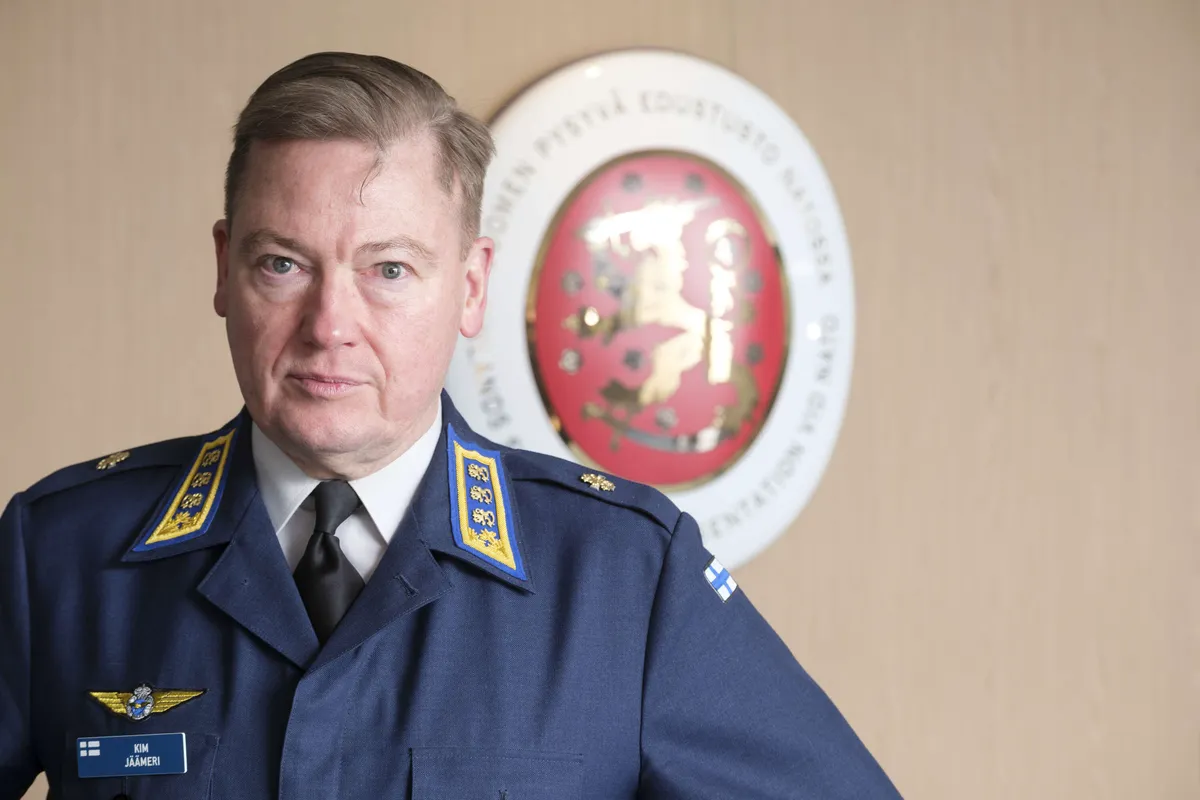
“We are one of the countries that enjoys the deterrence brought by NATO’s nuclear deterrence against conventional attack the most, because the essential obstacle to crossing the threshold of military use of force is nuclear deterrence,” says the lieutenant general who serves as Finland’s military representative at NATO Kim Jäämeri.
Finland participates in the maintenance of NATO’s nuclear deterrence without restrictions: Finland is involved in NATO’s Nuclear Planning Group and participates in NATO’s annual nuclear weapons exercises.
However, participation in the exercises does not mean an automatic obligation for Finland to transport or use nuclear weapons.
In a practical situation, roles are defined in NATO according to the position, willingness and equipment of each member country. For example, Finland’s current and future fighter jets are not equipped to carry nuclear weapons.
Should Finland have its own nuclear weapons?
“I don’t like it,” Jäämeri replies.
“Finland’s advantage is that US weapons are used by the alliance. Geographical proximity to Russia makes their maintenance in Finland unrealistic, especially with current systems that are based on aircraft,” says Jäämeri.
However, according to him, there should be more discussion about nuclear weapons in Finland and it should be more diverse.
“Recognition of the facts is necessary, although nuclear weapons are a matter of extreme concern, especially in the wrong hands.”
According to Käjmere, Finland also needs to strengthen and diversify nuclear weapons expertise.
“In Finland, we need to increase our understanding of the effects of nuclear weapons systems and deterrence theories, so that we can participate in discussion and decision-making when the situation requires it. It will increase our independence and protect us from Russian blackmail,” says Jäämeri.
THE FACTS
NATO, Finland and nuclear weapons
NATO’s nuclear deterrent is the cornerstone of its security strategy.
The purpose of NATO’s nuclear deterrent is to preserve peace, guarantee the alliance’s freedom of action and prevent an attack on a member country.
The backbone of NATO’s nuclear deterrence is formed by US nuclear weapons. France and Britain also have nuclear weapons.
Some of the USA’s nuclear weapons are located in Europe, such as Belgium, Italy, Germany, the Netherlands and Turkey.
As a member of NATO, Finland commits to NATO’s nuclear weapons policy and nuclear deterrence.
Finland participates in planning NATO’s nuclear weapons policy in the Nuclear Planning Group.
At the military level, Finland has participated in nuclear weapons exercises, such as the annual Steadfast Noon exercise, which tests the effectiveness of the alliance’s nuclear deterrent.
https://oscarspin-espana.com/legal
https://oscarspin-espana.com/login
https://oscarspin-espana.com/mirror
https://oscarspin-espana.com/mobile
https://oscarspin-espana.com/payments
https://oscarspin-espana.com/problems
https://oscarspin-espana.com/promocodes
https://oscarspin-espana.com/slots
https://oscarspin-espana.com/support
https://oscarspin-espana.com/withdrawal
https://oscarspines.com
https://oscarspines.com/apk
https://oscarspines.com/app
https://oscarspines.com/bonus
https://oscarspines.com/casino
https://oscarspines.com/deposit
https://oscarspines.com/download
https://oscarspines.com/faq
https://oscarspines.com/legal
https://oscarspines.com/login
https://oscarspines.com/mirror
https://oscarspines.com/mobile
https://oscarspines.com/payments
https://oscarspines.com/problems
https://oscarspines.com/promocodes