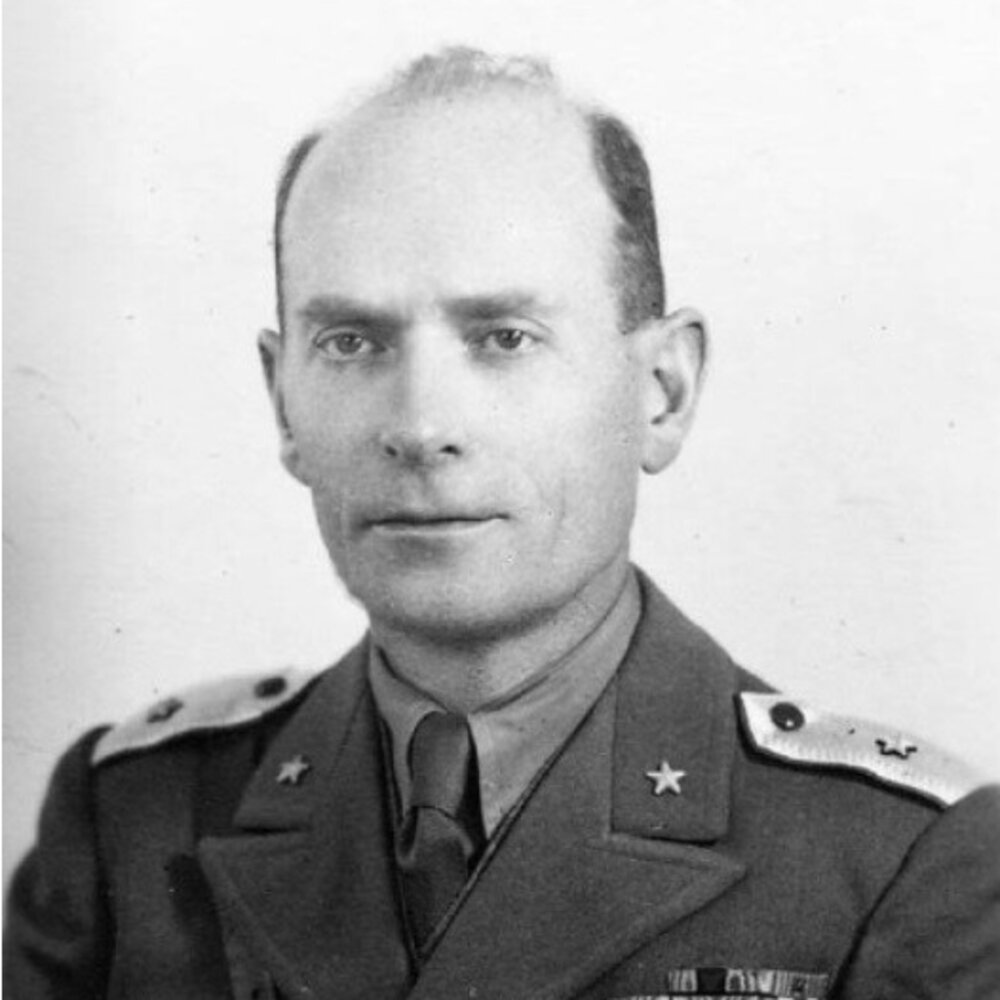
Armando, the nom de guerre of General Cesare Amè, had a meeting on the Lido of Venice on 2 August 1943 with Admiral Wilhelm Canaris, head of the German Abwehr espionage, who had probed his colleague and let slip the phrase that he hoped for a 25 July in the Reich too. Amè had reassured the German of the Italian desire to continue fighting alongside Germany, but then in a subsequent phase of the talks, amidst skirmishes and ambiguities like a game of hole cards, the astute admiral had hinted that he knew that Italy would disengage from the Axis and that there were several German officers eager to get rid of Adolf Hitler and put an end to that war. And he added that he was not too liberal in allowing the entry of German troops from Brenner in force.
Armando, or Amè, could not add anything because the Badoglio Government had deliberately excluded the Military Information Service (SIM) from all withdrawal maneuvers from the alliance, so as not to arouse the Germans’ suspicions. Canaris, returning to Berlin, would have instrumentally reassured Hitler of Italian loyalty, for his own games, but the Führer, who did not trust the admiral, did not believe him. Not even Badoglio trusted Amè and therefore the SIM which he had been directing since 20 September 1940. Mussolini, despite having a desperate need for intelligence, had behaved in the same way since Amè had expressed his absolute opposition to entering the war, and had therefore continually concealed from him the moves he intended to make, and giving him incomplete and late information.
The first intelligence assignment after three medals for military valor
From Cumiana in Piedmont, near Turin, Amè was born on 18 November 1892. The family had no military tradition (his father Francesco was employed at the land registry) but he entered the Modena Academy and left with the rank of second lieutenant. The first operational assignment was in 1912 in the Libyan war against the Ottoman Empire, with the insignia of the 92nd Turin regiment. He was repatriated in 1914 and the following year he was promoted first to lieutenant and then, with Italy’s entry into the world war, to captain. He attended the General Staff officer course in Padua and was assigned to the 25th division on the Carso front. He is in Caporetto in 1917, then on the Piave and up to Vittorio Veneto under the orders of Major Giovanni Messe who will be one of the most capable Italian generals of the Second World War, ending up promoted Marshal of Italy before the surrender in Tunisia.
At the end of the Great War he was able to show off two bronze medals and a silver medal for military valor on his chest. He continued his career in the army by attending the Turin War School. His qualities and intelligence did not go unnoticed by Colonel Attilio Vigevano, head of the secret services, who called him into counter-espionage in 1921. He remained in what became SIM in 1925, carrying out a series of missions and assignments until 1929, returning after several command experiences in January 1940, as colonel, and as deputy to General Giacomo Carboni, who however was fired in September after openly demonstrating his aversion to the Germans. Three months after Italy’s entry into the war he found himself at the top of the SIM which at the time was one of the four information services acting independently and in rivalry with each other, with obvious coordination problems due to jealousy and exclusivity of skills.
The double blow with Yugoslavia and with the Black Code stolen from the USA
Among Amè’s first acts, it is worth highlighting the merging of the military counter-espionage and special services for internal counter-espionage, until in June 1943 he succeeded in making the SIM the only espionage and counter-espionage body in Italy and abroad. It was an efficient and professional structure, built with modern systems, of trained and very skilled specialists. Despite the military conduct of the war, which Amè, by now a general, had opposed in full awareness of his unpreparedness, the secret services proved to be the spearhead of the Royal Army, even if their role and importance are often overlooked or even ignored.
The work of disinformation to the detriment of the Yugoslav army was sensational, as it carried out false operational orders issued by the SIM for two days, precisely on the initiative of Amè who had not even mentioned it to Mussolini. Even more striking was the coup carried out by Section P (Retrieval) of Lieutenant Colonel Manfredi Talamo who took possession of the encryption codes of the US Embassy in Rome (Black Code) when the United States was neutral, managing to clear all communications with the British which were then passed on to Field Marshal Erwin Rommel who made use of them for his formidable victories on the North African front.
The Americans only realized in the summer of 1942 that their codes had been broken. But while the Germans accused the Italians of leaks when supply convoys were intercepted and sunk by the British Mediterranean Fleet, the reality was that the British reported in the clear with Ultra the encryptions considered unassailable of the Enigma machine, and therefore it was they who revealed the moves of the Royal Navy. And it was precisely the Afrika Korps documents that fell into English hands that revealed that the Italians read the Black Code which was therefore changed and armored.
Mussolini didn’t trust the SIM and not even Badoglio trusts it
The “machine” created by Amè at the time was recognized as being of the highest level by the enemies themselves, even if the Canaris Abwehr was much more numerically articulated and therefore much more present on foreign territory and in a more pervasive manner. The SIM’s thinking head didn’t even have 1,500 employees. But he always paid for the absurd disconnect with the political leaders. Just as Mussolini informed of his moves with very little notice, Amè was not informed in the slightest of the maneuvers that led the Fascist Grand Council on 25 July to the defenestration of Mussolini, nor of the very secret preparatory military plans of the Badoglio Government in view of the cessation of hostilities with the Allies. The Marshal with a decree exonerated General Amè on 18 August, effectively excluding him from the negotiations for the armistice, because not even the executive trusted the double and triple games of the SIM. In an unfortunate move, former chief General Carboni was placed at the top, who combined the command of the secret services with that of the armored motorcycle corps defending Rome, with disastrous results in the hours following the proclamation of the unconditional surrender on 8 September.
Lieutenant Colonel Talamo was eliminated by Kappler at the Ardeatine
In the autumn of 1944, General Amè was assigned to the War Ministry’s Commission of Inquiry into the behavior of general officers and colonels at the time of the armistice and in the subsequent period, and in 1947 he was placed in the reserve. He will be promoted to general of division in 1948. His experience will be delivered to the pages of his memoirs published in 1954, entitled Secret War in Italy, where he retraces the activity of the SIM under his leadership. His colleague Canaris, whom Armando had met in Venice to take stock of the Italian situation in the post-Mussolini era, involved in the attack on Hitler on 20 July 1944, was hanged in 1945 in the Flossenbürg concentration camp by a piano string. The skilled Manfredi Talamo, one of the SIM’s best officers, was eliminated at the Fosse Ardeatine in 1944 by personal decision of SS Lieutenant Colonel Herbert Kappler, because he had infiltrated German espionage in Rome. Amè passed away in Rome in 1983.