The summary is made by artificial intelligence and checked by a human.
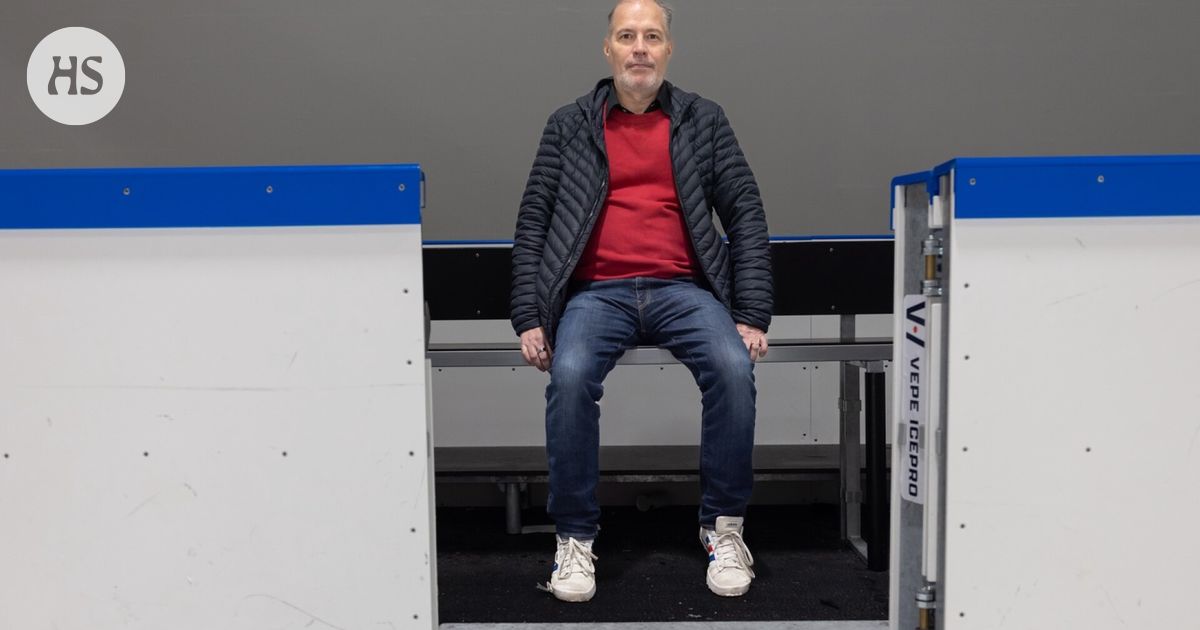
Petteri Huurre, CEO of the Helsinki Ice Rink Foundation, talks about the situation of ice sports in the capital region.
The occupancy rate of the ice rinks has decreased due to the corona virus and the high cost of the hobby.
Kivikko’s new ice rink is popular among clubs, although the lack of public transport was initially suspected.
When Petteri Huurre was laying bricks in 2008 Juha Miedon with the foundation stone of Kivikko’s ski rink, it didn’t even occur to him that in 2025 the same rink will have three rinks for ice sports.
“When the original operator went bankrupt, at that point there were probably the first sketches of whether this could become an ice rink,” says Huurre, who started as CEO of the Ice Rink Foundation on October 1.
The city of Helsinki ran the ski hall after the bankruptcy of the entrepreneur for several years, but when the operation was not profitable, the conversion of the hall into an ice arena began to materialize.
In the end, not much was left of the ski hall except the walls and the roof, but there was luck: the support columns supporting the hall are just right in such a way that there were three rinks in the hall.
Kivikko hall was a ski hall called Ylläshalli. In the background you can see the beams, the location of which was just right for the ice troughs.
Now the name of Kivikko’s hall is Kivikko-arena. Jääkenttäsäätiö’s CEO Petteri Huurre got a feel for the rink’s ice.
The Kiviko hall, which opened in September, is now one of the seven ice rinks of Helsinki Liikuntahallit oy. The Ice Rink Foundation owns about 60 percent of Liikuntahallit oy and the City of Helsinki owns 40 percent. The Helsinki ice rink, or Nordis, is completely owned by the city.
Jääkenttäsäätiö is a subsidiary of the Helsinki City Group, in which the city exercises control.
Kivikon the hall practically replaces Malmi’s hall, which was closed last spring and there are no decisions about its future use yet. At the moment, there is also no need to return the Malmi hall to ice sports.
“The halls that are now in use [kaukaloita 19] mainly meet the needs of the moment,” says Huurre.
In addition to everything, the afternoon shifts in several halls only start at 4 p.m., while they used to start at 3 p.m. This has made it easier for many to make time for practice. The background here is that the demand for ice age has somewhat decreased.
“Yes, it clearly indicates that,” Huurre confirms.
There are at least two reasons for the decrease in demand: the high cost of the hobby and the effects of the corona period. Especially the latter is considered particularly significant in the Ice Skating Foundation.
“With the corona virus, the gang drifted into other hobbies when the ice rinks were closed”, states the manager of the Ice Rink Foundation Karim Bentaleb.
“At least there were winners in futis”, adds Huurre.
”
“In the capital region, the population growth will largely come from foreigners. How can they also be integrated into ice sports?”
Huurre is also a little worried about the decrease in the number of ice sports enthusiasts.
“Of course, we hope that all ice sports, despite the challenging conditions, would maintain their position on the Finnish sports field.”
Although the population in Helsinki is growing, it is not reflected in the growing number of enthusiasts in the ice rinks.
“In the capital region, the population growth will largely come from foreigners. How can they also be integrated into ice sports?” Hurre ponders.
When in Helsinki the ice situation is good, at the same time in Vantaa the situation is different: only four rinks.
HS told recently from the long training trips of Vantaa juniors and the training venues were not the halls of Helsinki. According to the Ice Rink Foundation, Vantaa has also not inquired about shifts from Helsinki.
Would there be routes from Helsinki for Vantaa clubs?
“Prime time slots are pretty much sold out, but for example, you could find slots at the ice rink in Helsinki. Understandably, not everyone wants to go there when slots are canceled due to events,” Huurre states.
When Kivikko’s hall was started to be turned into an ice rink, criticism also arose especially about the location of the hall: the place seemed to be located “somewhere in Mäntsälä”.
“When the people realized that it’s easier to get here from the center than, for example, Herttoniemi or Salmisaari, there was no problem at all,” says Jääkenttäsäätiö’s property maintenance manager Marko Tarkiainen.
In addition, doubts were caused by the fact that there is no public transport near Kivikko’s hall.
“Lätkä players in particular do not use public transport. And when you look at the situation in the evening, 98 percent of the figure skaters come by car,” says Tarkiainen, and he is not only referring to Kiviko’s hall.
Do hockey juniors arrive on mopeds?
“Yes, there are some in that yard,” says Bentaleb.
But sometimes, a few years ago, a story was told that HIFK’s juniors don’t ride mopeds – it’s rural tinkering.
“Exactly”, the people of the Ice Foundation say at the same time and laugh.
The end result is that Kiviko’s hall has become popular with clubs: a new hall and, among other things, spacious dressing rooms.
Petteri Huurre visited the dressing room of Kiviko’s hall, which still has the smell of a new place.
How about the Ice Field Foundation itself?
In June, the city of Helsinki submitted an investigation request to the police, as the city’s internal audit report had identified problems in the procurement act’s risk management supervision. Already earlier in the spring, first the previous managing director resigned and a little later the city changed the entire board of the foundation.
Huurre says that he has a good chance of putting things in order.
“This means all the issues that have been addressed in the internal audit. They will be fixed. And the foundation’s board has been doing this work since last spring.”
Huurre was elected CEO of Jääkenttäsäätiö from the position of City of Helsinki’s sports venue manager. In total, he held various management positions in the sports department for 25 years.
“When you’re in the final years of your work and still get to work with Sport and events, what could be better,” Huurre explains his move to a new job.
Let’s go back to Kivikko’s ski hall days. Did you go skiing there?
“I think I went five times.”