Celonis has unveiled the latest innovations integrated into Celonis Process Intelligence Platform designed to enhance business artificial intelligence (AI) with the aim of reinvent and improve business operations underscoring the need to promote the modular enterprise, with a structured approach to agent-based AI and improvements to the Process Intelligence Graph to generate multimodal twins.
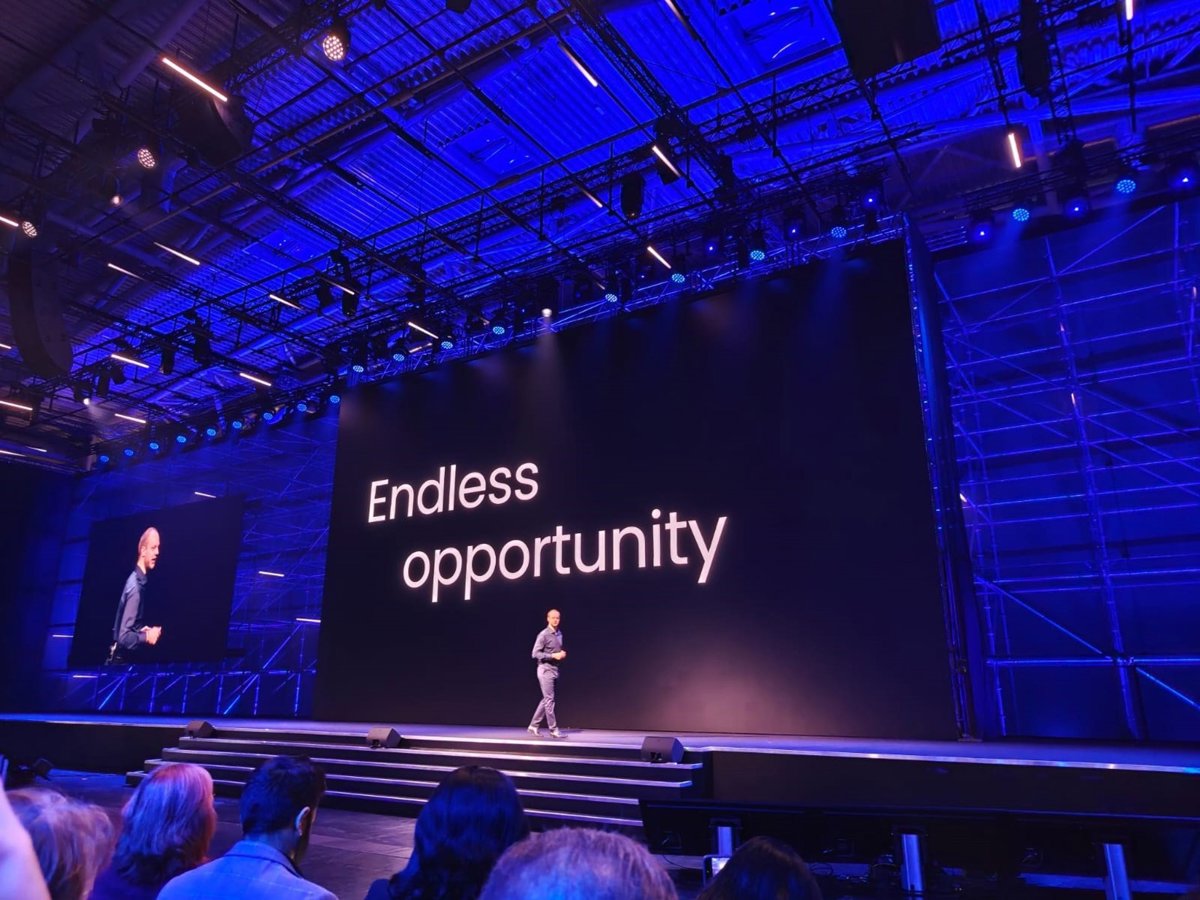
As part of its annual event Celosphere 2025, Held on November 4 and 5 in Munich (Germany), the company has brought together multiple industry leaders and clients to, in addition to announcing its latest news, show how some of the world’s leading companies are “reinventing their operations” and generating real results through the use of enterprise AI, driven by process intelligence.
In this sense, the coCEO and co-founder of Celonis, Alex Rinke, was in charge of starting these days and, during his opening speech, he put on the table the importance of enterprise AI implementation currently in order to drive improvements and how, although many organizations already use this technology, “they have difficulties in getting a return on their investments in AI.
In fact, he has highlighted how, according to data provided by the International Data Corporation (IDC), only 11 percent of companies obtain any benefit from the AI they implement.
As Rinke explained, this is because organizations “think of enterprise AI as a technology” when, in reality, “it is the strategic discipline of infusing AI into every part of their operations.” This question is based on three pillars: understanding the context of how each business works, implementing AI strategically based on its needs and making this technology work with the rest of the company’s elements.
This point of view is precisely what Celonis intends to continue promoting to help companies increase their growth and expand their business.
For this, it stands out Celonis Process Intelligence Platform which, as he explained, is based on a solution that extracts raw data from systems, applications and devices within and between companies and, after that, enriches this data with each client’s unique business context.
Through this process, it helps “create a digital twin of its operations” in real time, with the use of systems, departments and other organizations, through Process Intelligence Graph (PI Graph). This technology is “the heart” of its platform and integrates capabilities to analyze, design and operate automated processes and agents, making it easier to effectively integrate AI into business operations, with a multimodal twin that allows the creation of “scalable intelligent solutions.”
Furthermore, by having a dynamic ecosystem of services and technology partnersCelonis is able to expand its open process intelligence platform, with composable solutions powered by AI. In this way, it can help joint customers “transform their operations and unlock tangible value.”
IMPROVEMENTS TO THE PI GRAPH MULTIMODAL TWIN
Celosphere 2025 has also had the participation of Celonis Product Director, Daniel Brown, who has highlighted the need to offer a structured approach to agent-based AI. This is because, as detailed, to take advantage of AI in each company’s operations, it is necessary to “identify appropriate use cases, redesign business processes and orchestrate agents together with existing people and systems.”
Likewise, he has highlighted the improved capabilities of Celonis in Process Intelligence Graphwhich now allows combine more types of data, from more sources, more quickly, making it easier for customers and partners to build “AI solutions that elevate their operations to unprecedented levels of efficiency and agility.”
This is due to improvements such as the possibility of integrate data lakes without duplicating data using the Celonis Data Core solution, which is generally available to all companies. This tool allows you to obtain data and feed process intelligence into data lakes with bidirectional integrations without copies.
Likewise, with the enhanced capabilities of Task Mining y Task Discoller Sidethe company allows generating a “richer and more complete” digital twin, by connecting desktop actions—that is, keystrokes, mouse clicks, and screen scrolls—with business processes. This makes it easier to integrate unstructured data, such as PDF documents; semi-structured data, such as emails; and data external to the organization, through Celonis Networks.
Also added is the ability to integrate business architecture plans with operational reality in real time. This ensures that IT systems and AI understand which systems are used depending on which activities. Therefore, it allows decisions to be made based on the real performance of the company at all times.
In addition to all this, the possibility of testing the faster digital twinwhich now features more than 60 predefined objects and events, as well as new AI assistants for data mining and data modeling.
NEWS FOR AI-DRIVEN OPERATIONS
On the other hand, Celonis has also shared its advanced capabilities to continuously analyze, design and operate modular processes powered by AI.
This is thanks to the introduction of new process mining capabilities object-centered ‘object-centric process mining’ (OCPM) which, together with solutions such as Performance Spectrum, Instance Explorer and the Object-Centric Performance application, help customers identify problems at the intersection points of processes, that is, where failures tend to occur most.
As the company has exemplified, these capabilities can ensure the smooth transition between transportation, storage, packaging and shipping of a company’s finished products.
Another advanced capability is Orchestration EngineCelonis’ engine extension for coordinating AI agents alongside people and systems while executing end-to-end processes, is now generally available as a core capability of the company’s platform.
Furthermore, Celonis has launched the primer servidor Model Context Protocol (MCP), framed in the Process Intelligence MCP Server, which has been designed for process intelligence and which provides AI agents with the dynamic operational context they need to “make relevant decisions and take effective actions.”
CREATE NEW AI SOLUTIONS AND BUSINESS MODELS
Finally, Celonis has also put new ones on the table modular solutions developed with its technological partners as Rollwith its Process Collaboration Agent, which resolves process exceptions using the context provided by Celonis and bringing the right people together.
The company Trullionfor its part, has developed a specialized AI agent that interprets contracts to automate the complex and manual work required for lease accounting. Likewise, his collaboration with Bloomfilter has made possible Bloomfilter’s new Celonis Agent Miner app, which helps companies “go beyond analyzing human-led software development, to understand and govern the behavior of AI agents as they write code.”