The mission, whose name is short for Escape and Plasma Acceleration and Dynamics Explorers, is designed to measure the interaction between the solar winds and the weak magnetic fields of Mars. This is one of the main scientific questions about the planet: how it turned from a place rich in water and a thick atmosphere, to a frozen and almost completely dry world.
The path to success was full of obstacles. The proposal of Dr. Rob Lillis from the University of Berkeley was initially rejected by NASA, and only following the shutdown of the American government in 2018 was it decided to grant the project approval. Later, the mission was postponed again after NASA removed the satellites from the launch list of another rocket. Since then, the scientists had to go back and redesign almost every detail.
At one point, when Blue Origin was not yet ready to launch its flagship New Glenn rocket, the scientists had to pack up the two satellites and ship them back to California, where they were placed in storage for months. Only after the company promised NASA a discounted price of $20 million for the first launch of the new rocket was the green light given to go off again.
Despite the disruptions, including stormy weather and a cruise ship that penetrated the restricted area around the launch pad, the satellites were finally launched from Cape Canaveral in Florida. “This mission is like a cat with nine souls,” Dr. Lillis said with a smile, “every time it manages to survive what seems like certain failure.”
The two satellites, each the size of a small refrigerator, will enter an elliptical orbit around Mars and perform simultaneous measurements for the first time in the history of planetary exploration. First they will move together, and later they will separate to measure the effects of the solar wind on the magnetic fields and the thin atmosphere.
Each of them carries an identical set of scientific instruments: a magnetometer for measuring magnetic fields, an electrostatic analyzer for mapping charged particles, and detectors for measuring plasma density, temperature and electric voltage. Even the mission cameras were built by students from Northern Arizona University.
What sets ESCAPADE apart is the price: only 94 million dollars, including launch and operation. By comparison, NASA’s previous mission to Mars, MAVEN, cost almost $600 million. This achievement is considered revolutionary thanks to the use of small and relatively cheap satellites, built quickly and efficiently by Rocket Love.
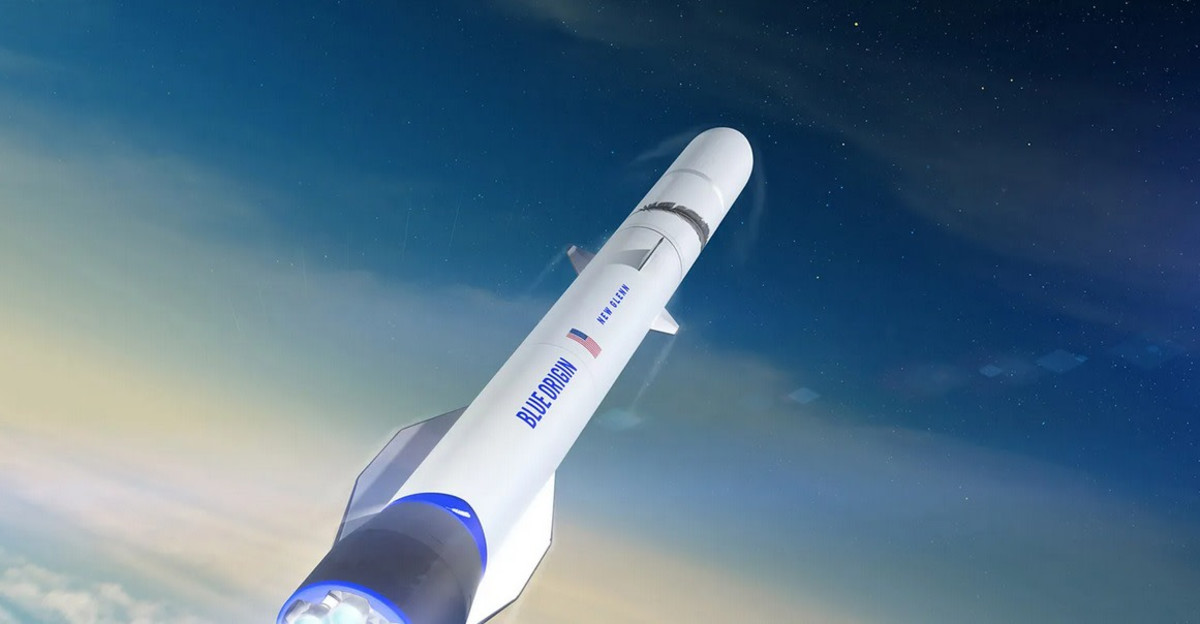
The launch itself is also a milestone: it’s the first time Blue Origin’s New Glenn rocket has launched an interplanetary mission. This is a huge rocket, almost too big for the two small satellites – but the collaboration between NASA and Jeff Bezos’ space company may lower the launch costs of similar scientific missions in the future.
The route designed by the engineers for ESCAPADE is just as complex as the mission itself. The satellites will first move in a bean-shaped orbit around the L2 equilibrium point between the Earth and the Sun, will return after about a year to the Earth’s environment, and only then will they direct their engines towards Mars. This unique route is designed to allow for an extremely long launch window of about a year – instead of just a few weeks as was customary until now.
This means that even in the future, when the possibility of launching hundreds of supply or settlement ships to Mars is considered, it will be possible to spread the launches over many months. The scientific mission will begin in June 2028, after a period of silence of several months in which the Sun will be between the Earth and Mars and block communication. Over the next year, the satellites will make intensive measurements of plasma and magnetic fields, trying to understand how Mars lost its atmosphere over billions of years. If all goes well ESCAPADE will not only reveal secrets about Mars, but will also serve as a new model for how NASA and the entire scientific community will approach interplanetary missions that are cheaper, faster, and more flexible than ever before.