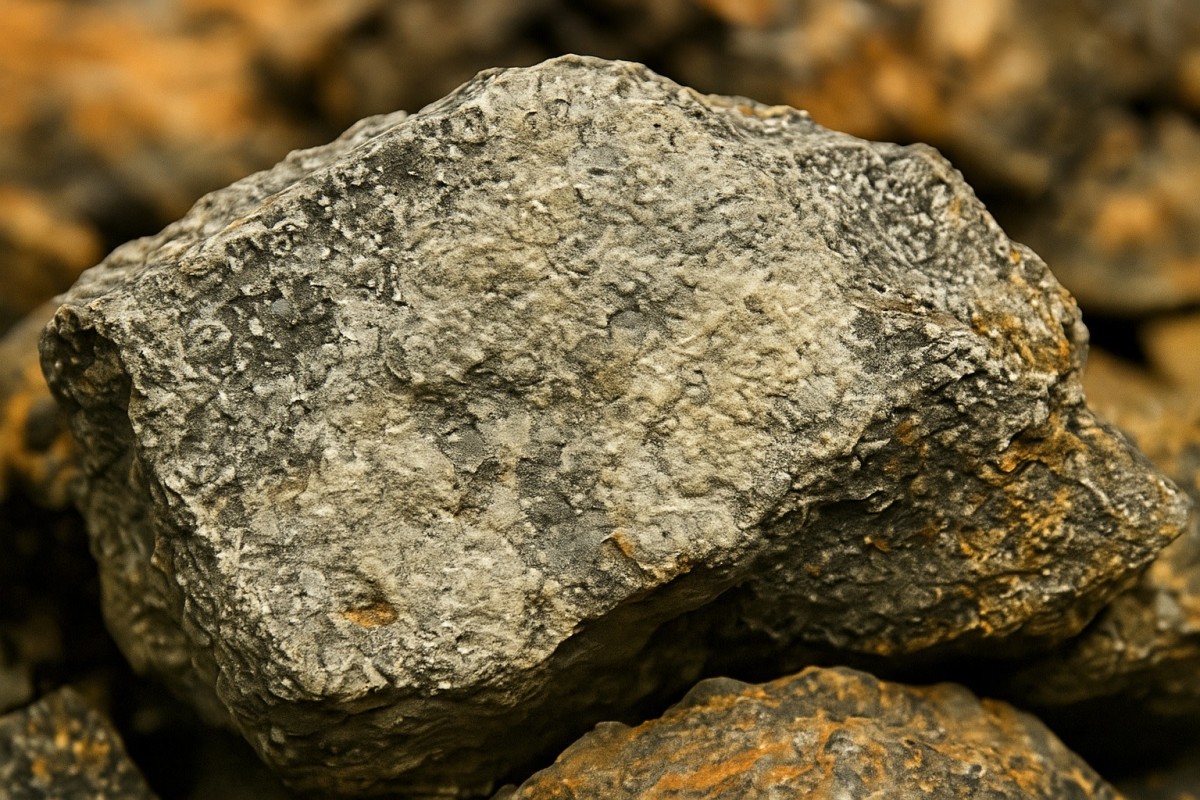
When the miners in the depths of the earth reveal a grayish block that looks at a look, no one can imagine that it is a material behind which a revolutionary and deadly secret is hiding. This material, uranium, undergoes a long and accurate journey – a wild drunk in nature to secret enrichment facilities – in which it changes its shape, its features and its purpose. Quietly and systematically, it becomes a regular raw material one of the most dangerous and powerful elements in the world: one that drives electricity generations, but also nuclear missiles capable of destroying entire cities. How exactly does this happen, and what does the same mysterious stone look like in the different stages of the road? In the journey in front of you we will discover the secrets of enriched uranium.
Uranium, a chemical element whose atomic number 92 is one of the most fascinating and dangerous materials in nature. This is a particularly heavy element that is in the earth’s land in almost all continents. Despite being radioactive, that is, radiation emits, it appears in nature mainly in a relatively stable way as solid ore in shades of gray, black, green or brown, depending on the materials that accompany it. In its natural state, uranium looks like a greyish or greenish rock, and has been illustrated by the depths of the land mainly in Canada, Kazakhstan, Australia, the US and Namibia.
The uniqueness of uranium is due to its atomic structure. Each opaque consists of a nucleus with positive cargo proton and lack of argument, and around it a cloud of negative charger electrons. Uranium has several versions, called “Isotopes,” each contains a different number of neutrons. The two most important isotopes are uranium 238, which makes up about 99.3% of uranium in nature, and uranium 235, which makes up only about 0.7% – but it is the really important material, because it can go through a nuclear foyer and release tremendous energy.
The reason that uranium is chosen to produce nuclear bombs and the use of nuclear reactors lies in the ability of uranium nuclei 235 to open up when they are injured from neutron. This process, called nuclear fission, releases tremendous amounts of energy and creates a chain response: each fission is accompanied by neutrons emission that are disturbed by additional nuclei. This is how a nuclear explosion is created with a huge destructive power or controlled response to electrical generation in the firstborn.
Since Uranium 235 is so rare, it is necessary to separate it from Uranium 238 and concentrate its part. This process is called enrichment. Enriched uranium is uranium where the 235 isotop concentration is higher than in the natural state. When its concentration reaches 3 to 5 percent, it is enrichment for civilian needs, such as operating nuclear reactors to electric generation. When the concentration reaches 90 percent, it is a weapon level – a material from which a nuclear bomb can be produced.
The first phase of uranium production is its mining from the ground. The material produced at this stage is oony orerium in the form of a yellowish -brown powder, known as “yellow uranium cake”. The cake is transmitted to industrial processing facilities where it is heated and chemically processed to produce the uranium itself. It is a complex process that includes acids, high heat and a series of chemical separations, followed by a relatively clean uranium.
Next, uranium must be made from a solid block into gas – a vital stage for enrichment. To do this, the uranium is turning into a compound called the Qassifooride Uranium (UF6) a chemical that appears as white crystals at room temperature but becomes gas easily as it is slightly heated. This gas is transferred into centrifuges, a kind of very high speed machines.
The centrifugation separates the isotopes according to their weight – the slightly lightweight uranium 235 tends to concentrate close to the center, while the liver 238 is pushed out. Because the difference in weight between the two isotopes is very small, a set of hundreds and even thousands of centrifugures that will work together, repeatedly, until the enrichment level is achieved.
During the uranium enrichment remains in a gas condition, it is transmitted in atomic pipes made of special steel, and is preserved in cylindrical containers. The process must occur under accurate conditions, due to the danger of leakage of radioactive gas. Once the desired enrichment level is achieved, uranium is going on a reverse process that brings it back to a solid shape – usually gray powder, which is transmitted to compressed molds and burned to create ceramic balls. A nuclear firstborn, these balls are packed into fuel rods. In a weapon system, the compressed material was built into the heart of the bomb.
At each stage the process also varies from the physical condition of the uranium: natural stone, yellow powder, transparent gas, and finally returning to gray solid material. Each of the stages requires different conditions, different tools, and heavy security. The material processing is done in labs, miners, or industrial facilities that require cooling, filtering, pressure control and frequent radiation tests.
Thus becomes a foundation that looks at first glance as one of the most dangerous materials known to the human race. From a grayish stone that is removed from the ground to the nucleus of a bomb capable of destroying an entire city – this is the long journey of uranium.