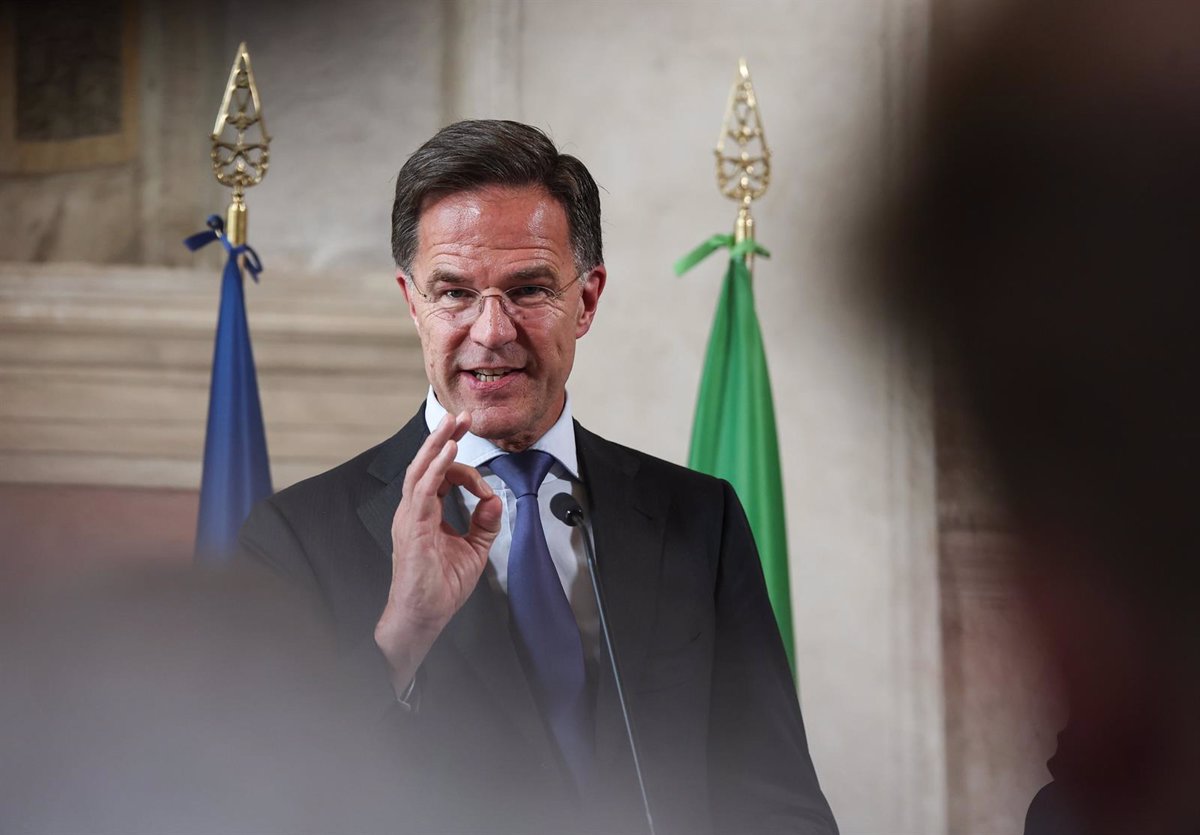
NATO has closed an agreement on Sunday for allies to commit to increase the defense spending up to 5% of GDP within 2035, giving flexibility to Spain to invest below that threshold, in a pact that arrives days before the NATO leaders summit in the Hague, they have confirmed several allied sources to Europa Press.
The agreement for the new spending ribbon within NATO comes after overcoming the reluctance of Spain, the main stumbling block in the negotiation and that has achieved greater flexibility by the Atlantic Alliance to set its own spending path, more linked to the objectives of military capacities required by NATO and that in any case forces to increase the expense in the coming years.
This commitment is reflected in a letter that the NATO general secretary, Mark Rutte, sent this Sunday to the president of the Government, Pedro Sánchez, in which he recognizes the particular situation of Spain. “Spain is convinced that it can meet the new skills objectives agreed with a spending trajectory of less than 5% of GDP,” he says in the letter to which Europa Press has had access.
“In view of its letter, I am inclined to confirm that the agreement of the next NATO summit will give Spain the necessary flexibility to determine its own sovereign trajectory to achieve the objective of capacities and the necessary annual resources as a percentage of GDP, and to present their own annual plans,” confirms the NATO political chief, which details that the allies will review the investment figure in 2029 as a flying goal for the flying goal for the flying target for the wheel. 2035.
In recent days, negotiations focused on overcoming the objections of Spain, which had refused Routte’s formula of dedicating 3.5% of GDP to pure military spending and reserving another 1.5% to investments in infrastructure and security, a recipe with which the 5% rounded NATO that has claimed the president of the United States for months, Donald Trump.
Spain does accept the declaration of the Hague Summit, once it has managed to introduce changes in language to leave the commitment to the new spending objective more open.
This has been reflected in another letter from the President of the Government to the NATO leader confirming the ‘SI’ of Spain to the summit statement, understanding that the achievement of the capabilities objectives “is respected in a timely manner, regardless of the percentage of the GDP that this supposes.”
In this way, in an exercise in diplomacy, the statement will reflect that the allies are committed to 5%, but will not refer to all NATO members, which thus fills the expectations of Spain, explain from Moncloa to respect that the expense is associated with fulfilling military obligations with NATO and not linked to a “arbitrary” expense percentage.
Diplomatic sources in NATO suggest that the agreement reached with Spain is “bad” for the organization and remembers the “Hungarian style”, referring to the exclusion achieved by Hungarian Prime Minister, Viktor Orbán, to the aid to Ukraine agreed a year ago. “This is far from being a more fair NATO,” criticize these sources.
Capacity objectives will force Spain to spend at least 3%
For weeks, the government insists that dedicating 2% of GDP to the defense budget provides a “sufficient” amount of funds so that Spain meets the requirements in military capabilities agreed by NATO allies.
The military requirements of Spain have an important naval component, of logistics, infrastructure and military mobility elements, explained allied sources to Europa Press weeks ago when the NATO defense ministers agreed in Brussels the new objectives.
In any case, at the headquarters of the Alliance they insist that the new requirements will not be achieved without reaching at least 3% military spending, so Spain will have to keep the upward path of investment in defense.
Negotiated during the last year, the objectives set the necessary military capacities in the 32 NATO countries in the short term, from 5 to 10 years, to ensure effective deterrence against security threats, in particular an attack by Russia to allied territory.
Faced with new requirements of 30% of average more ambitious, within NATO they warn that “the change of step is quite significant” and requires a change of mentality in the field of investment after decades of lack of investment in the military sector.
989000.1.260.149.20250622180352