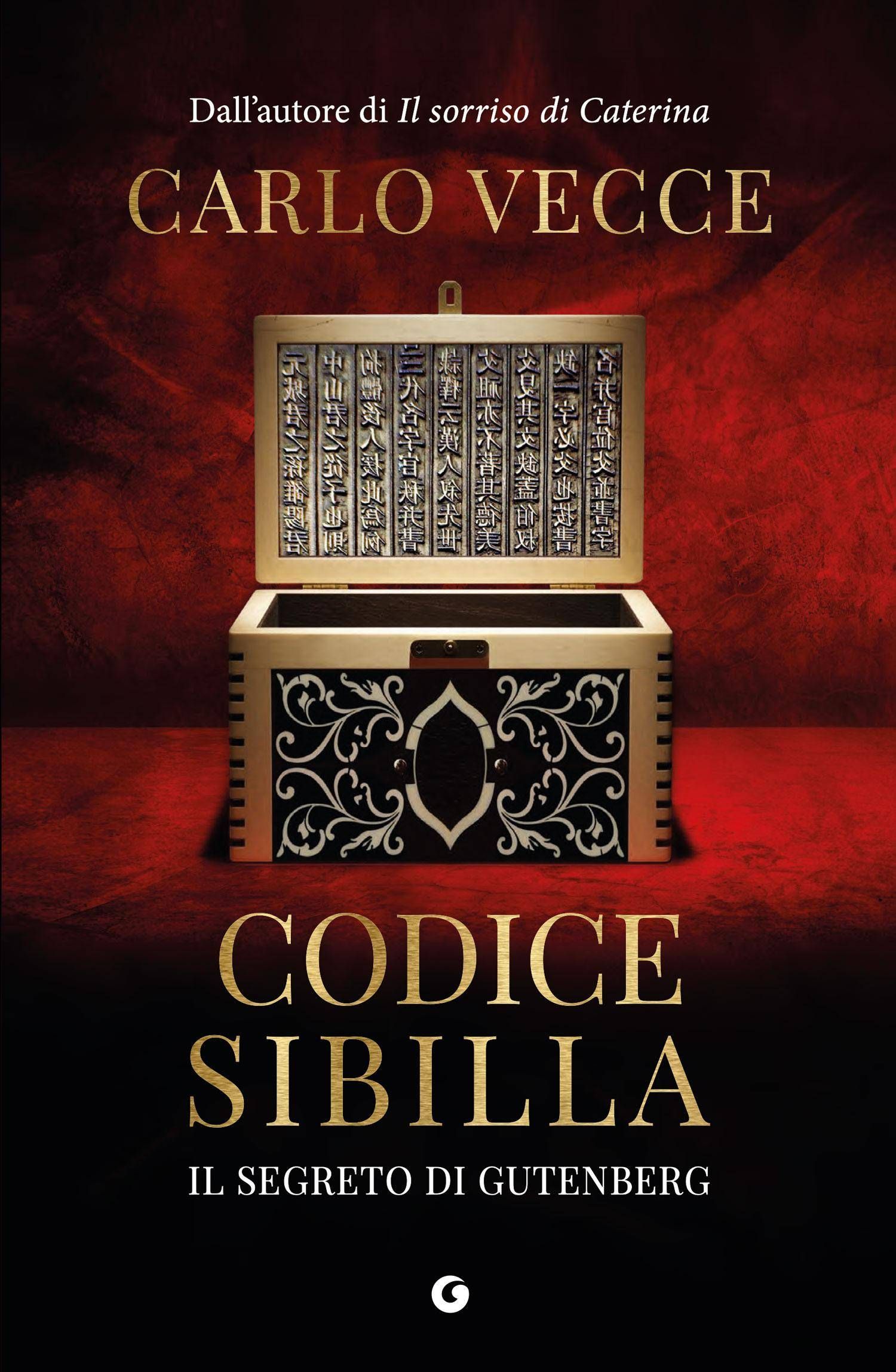
After the worldwide success of “Caterina’s smile”, Carlo Vecce returns to the historical novel with “Codice Sibilla. Gutenberg’s secret” (Giunti Editore), in bookstores from Wednesday 29 October.
Professor of Italian Literature at the Orientale in Naples and one of the world’s leading scholars of the life and works of Leonardo da Vinci, in 2023 Professor Vecce revealed to the world in a novel the true origin of Leonardo’s mother. From the State Archives of Florence, Vecce brought to light an autograph document by Ser Piero Da Vinci, the act of liberation of Caterina, a Circassian slave, Leonardo’s mother. A discovery that went around the world making “Caterina’s smile” an international editorial case, translated into 16 languages.
“Codice Sibilla” is now out, the second novel by Carlo Vecce, a historical novel about the advent of the modern world and the civilization that made the book its milestone. In the center Johannes Gutenberg, considered the inventor of movable type printing.
But the inspiration for this story comes from afar, as the author states: “This story was born almost by itself, many years ago. I, then a university student passionate about ancient books and libraries, was already part of it without knowing it. It is the story of a great love: the love for the book, this fragile object still has the ability, and the magic, to communicate to us the words and emotions of other human beings”.
“Codice Sibilla” takes us into the heart of “that extraordinary and contradictory moment of transition that we call the Renaissance, where for better or for worse, in light and shadow, are the origins of modernity”. Germany, 1438. The novel follows the events of two orphaned twins, a hunter of ancient manuscripts and a ferocious inquisitor friar. And so the irruption of History intertwines their stories with those of a fallen nobleman, a certain Johann Gensefleisch zur Laden, whom everyone calls Gutenberg, who fantasizes about changing the world with his “artificial writing”: a machine for multiplying the books, words, thoughts, stories of humanity. A miracle, a gift from God, perhaps. But also the beginning of the battle against those who see the invention as nothing other than the perverse work of the devil.
But “Codice Sibilla” is not just a work of narrative fiction. As with Caterina’s smile, Professor Vecce chooses the form of the novel to bring little-known truths to the general public, which deviate from the commonly handed down canon. “The invention of printing is one of the great myths of the so-called Western civilization. But who really invented it? Not Gutenberg in Europe around 1450, but an obscure Buddhist monk in Korea in the 14th century. And what was the first book printed by Gutenberg? Not the monumental Bible but a booklet of a few sheets, enigmatic and even a little heretical, the Book of the Sibyl, a mysterious prophecy on end of the world”, explains Vecce.
An enthralling, at times visionary, story that highlights the passions and fears that stir in the hearts of men on the threshold of a fatal technological turning point. Professor Vecce always explains: “Few other innovations have changed the course of humanity like movable type printing. Those who saw it for the first time called it ‘artificial writing’. And they were afraid of it, because they immediately understood that it was an open door onto a new and absolutely unknown world. Like us, today, faced with artificial intelligence. With the advent of the digital age and artificial intelligence, the Gutenberg Galaxy is finished. The long period of the Renaissance is over. What new galaxy awaits us? And will he still need us humans?”
For Giunti, Carlo Vecce published, with Carlo Pedretti, “Il Libro di Pittura” (1995) and “Il Codice Arundel” (1998), and numerous other volumes, up to the recent “La biblioteca di Leonardo” (2021) and “Leonardo, la vita” (2024). The novel “The smile of Caterina” (Giunti, 2023), where he brought together his discoveries about Leonardo’s mother, was an international bestseller. (by Paolo Martini)