Despite setting a record of 1.2 million VND per kg, Vietnamese coffee is still far away from the world’s level of 30,000 USD, due to differences in varieties, altitude of growing areas and market prejudice.
In October, a cafe in Dubai paid $600,000 for 20 kg of Nido 7 Geisha coffee beans (about $30,000 per kg) at an auction in Panama.
In Vietnam, the August 2024 auction recorded a record of 1.2 million VND per kg (about 45 USD) for an Arabica lot from Huong Hoa, Quang Tri. At the same session, a batch of Fine Robusta (high quality Robusta) reached a price of 720,000 VND per kg (27 USD).
This difference of thousands of times, according to experts, comes from two groups of factors: internal (rare or popular flavors) and external (market awareness).
Mr. Tu Vu, a Q Grader (coffee evaluation expert) recognized by the Coffee Quality Institute (CQI), said that the taste of Vietnamese Arabica is mostly at a “moderate” level. According to CQI’s scale, the best beans only reach 85-86 points, while coffee around the world can exceed the 90 point mark.
“The growing area is a big deciding factor,” Mr. Tu said. In Vietnam, the highest coffee growing area is about 1,400 – 1,500 m. Meanwhile, in famous countries like Ethiopia, altitudes above 2,000 m help plants accumulate nutrients, creating a more complex flavor.
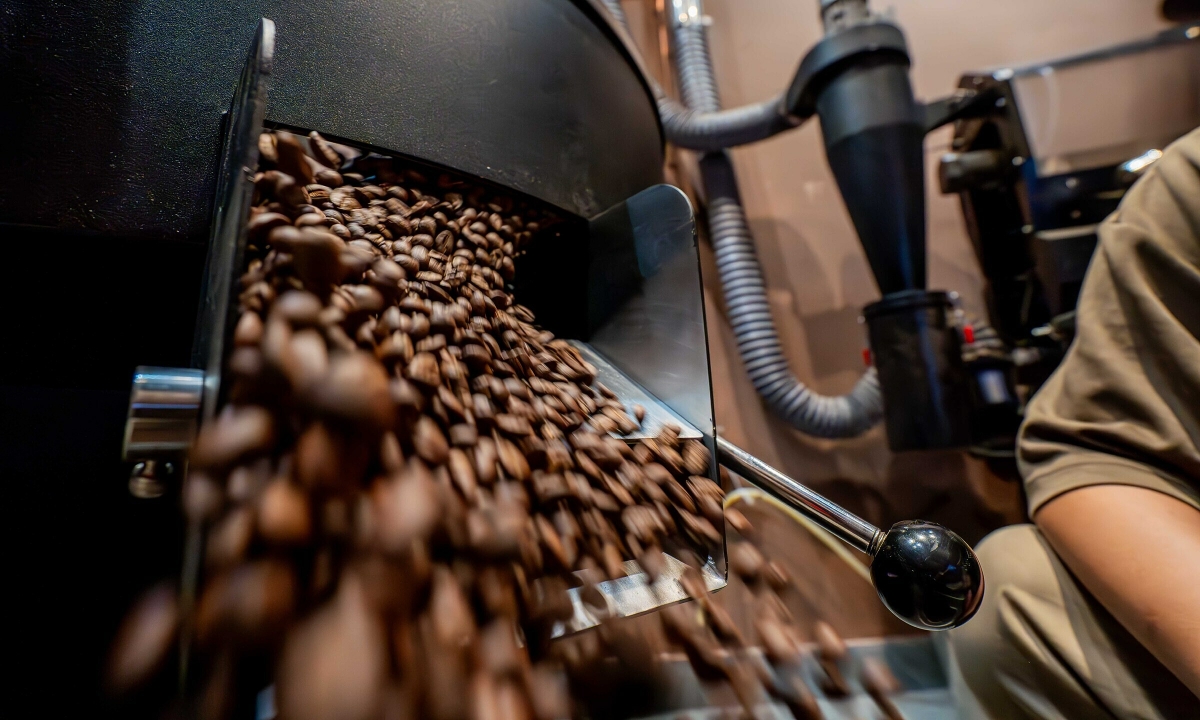
Inside the specialty coffee roasting factory in Hanoi. Image: Hoang Giang
Vietnam is the world’s largest robusta exporter, but the type of bean that made this name is subject to market “prejudice” about quality.
“Robusta has only received attention in recent years, but in the past it was considered a cheap type, imported only to get caffeine to produce medicine or energy drinks,” Mr. Tu said.
Currently, suppliers are trying to introduce Fine Robusta, a type of grain that is strictly selected, achieving 80/100 CQI points or higher. Thanks to changing growing and processing methods, some special types of Vietnamese Robusta have floral, herbal or spice flavors, instead of just the traditional bitter, astringent taste.
The CQI score for Robusta, officially known as Fine Robusta Standards and Protocols, was first announced by CQI in 2010, after many years of research and testing in collaboration with international experts and producers in Africa, Asia and Latin America. The scoring system applies a 100-point scale similar to Arabica but adjusts sensory criteria to suit Robusta characteristics, for example focusing on cleanliness, body, and aftertaste, instead of acidity.
However, even with its own scoring system, Fine Robusta still does not have a high position in the eyes of the coffee world. Mr. Tu said the simple reason is that the scoring system was originally created by Westerners. Therefore, their taste determines high or low scores, leading to high prices when selling.
“Even if our Fine Robusta is delicious, they still have prejudices about the taste. This coffee game works like that,” he shared.
Expert Raoul mixes pour over with a Vietnamese filter. Image: NVCC
However, Vietnamese coffee, especially Fine Robusta, is winning the hearts of many international experts and has become a unique travel experience.
Mr. Raoul de Peralta, Q Grader from the Philippines, said that every month his roastery imports green coffee beans (unroasted) from Da Lat and Son La. He assessed Vietnamese coffee as a “stable choice for making Espresso” because of its chocolate flavor and mild acidity, suitable for customers.
The Philippine expert said he had tasted impressive coffee samples from Vietnam, such as a sample treated with sea salt water that gave “a sweet taste like milk chocolate and cherry jam flavor”, or another sample with a “pleasant berry and honey flavor”.
According to Mr. Raoul, the biggest barrier for Vietnamese coffee is “lack of education and communication activities”, causing many people to still think this is a bean “only suitable for blending”. He suggested that marketing through international micro-roasters could help spread the story of Vietnamese specialty coffee.
This perspective coincides with Mr. Tu Vu’s observation. He said that the best-selling dish at his cafe is Fine Robusta mixed with filter.
“Vietnam Robusta brings new experiences, exciting foreign tourists. Besides learning, we also need to make a difference,” Mr. Tu emphasized.
Specialty coffee roasting workshop. Image: Hoang Giang
History explains the current position of Vietnamese coffee. The French brought Arabica in the 1850s. But due to difficulty in adapting, Robusta was gradually introduced (since 1910) and dominated because of priority in export output.
“Of course, we benefit from that, but today, many farms have converted to focusing on quality,” Mr. Tu said.
According to him, coffee growing takes 8-10 years to evaluate the results, but he believes that in the next 3-5 years, the Vietnamese coffee world can see initial results from applying new technology and varieties.
However, a new challenge appears. In April, SCA (World Specialty Coffee Association) and CQI announced an agreement that the operating role of the “Q Grader” program, which has been managed by CQI for more than 20 years, will be transferred to SCA. From October 1, SCA will officially deploy the “improved Q Grader” version, based on a new assessment framework called Coffee Value Assessment (CVA) developed by them.
Mr. Tu Vu believes that this merger has the potential to hinder the development of Fine Robusta. The Fine Robusta grading scale was accepted after many years of efforts by experts from coffee exporting countries – like Vietnam – and has now been replaced. With the existing prejudice of the coffee importer group, Mr. Tu thinks that in the long run it will affect the valuation of Fine Robusta.
While waiting for world recognition, experts say that Vietnam needs to focus on internal values. Mr. Raoul emphasized the potential of Fine Robusta if invested in the right direction, especially in roasting techniques.
“Roasting Robusta is very different from Arabica. If the roaster is not skilled, excellent coffee beans can still be ‘misjudged’. Vietnam needs in-depth training in this technique to properly exploit the potential of coffee beans,” Mr. Raoul concluded.