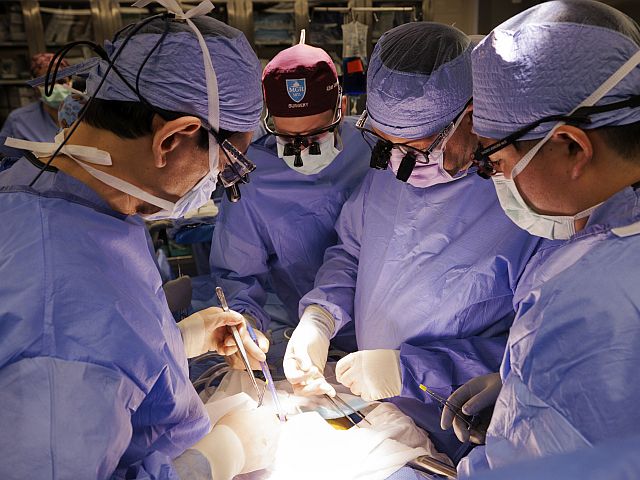
Researchers have found and removed a barrier that prevented successful xenotransplantation, in which an animal’s kidney is transplanted into a person. To further understand the immune mechanisms that cause xenograft rejection, scientists from NYU Langone Health conducted a study in which a genetically modified pig kidney was transplanted into a brain-dead but cardiac patient on a ventilator. This man’s body was donated for scientific research by his family. For 61 days after surgery, the team regularly collected samples of tissue, blood and other body fluids, which was impossible to do with primates or living patients without risking their health. This allowed them to uniquely observe how the body’s immune cells interact when it accepts a pig organ and when the process of rejecting it begins.
In the first of two reports published in the journal Nature, the study authors mapped the immune activity of human and pig kidneys after transplantation. They found that organ rejection occurs due to antibodies—immune proteins that “tag” foreign substances for destruction—and T cells that recognize and destroy these invaders. Once scientists identified this mechanism, they were able to successfully prevent rejection for the first time by using a combination of FDA-approved drugs that suppress antibody and T-cell activity. After this, there were no signs of permanent damage or deterioration in kidney function.
A second report in Nature describes the immune activity in more detail. The research team conducted a multi-omics analysis that combines data on gene function, activity, proteins and other indicators to create a comprehensive understanding of the complex mechanisms of the immune system. By analyzing the expression of about 5,100 human and porcine genes in a pig kidney xenograft, the scientists identified all types of immune cells in the tissue, tracked the behavior of the immune system for two months and observed the process of organ rejection in real time.
The analysis showed three main immune responses to the pork kidney: on the 21st day after surgery (DPO) – activation of the part of the human immune system that reacts to foreign agents in general (innate immunity), and not to a specific “enemy”; on the 33rd day of DPO – the activity of a certain population of human leukocytes (macrophages), which absorb foreign agents; and on day 45 of DPO, it is primarily a human T cell response.