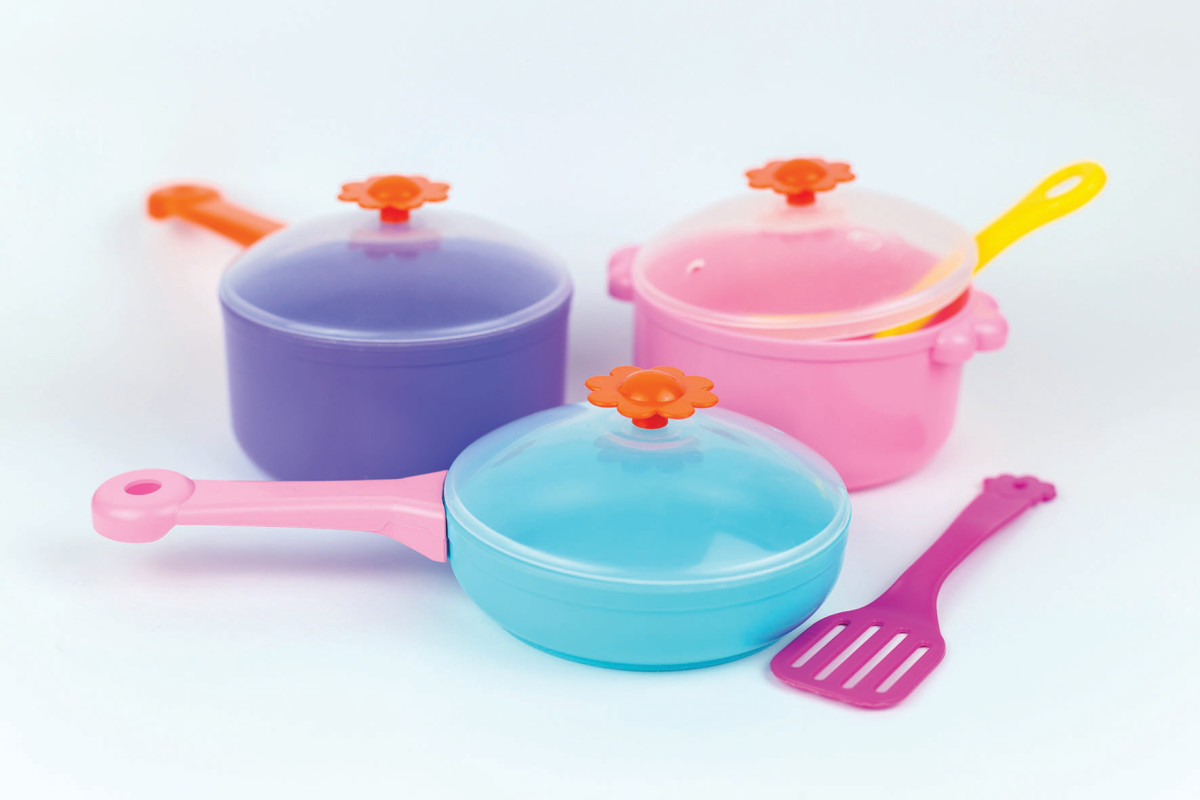
If you think a toy kitchen is just another cute feature in the corner of the living room, think again. It turns out that this game affects the children’s eating habits much more than what happens in a real family meal. And this effect is not theoretical at all.
Look at them: standing on tiptoe, vigorously “cutting” plastic vegetables, serving a small plate and asking in all seriousness: “Is it tasty?”. This picture is not only a nice sight, but also a window to a deep learning world. And this scene, it turns out, is also backed by research. More and more studies are finding that pretend cooking games, even without real vegetables or pots on the stove, influence the way children relate to food. You don’t need real food to learn about food.
In recent years, we have seen in the homes of young parents, in the center of the living room or in its corner, an elaborate toy kitchen: with small pots, a stove, a microwave, a mixer, an oven, sometimes even a coffee machine. If in the past such toys were mainly in kindergartens, today they are sold in every toy chain and simulate a small culinary world where the child is the main chef, who “prepares” a meal for “guests”, and his smile says it all: I am in control. I decide. I know how to cook.
But beyond the studies, there is also something deeper emotional here. Playing cooking is not only an imitation of the greats, but also an emotional and cognitive learning space. When the child “cooks soup”, serves it to the guests, and mentions that it is necessary to “make pho because it is hot”, he practices choice, patience and inner attention. He learns to pay attention to what is happening to him: if “the plate is too full”, if “he wants another dish”, and if he wants to share or choose alone. This is learning that is done not through a lecture, but through a game.
There is another surprising aspect, which is that kitchen toys can encourage self-regulation around food. In an approach known as “responsive feeding”, which is recommended by the World Health Organization and the CDC (Centers for Disease Control and Prevention) in the United States, the parent allows the child to choose when and how much to eat, while listening to hunger and satiety signals.
In the toy kitchen, the child practices exactly this: he “decides” how much to serve, when to taste, and how it feels to be on the side that prepares and not just on the side that eats. “Wow, it smells great, can we taste it?” says a parent who cooperates in the game and turns the situation into a small lesson of curiosity, confidence and joy around food.
Studies done in the United States have found that imitating parents’ behavior, such as joining in a cooking game or responding positively to “foods” served by the child, encourages children to show greater interest in new foods, including vegetables.
Plastic ice cream and real vegetables
Here comes the less talked about part. Along with the charming kitchenettes, ice cream stands, barbecues and coffee machines for toddlers are also sold today. They are colorful and fun, but it is worth noting that such toys also affect the way children imagine “food”.
A 2022 World Health Organization report found that frequent exposure to images of sweet foods influences future preferences. You should enjoy the game, but also make the right choice. To get the best out of the game, the choice of kitchen toys is meaningful.
How to choose kitchen toys that encourage good eating habits:
Ultimately, the sight of children “cooking” with tiny pots is an invitation to a whole world of learning. Not of recipes, but of attitude – how we approach food, how we talk about it, and how we feel, when it’s part of the game.
Play kitchens are not only a decoration in the living room, but also a social, emotional and nutritional space where the child experiences choice and expression. The more the experience remains positive and is based on sharing and choice, the greater the chances that the child will develop into a person who enjoys eating and knows how to listen to himself correctly. Sometimes the change begins not only in the family meal, but also in the small kitchenette waiting in the living room.