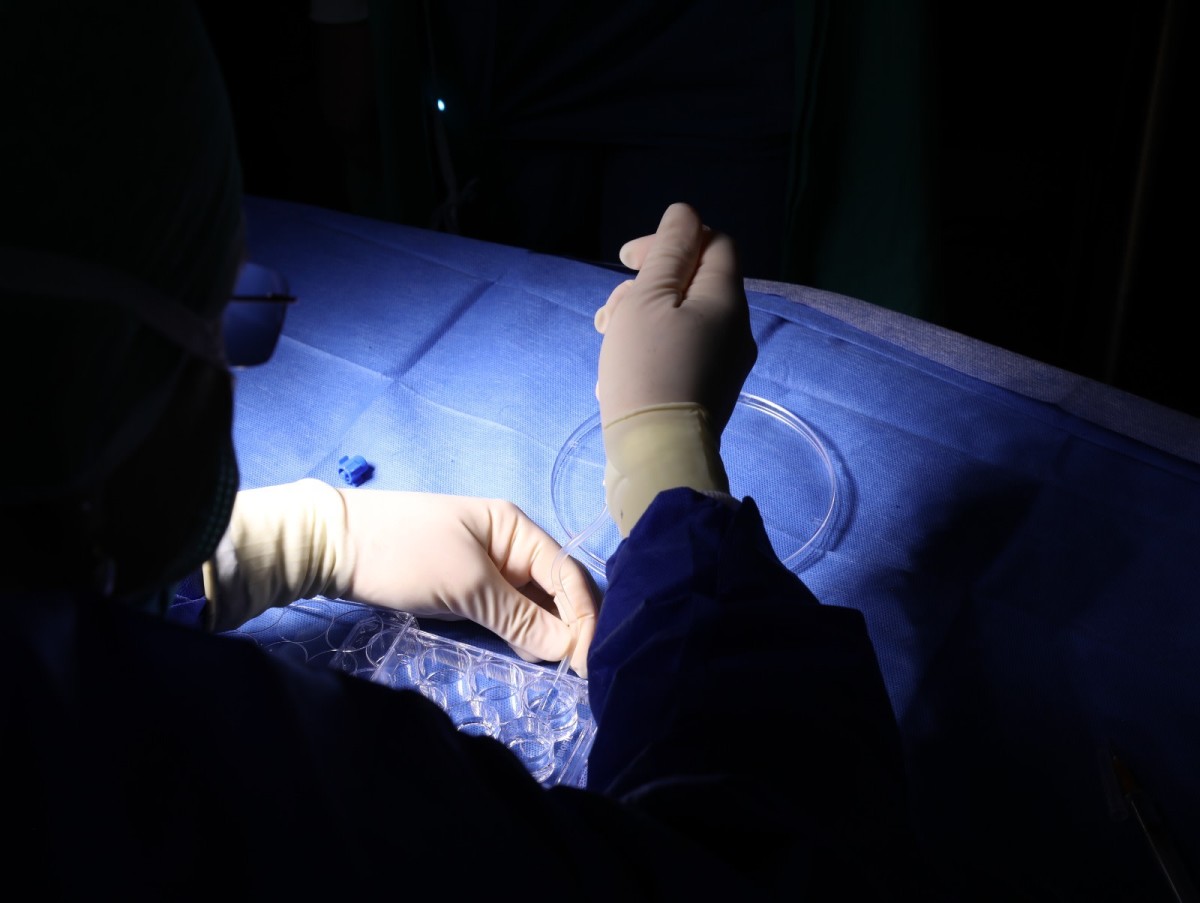
The Perseus Bio company from Modi’in and the Rambam Medical Center announced that this is the first time that advanced printing of corneal tissue from human cells has been tested in a clinical trial on humans. The transplanted cornea was created through a biological printing process based on the combination of biological materials and human cells, until a tissue with properties similar to a natural cornea is obtained. The operation was performed on a woman in her seventies who suffered from blindness in one eye due to a corneal disease. According to the medical team, The procedure was successful and the vision in the transplanted eye has already started to improve.
According to the company, the new technology has several notable advantages over natural implants and over synthetic implants. The printed cornea is free from contamination, undergoes extensive quality tests in the laboratory, and the cell density is higher than usual. The combination between human cells and a controlled production process allows the creation of an implant with predictable mechanical properties, which gives doctors ease of implantation and increases the chance of good optical results over time.
A solution to a global shortage: one cornea can enable the production of hundreds of implants
Over 13 million people worldwide are waiting for a corneal transplant due to a severe shortage of tissue donations. Precious-Bio’s technology is expected to provide an answer to this dire global need, and enable the mass production of standard corneas. The ability to create hundreds of implants from a single donor cornea may once and for all solve the problem of the lack of corneas for transplantation.