Register|The reason for the boycott of the publishing houses is the political views of merchant Juha Kärkkäinen.
The summary is made by artificial intelligence and checked by a human.
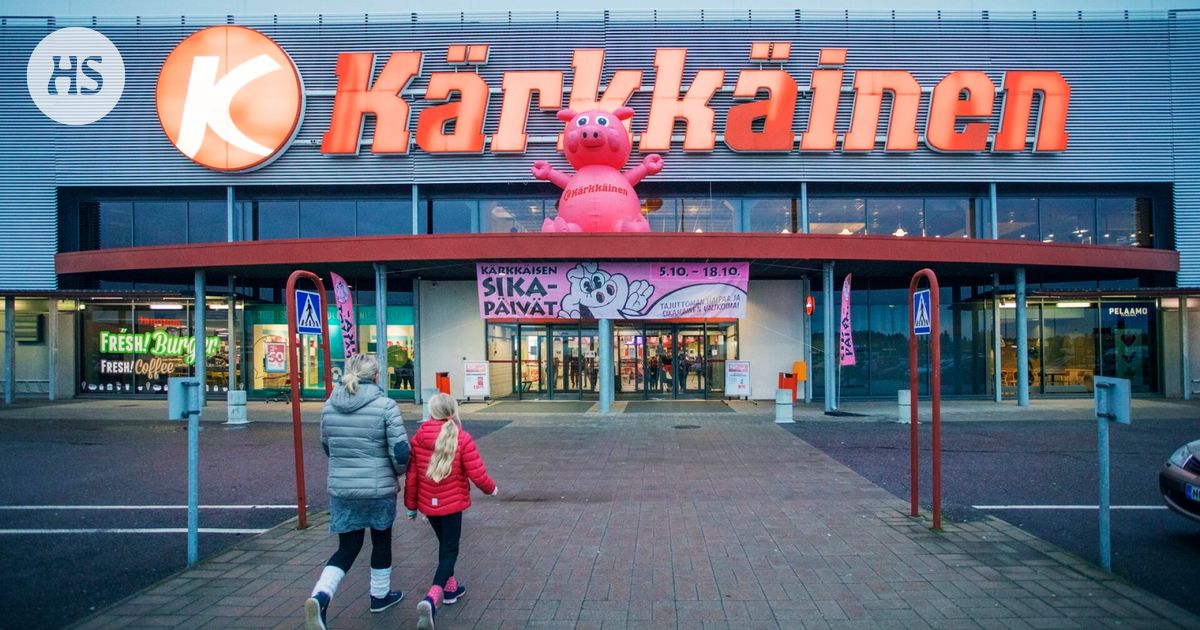
Kärkkäinen’s department stores sell books that publishers such as WSOY and Otava have not wanted to deliver there.
The publishers stopped cooperating with Kärkkäinen because the shopkeeper Juha Kärkkäinen has been convicted of inciting against a people’s group and has connections with neo-Nazi groups.
The books have ended up in Kärkkäinen through the mutual trading of the bookstore field, although the logistics service provider Storia does not deliver them there.
Finns writers wonder how Kärkkäinen’s department stores can sell their books, even though the publishers have refused to deliver them there.
The topic was brought up by a journalist and a writer Markus Leikola in public in his Facebook update. Leikola had noticed that his book is also on sale in Kärkkäinen, even though the book’s publisher WSOY has stopped cooperation with Kärkkäinen department stores years ago.
The reason for the boycott is the merchant Juha Kärkkäinen in political views. Kärkkäinen has been convicted of incitement against a national group, and he has had connections to neo-Nazi groups.
Juha Kärkkäinen still serves as the chairman of the board of Kärkkäinen oy.
Among the major publishing houses, in addition to WSOY, Otava has also refused to deliver its books to Kärkkäinen for sale. Despite this, the Kärkkäinen online store has plenty of productions from both publishing houses.
For publishing houses it is said that Storia, which offers logistics services, follows the line defined by publishing houses regarding the resale of books.
CEO of Storia Jaakko Haapakangas says that Storia does not deliver Otava’s and WSOY’s books for Kärkkäinen to sell, but that they ended up there through some other means. Storia has a hundred or so publishers as logistics customers, and it acquires books from more than 2,000 publishers every year on order from libraries and retailers.
“This is mutual trading in the bookstore field,” says Haapakangas.
Kärkkäinen’s selections have included books by Otava, WSOY and Tamme, which is part of the WSOY group, even though the publishers have refused to sell them there.
For some it has come as a surprise to the authors that their works are being sold in Kärkkäinen, even though the publisher has no longer delivered them there.
Kärkkäinen’s selections include, among other things Elina Hirvonen a biography written and published last year by Johnny Kniga of the WSOY Group Katri Helena – singer.
Hirvonen says he discussed the matter with the publisher for the first time when the information about Juha Kärkkäinen’s sentence and neo-Nazi connections became public. At that time, WSOY decided to end cooperation with Kärkkäinen.
“I hadn’t noticed now that the book is on sale there,” says Hirvonen.
In his opinion, the issue is not only about writers, because in the current world situation, everyone has to be vigilant.
“More generally, it’s about how a democratic society reacts to activities that try to undermine the core of democracy.”