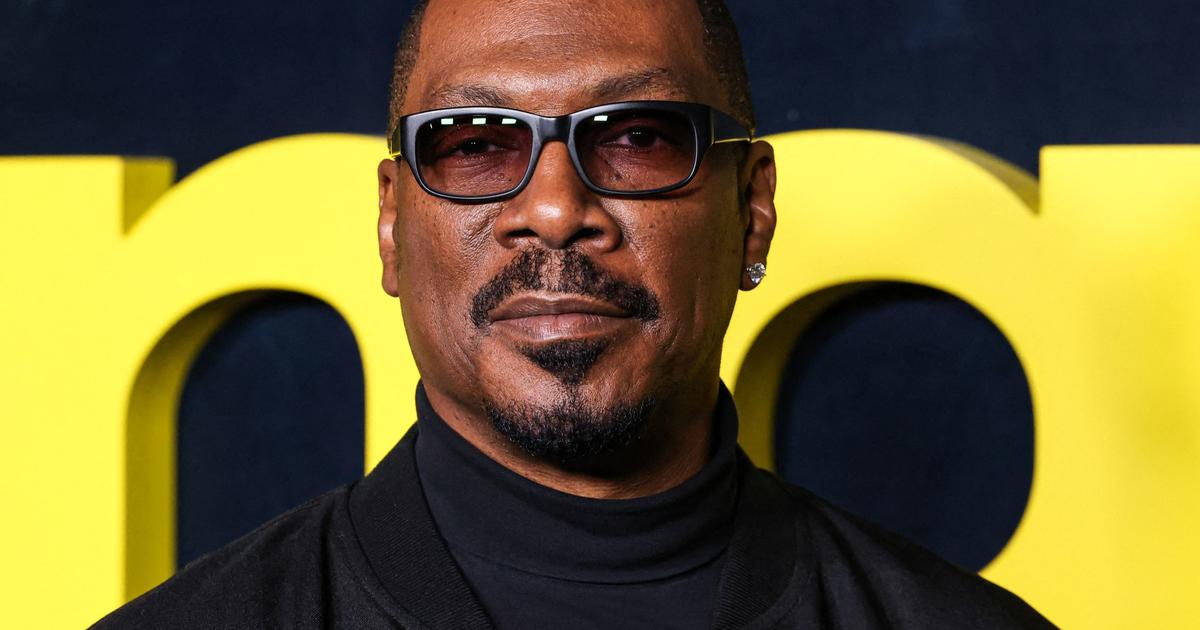
As part of the promotion of a documentary on Netflix, the actor star ofA Prince in New York expressed his views on the effects of political correctness on humor.
In 1976, at the age of 15, Eddie Murphy took his very first steps on stage, offering imitations of stars of the time. Fifty years later, the American has the right to a biographical documentary on Netflix entitled Being Eddie. His first name alone is enough to identify him. These five decades of career have allowed the star of Flic de Beverly Hills (1984) to observe the evolution of the humor landscape.
The Hollywood Reporter wanted to know his opinion on the consequences, in the world of stand-up, of cancel culture. The expression designates the banning of people, ideas or representations because of their content or remarks, deemed shocking by certain ideological communities.
Also read
Is “cancel culture” creating a generation of ignorant people?
Skip the ad
An irreverent youth
“I don’t know any comedian who has been “canceled” for a joke. I have the impression that this whole cancel culture thing was just a passing phenomenon, a moment where people said to themselves: “Comedians need to be careful about what they say”. » For the actor, the phenomenon is more akin to a passing fashion than to an upheaval in popular culture. Moreover, it would be more to be sought from the side of the spectators than from the comedians.
Eddie Murphy, who is currently working on the next installment of Shrek and a spin-off film devoted to the character of Donkey, takes as proof the freedom that would shake up the world of stand-up. “Today, in clubs, comedians are crazier than ever. They say absolutely whatever comes to mind. A generation is arriving, outraged by this cancel culture: “We don’t care about this cancel culture. Come what may”. »
Also read
Pinned by his colleagues, Louis C. K. justifies his presence at a humor festival in Saudi Arabia
If they do not abandon the terrain of irreverence, several English-speaking or French-speaking comedians do however express regrets for jokes made in the past. This is the case, in France, of Laurent Baffie, who recognized that some of his interventions amounted to sexism. Eddie Murphy himself assured that he was ” embarrassed ” by rediscovering his jokes about homosexuality in Rawin 1987. A show which, at the time, was a huge success.