Filmmaker Ronan Day-Lewis is a closeted landscape painter with a penchant for the surreal. The latter is particularly evident in the 27-year-old’s pictures, many of which depict exaggerated everyday situations, particularly through the erratic presence of curved light beings and a cool, distant aesthetic in the style of night vision photographs.
In his directorial debut, Ronan Day-Lewis has to deal with a completely different force of nature. Father Daniel actually said goodbye to cinema seven years ago – after his third Oscar and at the height of his career with director Paul Thomas Anderson. His “comeback” is, of course, the main attraction of Ronan’s first directorial effort, “Anemone,” which, fittingly, also tells a traumatic story of fathers and sons.
You don’t have to be a fan of the mannerisms of actor Daniel Day-Lewis, whose sinewy acting always hints at a biblical elemental force. Judging by “Anemone”, the impression that this kind of theatrical masculinity, between eloquent hubris and repressed devotion, is a little out of date today cannot be completely refuted.
PT Anderson played a subtle game with this authoritarian self-righteousness, which surrounds many of Day-Lewis’ roles like an aura, in his last film to date, “The Silk Thread”. For son Ronan, this robust profile now serves as a rock in the surf of a highly ambitious change from the visual arts to directing.
The repressed traumas of the Northern Ireland conflict
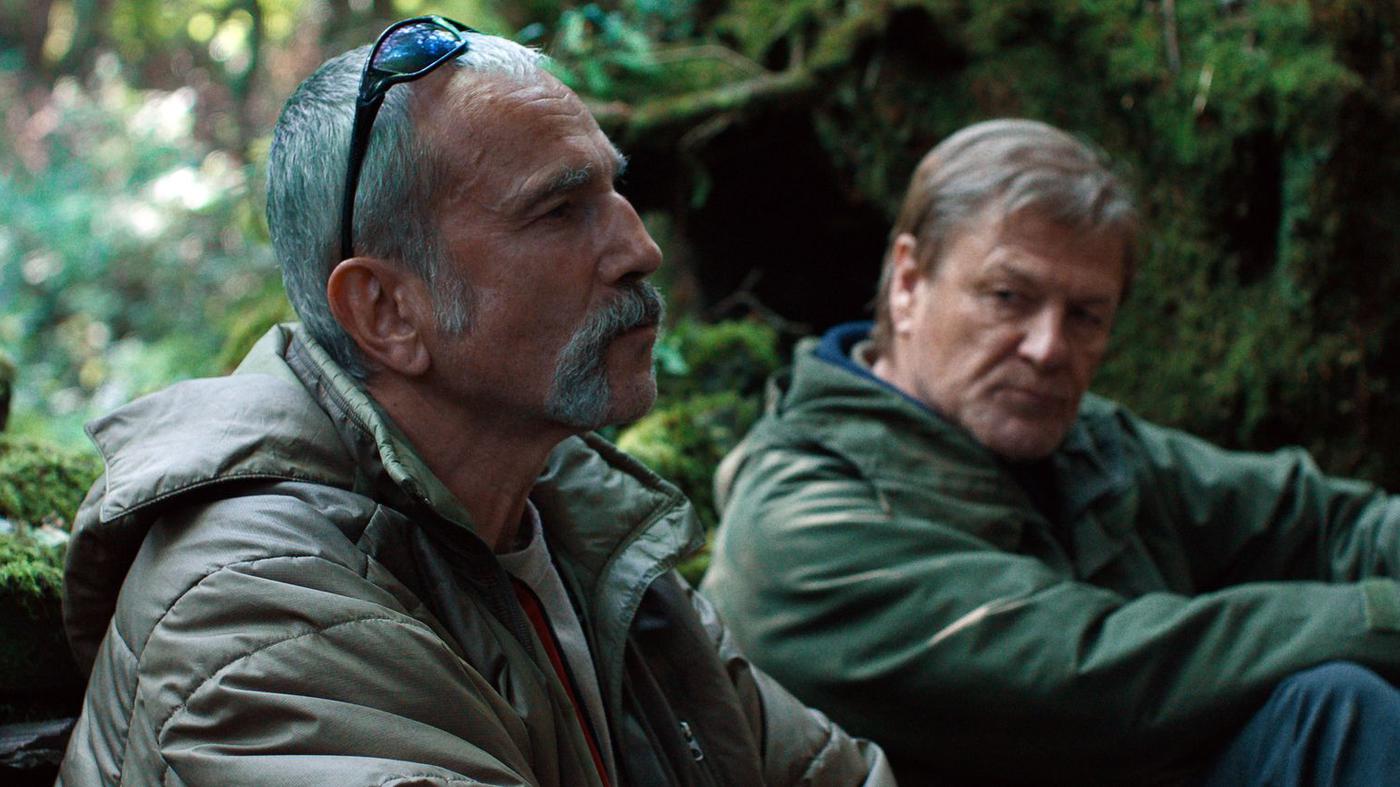
The archaic nature of the father-son conflict finds its counterpart in the Irish forests, into which Ray Stokes (Day-Lewis) has retreated with soldierly discipline. Right at the beginning, “Anemone” films this taciturn man from the rear while chopping wood. Ray lives isolated from civilization for 20 years; he is so at one with nature that his instinct senses every change around him.
Suddenly – Ray calmly puts the ax aside and starts making tea – his brother Jem (Sean Bean) appears in the door, who has been looking after Nessa (Samantha Morton) and the now 20-year-old Brian (Samuel Bottomley) in the absence of their husband and father.
I agree that the external content can be displayed to me. This means that personal data can be transmitted to third-party platforms. You can find more information about this in the data protection settings. You can find these at the bottom of our page in the footer, so you can manage or revoke your settings at any time.
“Anemone” is a film of few words and brooding virility. Brian learned this lesson from his absent father. Mother Nessa talks against walls with growing desperation. Now it’s time for Jem, the other male role model in the film.
He (literally) follows his brother’s location coordinates – both were stationed as British soldiers in Northern Ireland – to convince Ray that only he can lead his son back to the right path.
The boy has brutally beaten a comrade and is now cowering apathetically on his bed. He is threatened with a trial before a military court, a story that Ray, who was convicted as a “war criminal,” has long had behind him.
The family traumas run deep in “Anemone,” all the way back to the Northern Ireland conflict (also a war between brothers), which left its mark on Ray’s soul. The anger and pain in Day-Lewis’ volatile acting wraps the story tightly until none of the characters – and the film – are left with room to breathe.
Father and son wrote the script together, but the film undoubtedly gains its qualities not from its script, but from its direction and performance. Ronan films the forests as a cloud-shrouded, mythical primeval landscape, from the air and the perspective of the mossy underground through which the brothers stalk while bonding on the hunt.
© Focus Features
The Irish national color has, probably not entirely by chance, a juicy saturation in the images by cameraman Ben Fordesman (most recently “Love Lies Bleeding”). Each image is symbolically charged; at some point Ronan’s being of light stands in the darkness at a watering hole.
This hypertrophic visuality – a nightly planned sequence leads past an illuminated fair and straight into the next pub – contrasts with the ascetic acting of Daniel Day-Lewis, who, after years of absence, is taking another master class in method acting.
The desire to make one’s own father proud is clearly evident in the production. There are a few scenes that could later make it into the top ten of his career.
For example, Day-Lewis and Bean pogo in the lonely wooden hut while the camera slowly retreats into the night. Particularly memorable is a long monologue in which Ray tells his brother in detail how, as a grown man in an RAF uniform, he emptied his bowels over the face of a Catholic priest who had sexually abused him as an altar boy.
It’s an incredibly piggy text that Day-Lewis recites with a sardonic grin. “Do you believe my story?” Ray asks Jem at the end. But it doesn’t really matter. When Daniel Day-Lewis is in front of the camera, he still creates his own truths.