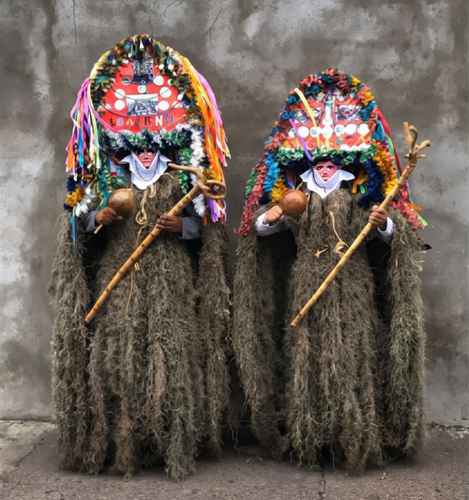
Texcoco, Méx., The Autonomous University Chapingo (UACh) presented the Ethnobotanical and cultural study of the Dance of the Paixtles in Mexico, in which he warns that said dance could be affected by the excessive extraction of hay.
The study, directed by researcher Edna Fabiola Valdez Hernández, analyzes the origin and meaning of this ritual dance, its composition, clothing and ecological impact, revealing that the continuity of the tradition in the country’s communities depends on a plant species on the limit, today threatened by intensive extractive practices.
Valdez Hernández explained that hay, “paixtle” or old man’s beard (Tillandsia usneoides), It is an aerial plant belonging to the bromeliad family that is a perennial resource with slow development: only one centimeter per year.
He pointed out that his collection for the making of the main outfit in the Danza de los Paixtles is carried out without sustainability criteria and culminates in costumes that weigh up to 20 kilograms; Furthermore, the plant extraction technique is usually aggressive.
He noted that each suit is a living representation of the forest and its inhabitants. “The costume includes a sack covered with paixtle to which are hung figures of animals that take refuge in the trunks of the trees. The dancers cover their necks with scarves, wear masks with images of animals or guardian spirits of the mountain, wear blanket pants; in addition, at the height of the torso there is a blue band that symbolizes the sky and a red or pink sash that represents earthly life is tied around the waist.”
Renewal rite
This cultural and religious manifestation was originally a rite of renewal for the winter solstice, but after the Conquest it merged with the celebration of the birth of the Child Jesus, taking place on December 25, the first and the 6th of January.
The researchers detailed that in San Andrés Ixtlán, Jalisco, the hay on the clothing is associated with the concealment of the indigenous people from the conquerors. In Puebla, the dance is dedicated to Mother Earth and old trees, and is celebrated around the celebration of San Mateo Apóstol and other patron saint festivals.
The UACh study, which was supported by students Sarai Ávila Cruz and Sara Elizabeth Chávez Covarrubias, highlights that although the Dance of the Paixtles participates as an important element in the conservation of traditions related to fertility, care of the forest and brotherhood with nature, the environmental problem is aggravated because the hay is not cultivated, it is only extracted, which means that all its supply comes from wild populations.
Valdez Hernández specified that hay collection is usually done during the reproductive stages of flowering and fruiting, which reduces the possibility of plants producing new individuals and compromises the ecological stability of the forest.
He added that as there are several groups of dancers active, the gatherers are forced to go deeper and deeper into the forest to find hay, which indicates that its nearby availability is beginning to decrease.
“For this reason, it is crucial to develop conservation strategies that allow the cultural continuity of the dance, while ensuring the preservation of the native flora.”
The specialists propose moving towards the controlled and legal cultivation of hay in a greenhouse and, through research that began in 2022 in the Department of Phytotechnics of the UACh, they have addressed the analysis of this bromeliad that focuses on its irrigation, shading, disinfestation treatments for adult plant explants and fertilization.