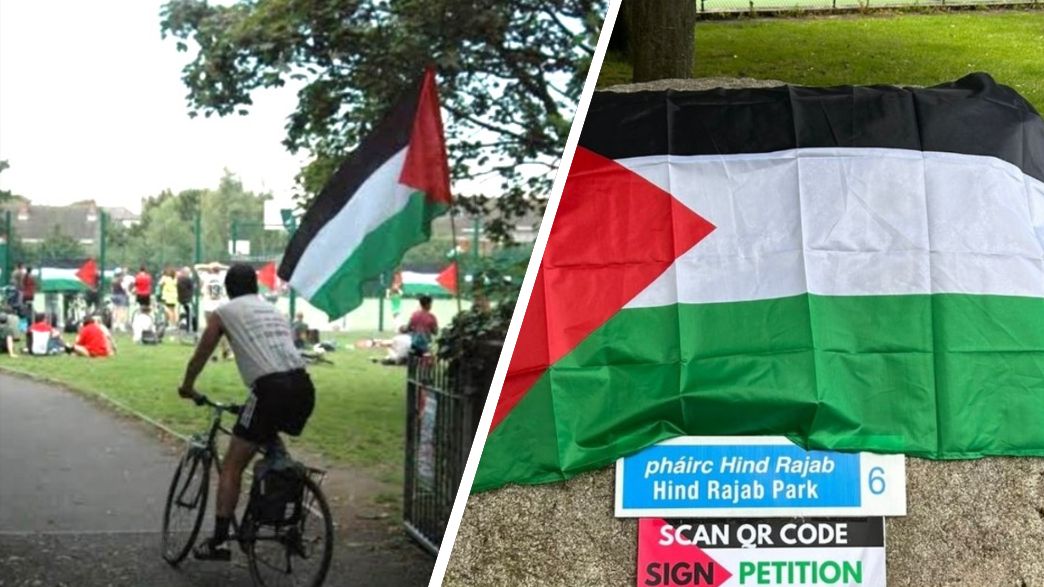
What started as a local dispute over the name of a small park in south Dublin turned into a heated public debate at the national and international level last weekend. The proposal to remove the name of Haim Herzog, the 6th president of Israel who was born in Northern Ireland, provoked strong reactions from all ends of the political and social spectrum, including the intervention of the Irish Minister of Foreign Affairs, the Tanaiste (Deputy Prime Minister of Ireland), and the President of the State of Israel.
In fact, the real news in the story is not the proposal itself, which was already raised months ago, but the significant escalation in the public discourse, which created an arena of conflict between local authorities, the Irish government, the local Jewish community and the international relationship with Israel.
Government intervention and presentation of harsh positions
The Irish Minister of Foreign Affairs, Helen McKinty, called on the city council to reject the move, noting that Haim Herzog is “an important figure for many, and especially for members of the Jewish community in Ireland.” According to her, “the government’s justified criticism of Israel’s policy in Gaza and the West Bank is not related to the removal of the name of an Irish-Jewish person from the public sphere”, and clarified that the move is not in line with the principles of inclusion of the Irish Republic.
The Tanner, Simon Harris, also joined McIntyre’s position and stated that he “absolutely condemns” the move, and that it “damages the core principles of an inclusive Irish society”. At the same time, former Minister of Justice Alan Shetter attacked the proposal in particularly harsh language, calling the move “absolute Nazism” and claiming that it was an attempt to erase Jewish-Irish history. Shetter emphasized the importance of the park to the Jewish community, given its proximity to the only Jewish schools in south Dublin, and warned that the name change could make the area a “hostile and uncomfortable place” for Jewish families.
Naturally, the office of the President of the State of Israel, Yitzhak Herzog, issued a scathing statement calling for the proposed change to be rejected, calling it a “shameful and horrifying move” that harms the legacy of Israel’s sixth president and the historical connection between the Jewish community and Ireland.
This dispute is not a new phenomenon, since the Dublin City Council’s Names and Heritage Committee recommended the removal of the name as early as last July, and the issue is in the process of being fully discussed by the council. However, only in recent weeks has there been a dramatic escalation in the public discourse, when the discussion moved beyond questions of municipal procedure and touched on questions of anti-Semitism, historical memory and the identity of the Jewish community in Ireland.
In addition, a number of petitions from pro-Palestinian groups demanded that the name of the park be changed after Palestinian children killed in clashes with Israel. Some of the petitions call the name “Hind Rajab Park”, and others “Free Palestine Park”, and together they have gathered thousands of signatures. Supporters of the name change claim that Herzog “moved to Israel in the 1930s and joined the Jewish military forces, and in later years served as a general in the Israeli army. Therefore, he does not deserve to be commemorated in the Irish public sphere.”
Public choice under supervision and national expectations
The Dublin City Council vote planned for Monday is expected to take place under extensive public scrutiny, at the same time as pressure from state institutions, political parties, the Jewish community and the international media. According to Dublin City’s naming policy, which has been in place since 2017, any name designated for a public space must meet the criteria of “at least 20 years since the person’s death” or “for a person born a century ago”, whichever is the earlier of the two. The criterion is intended to prevent the commemoration of living figures or of people who have not yet passed 20 years since their death.
The park was named Herzog Park as early as 1995, just two years before Haim Herzog’s death, a fact that, according to the supporters of the move, constitutes a technical and symbolic basis for challenging the legitimacy of the name. On the other hand, opponents of the change, including figures from the political mainstream, the leadership of the Jewish community in Ireland and international parties, claim that the move is an attempt to erase part of Irish-Jewish history, damage the sense of belonging of the Jewish minority in the country and deny public recognition of a figure of historical significance and community importance.