Tesla applies the strategy of sharing components in Model 3 and Y models, learning from Chinese electric vehicle businesses, according to the former president of this car company.
Specializing in electric vehicles Inside EVs December 1 cited the above sharing by businessman John McNeill, former Chairman of Tesla from 2015 to 2018, currently a member of the board of directors of General Motors (GM).
McNeill said Tesla has a “sponge” learning culture, absorbing knowledge endlessly. During his nearly three-year tenure, this car company dismantled Chinese electric cars, learned and applied them to Model 3 and Y – two best-selling cars globally.
According to him, the biggest lesson for them is to share components between car models as much as possible, a strategy that the former Tesla Chairman considered “super smart”.
“Chinese engineers are very disciplined in sharing parts under the hood, where it is difficult for customers to detect,” he said, adding that they save a lot of costs thanks to this tactic.
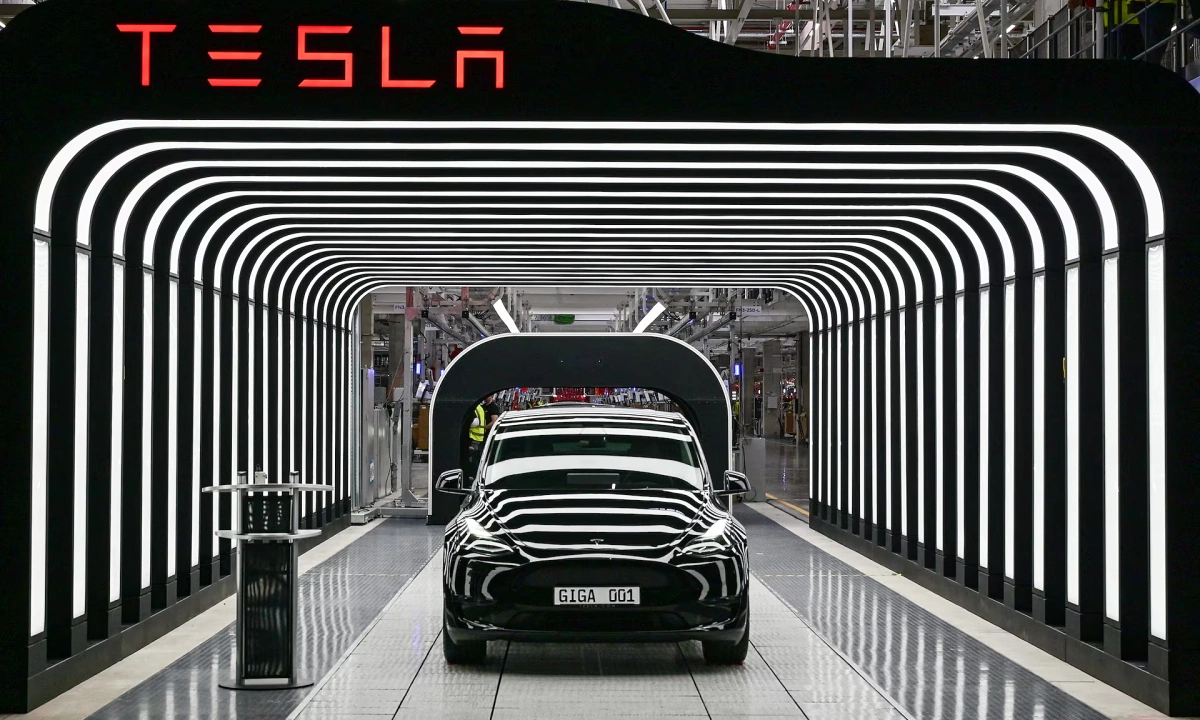
Model Y cars at the opening ceremony of the Tesla Gigafactory in Gruenheide, Germany, March 22, 2022. Image: Reuters
In the automobile manufacturing industry, businesses often test and dismantle other units’ vehicles. That’s also the reason a Xiaomi car was discovered at the Ferrari factory. In the case of Tesla, McNeill did not specify which Chinese car model. However, in his role at GM, he witnessed the dismantling of BYD cars, discovering that Chinese businesses applied the strategy of sharing components to a new level.
If we disassemble these cars, engineers find they use the same wiper motors, heat pumps, and pipes, which do not help improve the user experience.
The strategy of sharing components was once acknowledged by CEO Elon Musk. During the 2020 shareholder meeting, Musk said the Model 3 and Y cars are about 75% similar in terms of platform, powertrain, interior parts and many other components. For example, the front seats are nearly identical, only they are mounted higher on the Model Y.
A Tesla spokesperson did not respond to the former Chairman’s story.
Also according to Mr. McNeill, the philosophy of sharing maximum components helps Tesla reduce production costs, thereby lowering prices for end users. This helps the company’s compact electric cars have very competitive prices in the US and Europe.
In the US, Model 3 became the focus when it launched, with sales of about 138,000 units, becoming the best-selling high-end car model in 2018.
This car model is even causing a fever in China, with sales of more than 137,000 units in 2020. However, Tesla is currently not very successful in the billion-people market, with October sales falling to a three-year low. The company’s market share also decreased from 8.7% to 3.2% compared to the previous month, according to CNBC.
“Tesla is being surrounded by a series of Chinese car manufacturers,” said Michael Dunne, CEO of auto and technology market analysis company Dunne Insights. He compared domestic companies to “a herd”, each business taking a portion of the American car company’s sales.
Tesla’s strategy of “imitating” its competitors proved effective for a long time, but now Chinese automakers produce low-cost cars that are more suitable to the tastes of local people. Many models are also technologically superior, with fast charging capabilities, strong capacity and more features to meet buyer needs – features that Tesla does not have.
For example, phone company Xiaomi has just entered the electric vehicle market, with Q3 sales reaching 109,000 vehicles, equal to 64% of Tesla’s sales in the same period. Leapmotor’s C10 mid-size SUV is half the price of the Model Y. Another trend in China and tech giants joining hands with established automakers. Meanwhile, Tesla’s popular model in this market is still the car line that has affirmed its position for many years, Model Y.
Although the former Chairman praised Tesla’s “relentless learning”, Tesla’s efforts to reduce costs were not enough to create competitiveness in China, one of the three largest auto markets in the world.
In the remaining two major markets, Europe and the US, they also witnessed a gloomy business situation. In the US, their car sales in October decreased by 24%, after the tax credit support policy of up to 7,500 USD ended.
In Europe, their sales decreased by nearly half over the same period. Tesla cars are no longer popular in this market since CEO Elon Musk joined politics late last year.