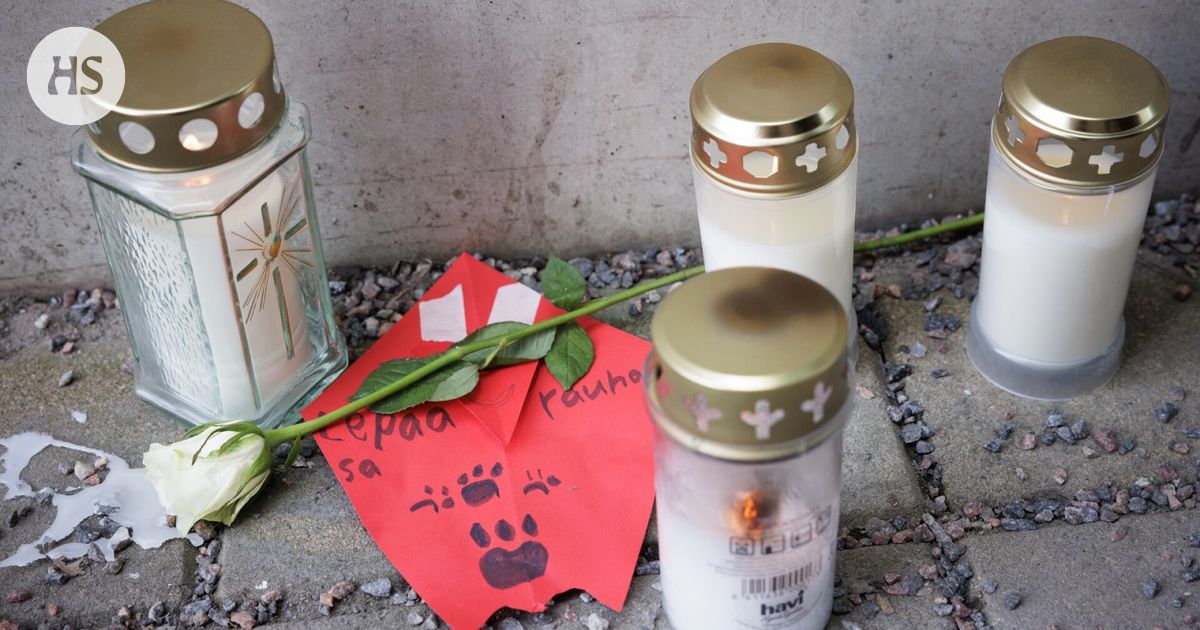
Family deaths|Perpetrators of intra-family homicides were found to have mental health disorders and emotional and thinking difficulties.
The summary is made by artificial intelligence and checked by a human.
According to the dissertation under review at the University of Tampere, those who killed their children often had personality disorders and mental health problems, which could stem from the abuse they experienced as children.
Between 2009 and 2022, 58 children under the age of 15 were killed in Finland. Almost every one of them was killed by a family member.
According to researcher Marianne Ellilä, family deaths could be prevented by identifying the underlying factors and offering timely help to families.
Ellilä emphasizes that all professionals working with children should be trained to recognize and deal with violence within the family.
in Finland a total of 58 children under the age of 15 were killed between 2009 and 2022. Almost all of them were killed by a family member.
The biological mother killed 33 children and the biological father killed 19 children. The stepmother killed one child and the stepfather killed one child.
Only four children were killed by someone else.
In the same period, an additional 257 adults died as a result of being killed by a spouse, dating partner or ex-partner. By far the majority of perpetrators in these cases were men.
What were the family murderers like and their background? The question is answered by health sciences dissertationwhich will be checked at the University of Tampere on Friday next week.
Results according to the family common background factors for internal homicides were abuse experienced by the perpetrators as children and adolescents, mental health disorders, substance abuse, and intimate partner violence between adults.
Actions are often preceded by an accumulation of difficulties, the author of the study Marianne Ellilä tells.
“The best way to prevent family deaths would be to identify the underlying factors and provide timely help to the family and the perpetrator,” he says.
Ellila collected information about the backgrounds of family deaths from the victims’ relatives using an electronic survey and themed interviews. The source of the second sub-study was the authors’ state of mind surveys.
In addition, Ellilä made a survey to the health nurses of maternity and children’s clinics in Southern and Eastern Finland about the identification of background factors.
Close ones for example, they told about post-divorce persecution, financial distress and honor violence.
According to mental state studies, the killers suffered from mental health disorders and difficulties with emotions and thinking.
A clear majority of the investigated killers of their children had personality disorders, 82 percent of the men and 67 percent of the women.
In men an emotionally unstable, dependent and antisocial personality with narcissistic traits or a narcissistic personality with antisocial traits were diagnosed.
The women who killed their child were found to have narcissistic and mixed personality disorder and an emotionally unstable, demanding, attention-seeking and antisocial personality.
One in three women had depression. They showed constant concern for the child’s development, conflicting feelings towards the child and an identity that strives for perfection in motherhood.
A good third of those who killed their children were psychotic.
According to state of mind studies, 38 percent of all those who killed a child attempted suicide at the time of the act or had previous suicide attempts. 10 percent of those who killed a spouse or ex-spouse attempted suicide at the time of the act.
”
Some of the victims were afraid and sought help, but they had not received it in time.
Ellila also asked health nurses and relatives of the victims for their views on preventing deaths.
It appeared that the home conditions of the murdered children had often been poor, they had been neglected and they had been subjected to violence, but child protection reports had not helped to prevent the deaths.
Even for the perpetrators of the deaths, it had been difficult to get help for psychological and financial problems. Some did not want help but tried to keep the scenes up.
Some of the victims were afraid and sought help, but they had not received it in time. Lack of safety nets, lack of information and lack of language skills had made it difficult to get help. A well-known fear of the perpetrator was also an obstacle.
A researcher the conclusion is that all professionals working with children should be trained to recognize and intervene in domestic violence and other background factors. It should be possible to apply for help with a low threshold.
Ellilä hopes that the health nurse who meets the family’s children would not constantly change, as has started to happen in big cities. He also supports the family doctor system, where the doctor gets to know the families he treats.
The flow of information between authorities would also be important.
“Now the information is not transferred,” says Ellilä.
Protecting children from abuse would also be important because this way the intergenerational chain of disadvantage can be broken.
“If we protect children, they will grow up to be adults who do not use violence.”
Supplement 2.12. at 5:55 p.m.: Added that professionals should be trained to identify not only violence but also other background factors.
http://www.brouilette.com/archives/111829
https://www.premierpropertyclub.co.uk/uncategorized/amerikada-casino-mahkemeleri-nerede/
https://liverpool888.org/lucks-kumarhane-inceleme-uzmani-ve-sporcu-puanlari-2025/
https://bakwan99.com/lucky-rebel-yorumu-2025-fortunate-break-the-rules-spor-bahisleri-ve-casino-guvenli-oyun-mu/
https://gembet88.net/2025te-yuksek-karli-en-iyi-25-casino-ortaklik-programi/
http://www.hubnersport.com.br/luks-kumarhane-en-iyi-internet-kumarhanesi-ve-spor-bahisleri-daha-guvenli-buyuleyici-mobil-konumda/
https://aba99.net/cevrimici-kumarhane-ucret-adimlari-tam-bir-rehber/
http://www.spanishtrainers.com/blog/ordeklerinizi-cep-duckyluck-kumarhanesine-getirin/
https://ayudachamilo.siempre.net.co/lucks-gambling-enterprise-one-100-free-revolves-extra-2025-northern-bengal-fitness-institute-i-pandua-we-gajol-we-malda/
https://powercordlead.com/cevrimici-kumarhane-yuzde-eylemleri-tam-bir-kilavuz/
https://xpertscreation.com/luks-kumarhane-tavukculukta-cevrimici-kumar-ilginizi-cekebilecek-bir-donus/
https://national88.org/lucks-casino-aciklamasi-limanlar-cevrimici-oyun-ve-tesvik-ayrica-sunlari-da-sunar/
https://ampmconsulting.it/lucks-casino-gorusu-limanlar-oyun-ve-bonus-ayrica-sunlari-da-sunar/
https://yallaielts.com/eylul-2025in-en-iyi-internet-casino-avantajlari-ve-vip-yazilimi/
https://centrummedyczneprime.pl/lucks-casino-incelemesi-2025-tesvikler-lisanslar-cevrimici-oyun
https://minbet.org/?p=2967
https://magnum789.com/lucks-kumarhanesi-2024-yili-kumarhaneler-kuresel-tesvik-odulleri/
https://seamarkamerica.com/al-gonzos-journey-exposedu-oynayin-tamamen-ucretsiz-donusler-sunan-en-heyecan-verici-pozisyonu-serbest-birakin%ef%b8%b1internet-kumarhanesi-luks/
https://book.jaezaesthetics.com/lucks-yerel-kumarhane-yorumu-5-kisi-tamam-dedi/
https://collectivetutorial.com/lukki-kumarhane-cpa-fb-au-reg-ortak-programi-cpa-render/
http://www.deniziskele.com/daha-iyi-kumarhane-ortaklik-programlari-igaming-2025-kitabinda-daha-buyuk-kazanclar-elde-edin/
https://bioquinor.com/internetteki-casinolarda-para-cekme-islemlerinin-gerceklesmesi-ne-kadar-zaman-alir/
https://barca99.net/lucks-casino-100-ucretsiz-dondurme-ekstra-2024-ev-is-secenekleri/
https://caricho.com/2025/11/12/abdde-kumarhaneler-nerelerde-yasaldir/
https://as123.org/ucretsiz-ekstra-tr/