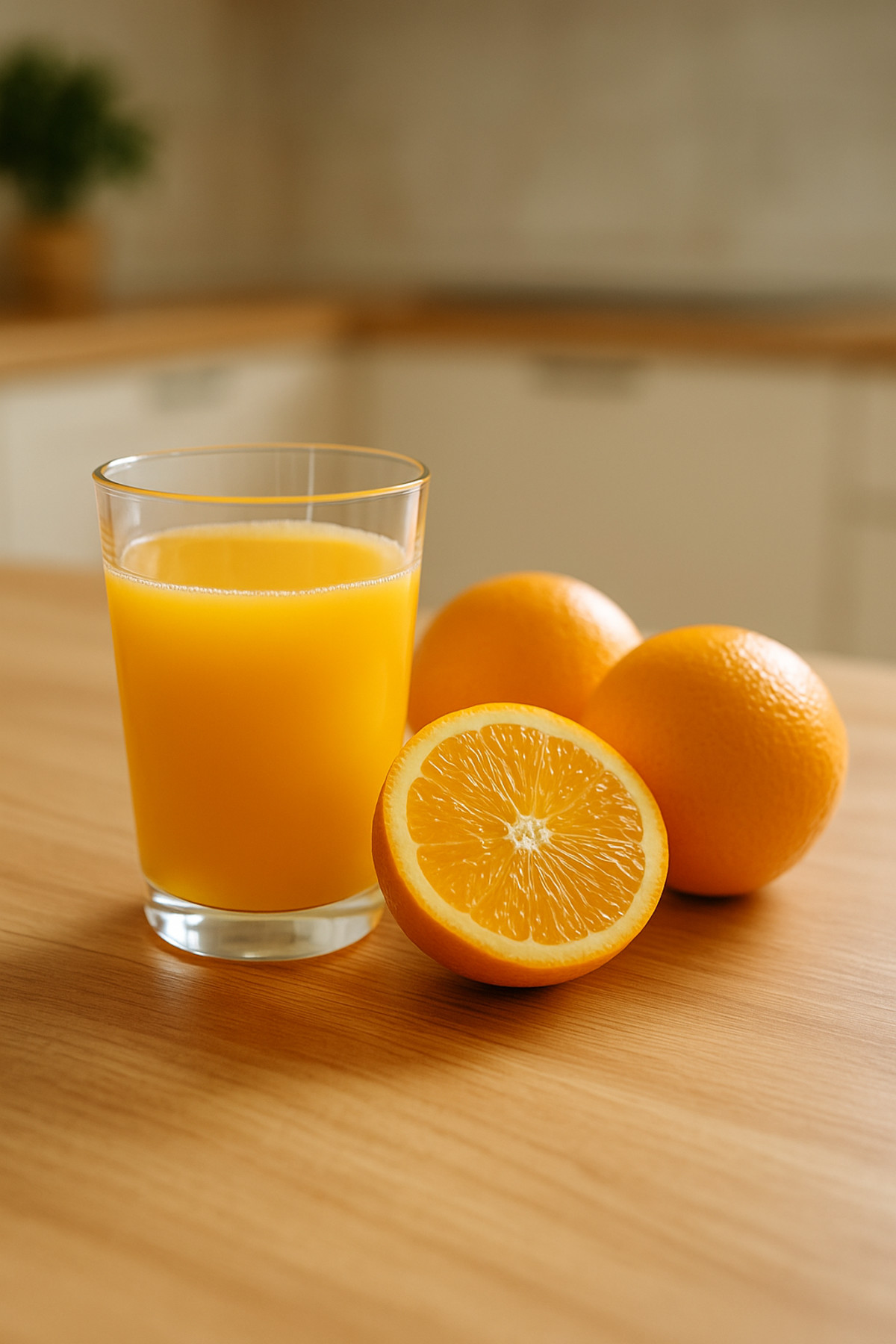
If you start the morning with a glass of squeezed orange juice, it may affect your body far beyond the level of vitamin C. A new study reveals that orange juice may change the activity of genes related to the heart, inflammation and the body’s use of fats – but it is also important to understand the limitations of the findings.
In the study, recently published in Molecular Nutrition & Food Research, 20 healthy adults participated. For two months they drank about two glasses of 100% natural orange juice every day. The researchers, from Brazil and the USA, took blood cell samples from them and checked how the activity of more than 1,700 different genes changed.
After two months of drinking orange juice every day, extensive changes were found in the activity of the genes. A large part of them was related to the processes of inflammation, vascular function, blood pressure and the way the body uses fat and energy. In simple words: the body seems to have reoriented some of the systems related to heart health and metabolism.
One of the interesting things was that the reaction did not seem to be the same for everyone. In participants of normal weight, more changes in genes related to inflammatory processes stood out. In overweight participants, more changes were seen in genes related to fat metabolism and energy use. The researchers suggest that this is a hint that everyone’s body “translates” the orange juice differently – depending on their metabolic state.
This effect is mainly attributed to flavonoids – a group of natural plant compounds found in citrus fruits, berries, tea and cocoa. For years, flavonoids have been attributed an antioxidant and anti-inflammatory role, as well as a beneficial effect on blood vessels. The current study did not directly examine the flavonoids themselves, but rather their “fingerprint” at the gene level.
To better understand the picture, the researchers explain that the changes seen are at the molecular level, not at the “feeling” level. The participants did not undergo complex clinical tests of the heart and blood vessels, but tests that look at what happens inside the cells. Therefore, at this stage it can be said that orange juice affects the activity of the genes, but it is still impossible to know if this translates in the long term into fewer heart attacks or less diabetes.
Beyond that, it is important to remember that this is a very small study – only 20 people – and without a comparison group that drank, for example, a different drink or water. Without a “control group” it is impossible to know for sure that the changes found are only related to the juice, and not to other lifestyle changes at the time of the study. The researchers themselves emphasize that the findings show a connection, not cause and effect.
The issue of sugar is particularly important. Even when it comes to 100% fruit juice, without added sugar, it is a relatively concentrated drink – without the fiber found in whole fruit. Therefore, even if the juice has beneficial components such as flavonoids, drinking it excessively can add a lot of calories and simple sugar to the daily menu. The researchers did not test a direct effect on weight or blood sugar in this small sample, so no conclusions can be drawn in this regard.
Still, there is an interesting opening for the future here. The researchers claim that the different changes seen between people of normal weight and people who are overweight may help in the future to develop more personalized nutritional recommendations – ones that take into account how each person’s body reacts to bioactives such as flavonoids. Instead of a “uniform menu for everyone”, we may see menus in the future that are built according to the body’s response at the gene level.
The main message from the current study is not that we should start “treating ourselves with orange juice”, but that more and more studies are showing how profound an effect food has on the body – down to the gene level. A glass of juice in the morning will not replace exercise, good sleep and a balanced diet, but it can be a small part of a wider mosaic of habits that are good for health over time.
https://www.sitcomsoldiers.com/portfolio/
https://alancashvideo.com/about-alan-cash-video/
https://infigrityit.com/digital-development-services/react-native-development/
https://sustainable-ir.com/component/contact/contact/4-uncategorised/26-bsr
https://northland.cc/plan-your-visit/
https://microscopes-india.com/about-us/
https://www.virepost.com/alt-rock-music-events-are-shaping-the-modern-music-scene/
https://www.yubaskillacademy.com/about/
https://bookbongo.com/kindle-books/
https://charter.support/services/
https://champion-casino.vinnytsia.ua
https://champion-casino.vn.ua
https://champion-casino.lviv.ua
https://champion-casino.odesa.ua
https://champion-casino.odessa.ua
https://champion-casino.od.ua
https://champion-casino.kharkiv.ua
https://champion-casino.kharkov.ua
https://champion-casino.kh.ua
https://champion-casino.dp.ua
https://www.0564.ua/list/462875
https://www.0462.ua/list/479263
https://www.0532.ua/list/478457
https://www.04141.com.ua/list/482408
https://www.0472.ua/list/482407
https://yellow.ua/idealnyj-tandem-podbiraem-zhidkost-dlja-pod-sistem-30-ml-pod-cvet-vashego-novogo-smartfona/
https://mezha.net/ua/bukvy/podyky-i-smak-vash-hid-pered-pokupkoiu-pod-systemy
https://i.factor.ua/promo/novinki-jidkostey-dlja-veypa.html