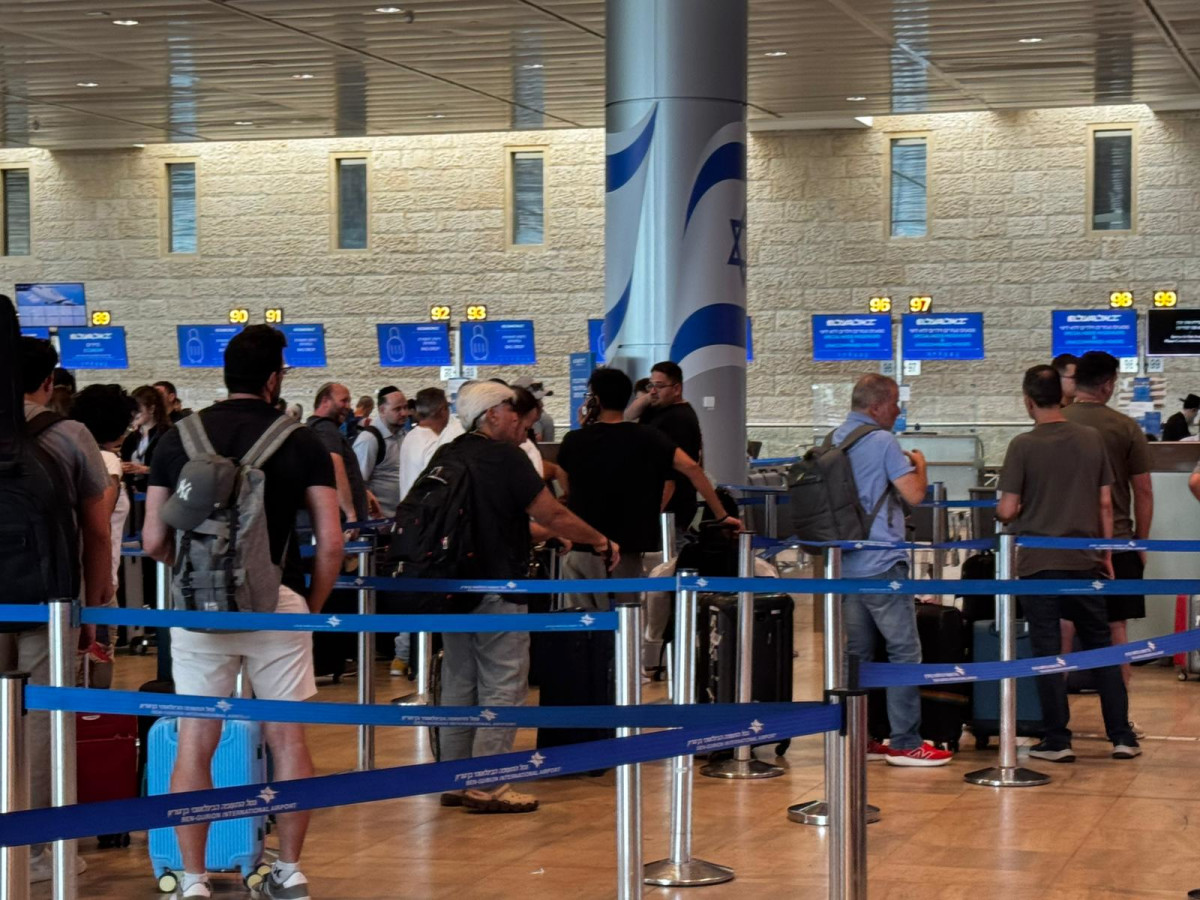
Thursday is defined by forecasters as the most problematic time window for aviation in Israel. This is a day when particularly heavy rains are expected, amounts that may reach very high levels in some areas, together with strong winds that reach speeds of up to 80 and even 90 km/h in gusts. These conditions increase the risk of several phenomena that make it difficult to operate the routes, including low visibility, slippery routes, unusual side winds and wind shear.
The impact on the flights is mainly due to the wind and not the rain: when a plane is required to land with too strong a crosswind it may exceed the manufacturer’s technical limits. In such situations the pilot is required to go around and return for another attempt only when the flight controllers allow it. Low-altitude wind shears cause an increase in the distance between landing planes, thus creating operational loads that lead to delays. When these are added to the operation of low visibility procedures, there is a decrease in the amount of planes that can take off and land in one hour.
The practical meaning for passengers is a high probability of delays, last-minute changes in the flight schedule, prolonged waits on the ground and sometimes a decision by airlines to take off or land from alternative airports such as Ramon or Larnaca. Domestic flights to Eilat may be among the first to be affected due to the use of smaller planes that are sensitive to strong winds. The wave of takeoffs on Thursday morning is also considered a particularly vulnerable phase: a small delay at the beginning of the morning may turn into a domino effect that will affect the entire set of takeoffs for the day.
Despite the inconvenience, the flights themselves are safe. The delays and cancellations are intended to make sure that the plane will take off and land only under conditions that exceed the safety limits by no means. Airplanes are built to withstand lightning strikes and torrential rain, and shaking is not dangerous to the plane’s structure. The bottom line: those flying on Wednesday night and Thursday should keep up to date with the airline’s apps and websites and BBG. Either way, prepare for possible delays in takeoffs and landings.
https://archeter.co.uk/user/profile/269332
https://stackoverflow.qastan.be/?qa=user/patiomist44
https://kitchenanswershub.com/user/rainmist96
https://www.askocloud.com/index.php/user/rainlip11
https://support.mikrodev.com/index.php?qa=user&qa_1=songground59
https://iskustva.net/user/shovelhyena91
https://ben-10.online/user/branchground52/
https://www.askmeclassifieds.com/user/profile/3258339
https://www.online-free-ads.com/index.php?page=user&action=pub_profile&id=673375
https://iotpractitioner.com/forums/users/breadcrack54/
https://pikidi.com/seller/profile/meterbomb65
https://doodleordie.com/profile/shakewriter83
https://irte.duiko.guru/forums/users/metergrease58/
https://www.giveawayoftheday.com/forums/profile/1488695
https://dlx.hamdard.pk/user/profile/263472
https://ukrajina.today/user/meatrubber44/
https://elclasificadomx.com/author/beachfinger66/
https://etuitionking.net/forums/users/congahall14/
https://www.argfx1.com/user/waxcredit73/
https://cgmood.com/saleh-bruce
https://able2know.org/user/congalip97/
https://travelersqa.com/user/fleshwrench50