Over the years it became clear that the ability to perform many calculations at the same time, which is the basis for the operation of the graphics processor, the GPU is also suitable for non-graphical uses. Researchers began using these chips for scientific simulations, physical calculations and large-scale data analysis. Nvidia recognized the potential and began to invest in the development of tools that would allow a wider use of its chips beyond the gaming world.
Today, Nvidia’s activity is divided into several key areas. The GeForce series is intended for the consumer market, mainly for gamers and content creators. Next to it are dedicated series for data centers and high-performance computing, used by cloud companies, academic institutions, research institutes and advanced industries. These chips are used to train and operate models in the fields of language, image and sound, and are a basic component in data centers around the world.
Beyond hardware, Nvidia develops complete systems that combine chips, software and management tools. These solutions are applied in a variety of fields. In the automotive sector, the company provides computing platforms for the development of advanced driver assistance systems and autonomous driving. These systems process data from cameras, sensors and navigation systems in real time, and enable quick decision-making in a changing environment.
In medicine and life sciences, Envidia’s technologies are used to analyze medical imaging, identify patterns in imaging tests, accelerate genetic research and assist in drug development. Fields such as climate research, weather forecasts, robotics and smart industry also rely on high-performance computing solutions, mainly due to the need to deal with huge amounts of data.
Nvidia’s growth in recent years is related to the sharp increase in demand for artificial intelligence solutions. While many companies focus on the development of applications and services, Nvidia works mainly in the infrastructure layer, the hardware and the tools that enable their activities. This model places it in a central position in the value chain of the field of artificial intelligence and also exposes it to competition and sharp changes in demand.
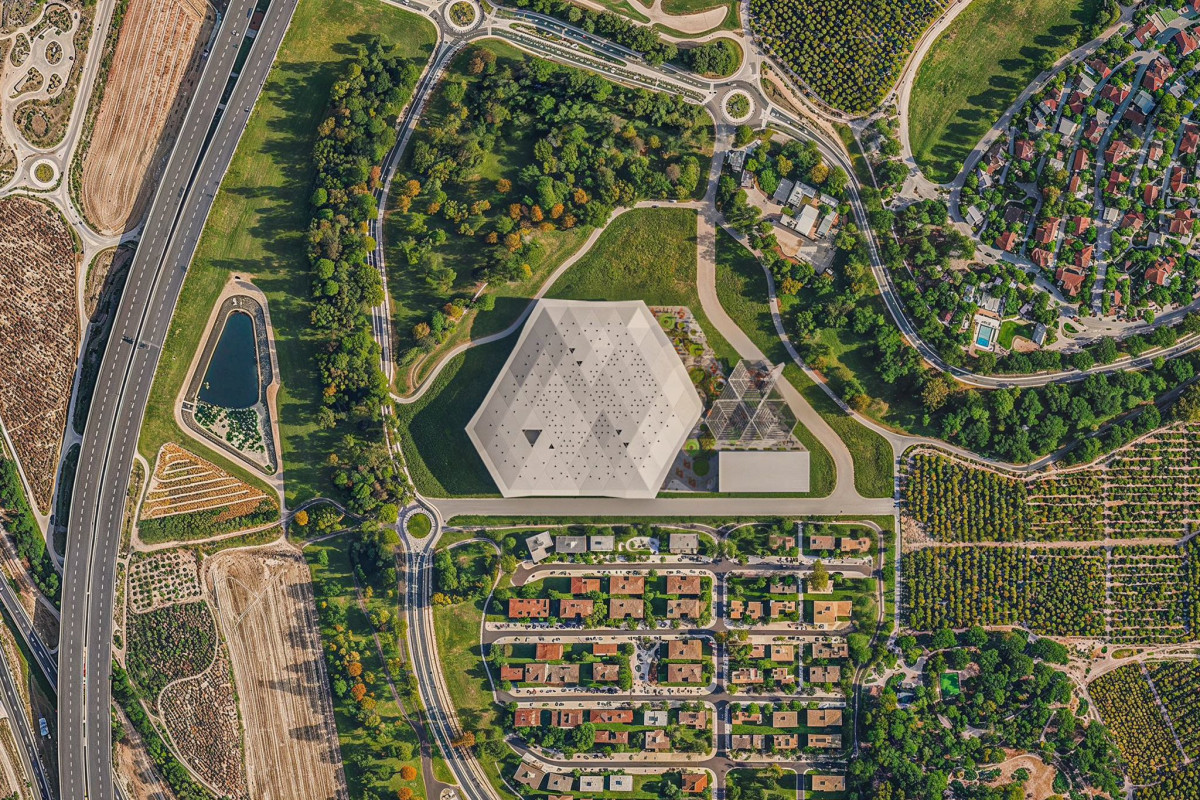
According to the plan, Nvidia’s new campus, which will employ 10,000 employees, double the number of employees currently at the Israeli headquarters, will be established as a large-scale employment complex of 90 dunams, which the company purchased from the state for NIS 90 million. The central building will look like a “spaceship” and will be based on a futuristic architectural language associated with the company’s branches around the world, with an emphasis on large volumes and flowing lines, similar to the company’s headquarters in California. Complementary buildings will be built around it that will be connected through internal passages and open spaces, with the aim of enabling functional continuity and cooperation between different development teams. The design emphasizes extensive use of natural light, wide spaces and a modular configuration that allows adaptation to changes in work needs, alongside laboratories, experimental areas and flexible work rooms and not just closed offices.
Beyond the work areas, the campus is planned to operate as a comprehensive employment space, with a combination of leisure areas, green spaces and ancillary services for employees, including cafes, restaurants and living areas. The guiding concept is to create a continuous work environment where you can combine development, meeting and staying throughout the day, while reducing the need to leave the complex. The issue of accessibility and transportation is also integrated into the planning, with extensive underground parking lots, public transportation infrastructure and internal walkways connecting the parts of the campus. The establishment of a complex of this type is expected to set a new standard for development centers in Israel, both in its physical scope and in the planning approach that combines work, infrastructure and a living environment in one space.