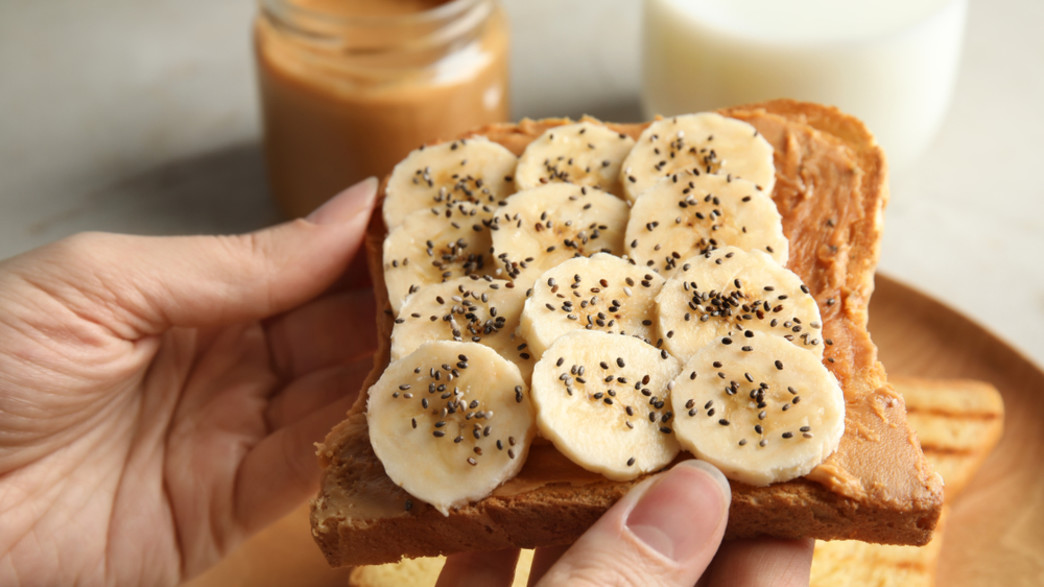
Just before bed, many of us are looking for the small action that will signal to the body that the day is over. There are those who apply face cream, there are those who give up screens and there are those who go into the kitchen and take one tablespoon of peanut butter. In fact, this is not another trick detached from reality, but a custom that continues to gain popularity and raises real questions about the relationship between nutrition, the nervous system and sleep mechanisms.
The scientific logic
Peanut butter contains an interesting combination: protein, unsaturated fat and an amino acid called tryptophan, which is used as a basis for building serotonin and subsequently melatonin. These are two hormones that help regulate sleep, contribute to an improvement in mood and assist in the transition from a state of alertness to a state of relaxation. In addition, the unsaturated fat and protein slow down the rate of carbohydrate absorption and help maintain balanced sugar levels.
What is the recommended amount?
The recommendation is 10-15 grams, i.e. one tablespoon of natural peanut butter (without added sugar or hydrogenated oils). This amount provides the body with enough fat and protein to maintain sugar levels and a comfortable feeling of satiety, but without burdening the digestive system. But pay attention to this: a larger amount already completely changes the picture: a fatty load before bed can cause reflux, slow digestion and less quality sleep.
Do you have to eat it before going to bed? Absolutely not. The body uses tryptophan throughout the day, and produces serotonin and melatonin from it according to the hours of light and darkness. Good sleep can also be influenced by consuming sources of tryptophan during the day: eggs, oats, tofu, chicken, tahini and more.
So why does a spoon before bed work for some people? The answer to this is thanks to the combination of three factors: the stability of the sugar in the body before the overnight fast, a feeling of satiety that reduces discomfort and a regular ritual that signals the brain to start relaxing. That is, the behavioral factor, the ritual, is just as significant as the physiological one.
However, it is important to note that this trick is not suitable for everyone, for example for people suffering from diabetes or pre-diabetes it is not always suitable. It is true that fat can stabilize sugar in some patients, but in others eating late may actually cause an increase in glucose. Therefore, it is important to check the individual reaction and measure the sugar levels, to see if it does contribute or vice versa. In addition, people who suffer from reflux can experience an unpleasant sensation and also people with diseases of the gallbladder.
The bottom line: peanut butter before bed is neither a magic solution nor a natural sleep remedy, but it can serve as a small, effective and pleasant tool that helps some people in an established night routine that includes measures such as: dim lighting, no screens, slow breathing and a calm environment.
Good sleep is the product of a nervous system that feels safe and if one tablespoon of natural butter can support this process, for some people, then it is another useful tool in the toolbox. Not mandatory, not necessary, but it’s definitely a nice option.
Shir Alfi – Zegar, clinical dietitian of Klalit in the Dan district – Pet
https://rabbitroad.dk/
https://reactoonzdemo.fi/
https://reactoonzdemo.org/
https://spinangascasino.cz/
https://spinanga-cz.cz/
https://spinanga-cz.eu/
https://spinanga-casino-cz.eu/
https://stake-dk.com/
https://stake-dk.org/
https://stake-dk.net/
https://stakes.dk/
https://sugar-rush-demo.com/
https://sweetbonanza1000.in/
https://sweetbonanza1000.ph/
https://sweetbonanza.com.nl/
https://sweet-bonanza.com.nl/
https://arteasy.app/lessons/lion
https://arteasy.app/lessons/pumpkin
https://arteasy.app/lessons/chair
https://arteasy.app/lessons/flower
https://arteasy.app/lessons/human-face
https://arteasy.app/lessons/mermaid
https://arteasy.app/lessons/anime-head
https://arteasy.app/lessons/sphere
https://arteasy.app/lessons/parrot