According to a report, many of last year’s extreme weather events became more likely or were particularly severe due to climate change. Global warming is already pushing millions of people to the limits of their ability to adapt, emphasizes the scientific initiative World Weather Attribution (WWA) in its annual report for 2025. “Every year the risks of climate change become less hypothetical and more of a brutal reality,” study leader Friederike Otto from Imperial College London is quoted as saying in a WWA statement.
In 2025, WWA scientists counted 157 extreme weather events worldwide: 49 floods, 49 heat waves, 38 storms, 11 wildfires, 7 droughts and 3 cold snaps. Events are only included in the list if a certain threshold is exceeded: for example, if there are more than 100 deaths, if more than a million people are affected, or if a state of emergency or disaster is declared at national or regional level.
Of the 157 events, the scientists took a closer look at 22. 17 of these have become more likely or more severe due to climate change. For only five of them – all extreme rainfall events – there were no clear results.
Other events included a seven-day heat wave in February in South Sudan with temperatures reaching 40 degrees. According to the analysis, without climate change the temperature would have been a maximum of 36 degrees.
2025: Global warming probably exceeds 1.5 degrees for the third time in a row
Regarding the devastating wildfires in the northwest of the Iberian Peninsula in August, model calculations showed that climate change has made fires of such magnitude 40 times more likely.
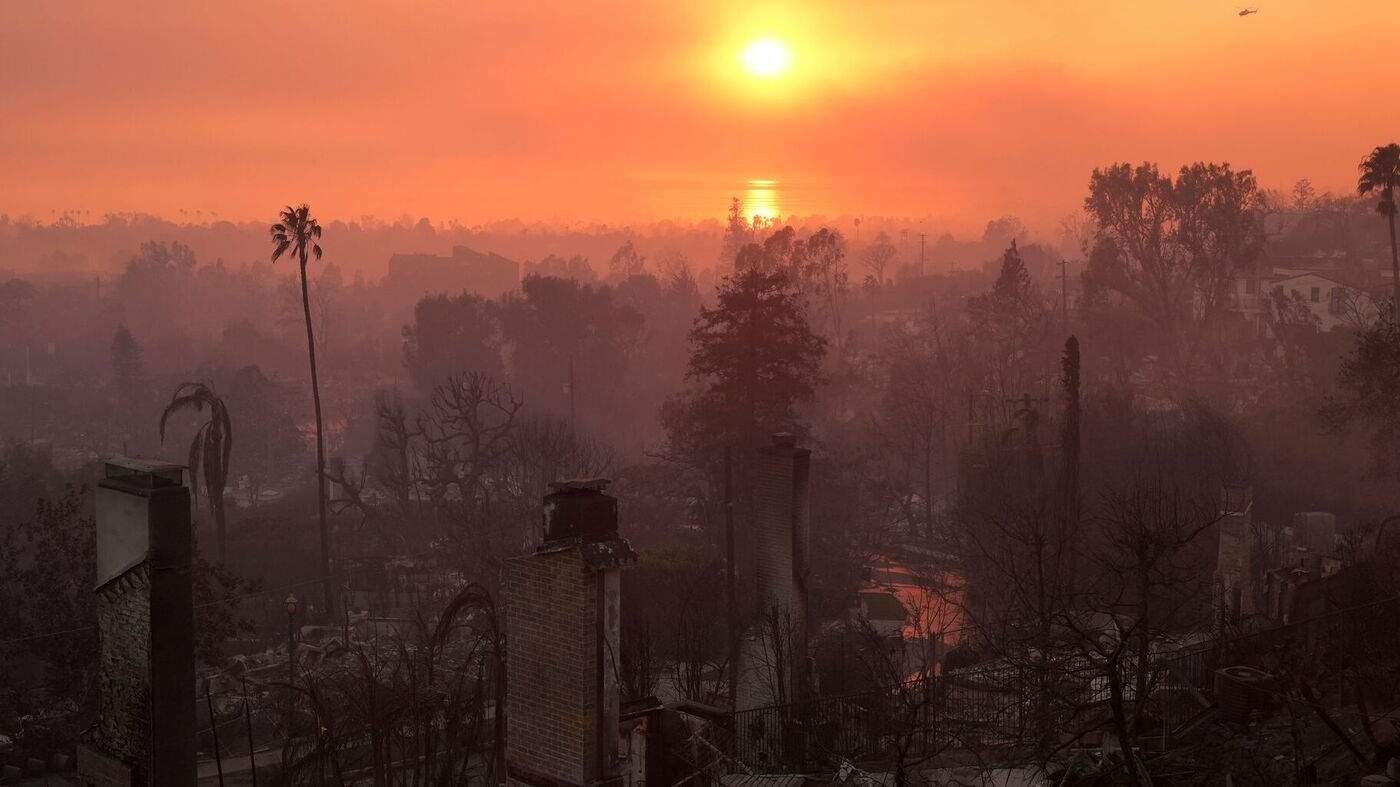
And of the Los Angeles wildfires in January, the researchers write: “These fires claimed approximately 400 lives, insured losses totaled $30 billion—the largest insured wildfire losses ever recorded—and uninsured losses are likely much higher.” Climate change has increased the likelihood of these fires by 35 percent.
Looking at tropical cyclones, Otto and colleagues report that many of them were a category stronger than would have been the case without climate change. Hurricane Melissa, which hit Jamaica and Cuba in October, brought wind speeds of up to 288 kilometers per hour. Without climate change it would have been 270 kilometers per hour.
With global warming of 2 degrees compared to pre-industrial times – the team currently assumes 1.3 degrees – top speeds of 295 kilometers per hour would be expected under the same conditions.
Every tenth of a degree Celsius counts
According to the report, by 2025 global warming is expected to exceed 1.5 degrees Celsius compared to pre-industrial times for the third consecutive day. The Paris Climate Agreement aims to limit global warming to 1.5 degrees if possible – but this goal is now considered unrealistic. If climate protection measures are fully implemented, the earth is expected to warm up by 2.6 degrees instead of 4 degrees Celsius, the group writes.
The research team makes it clear that every tenth of a degree counts by studying heat waves in recent years, for example in the Amazon region or in Burkina Faso and Mali. These events have become almost ten times more likely since the Paris Climate Agreement was signed in 2015 – with global temperatures increasing by 0.3 degrees Celsius since then.
“Decision makers must face reality”
Although 2024 was particularly hot due to the effect of the climate phenomenon El Niño, the year ending 2025 was the hottest year since 1995 in larger regions in Central Asia and China as well as parts of Scandinavia. The El Niño phenomenon, which occurs every few years, is triggered by warmer water temperatures in the tropical Pacific, which influences weather conditions worldwide through changes in air and ocean currents.
The report shows that efforts to reduce CO2 emissions are not enough to prevent global temperature rises and the worst impacts, explained Otto.
“Policymakers must confront the reality that continued reliance on fossil fuels costs lives, causes billions of dollars in economic losses and causes irreversible harm to entire communities worldwide,” she stressed.
German-born Friederike Otto is one of the most important scientists in attribution research – also known as attribution research. This examines what contribution climate change has to extreme weather events. The scientists analyze how likely and how severe the events would have been without human-caused warming since the beginning of the Industrial Revolution.