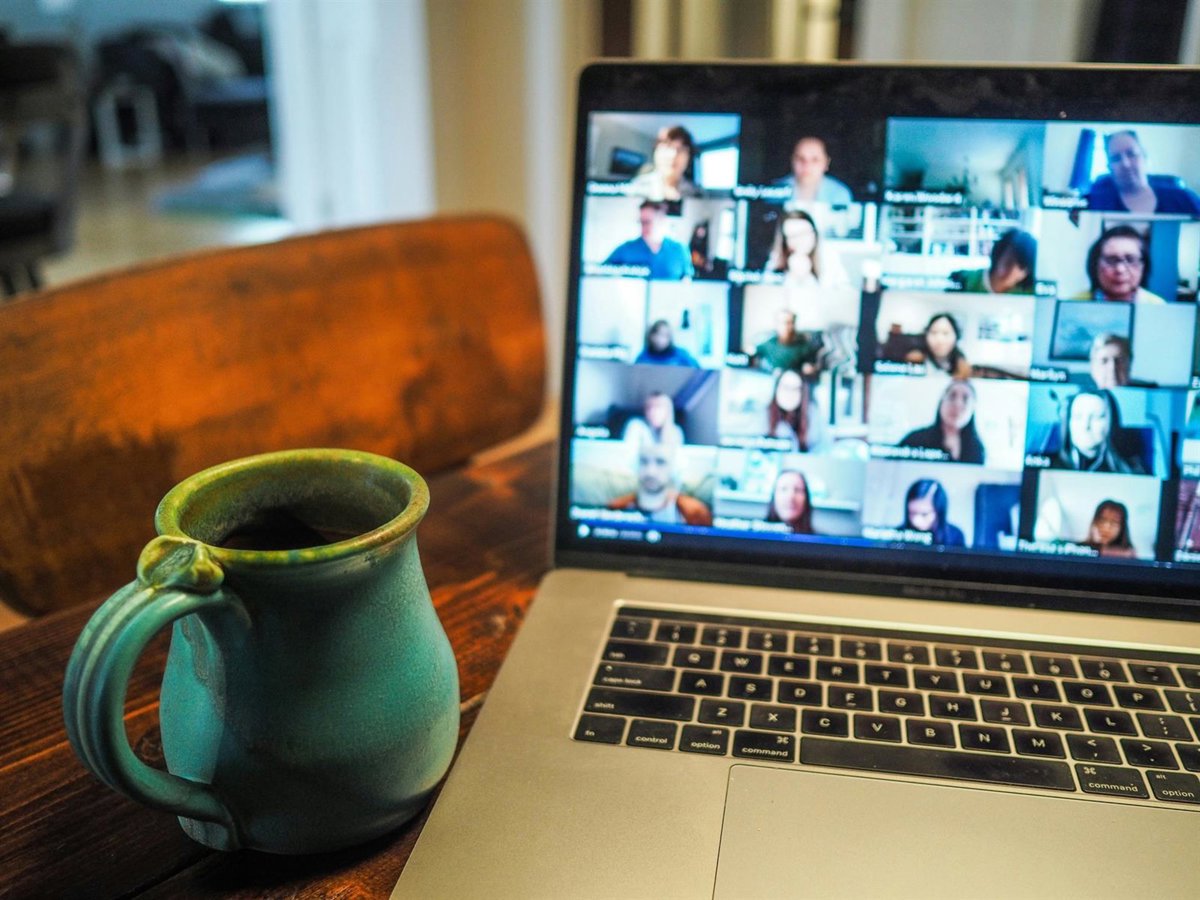
Videoconferences facilitate remote communication in medical consultations, work meetings or following a class, but the audiovisual errors that may arise during their development influence interpersonal judgments and can perpetuate inequality.
The failures experienced during a video call influence people’s opinions and have an impact on the decisions they make, as concluded in a study carried out by researchers from Cornell University and the University of Missouri-Kansas City (United States), published in Nature.
These errors, which they describe as minor, such as connection problems, a distorted image or delayed audio, cloud interpersonal judgments in face-to-face video calls, and the reason is found in a phenomenon known as the uncanny valley, usually linked to robotics.
This phenomenon refers to the rejection or distrust that human beings can feel when a robot is too similar, in appearance and behavior, to real people, but without being perfect.
When it comes to video calls, the researchers explain that the glitches “break the illusion of face-to-face contact, evoking a strange, creepy or disturbing sensation”, as they have proven through five experiments and three complementary studies using live and recorded interactions.
And this has consequences in real decisions. The greater the strangeness a person feels, the more negative their judgment of their interlocutor. Thus, they indicate that they influence decisions such as the hiring of a person in a company, the granting of parole to a prisoner or health care.
And they emphasize the role that this influence has in perpetuating inequality, since it is people with fewer resources who tend to have less reliable internet connections, which generates more failures and, as they conclude, would lead to them “experiencing worse results in consequential contexts such as health, professional careers, justice and social connection.”