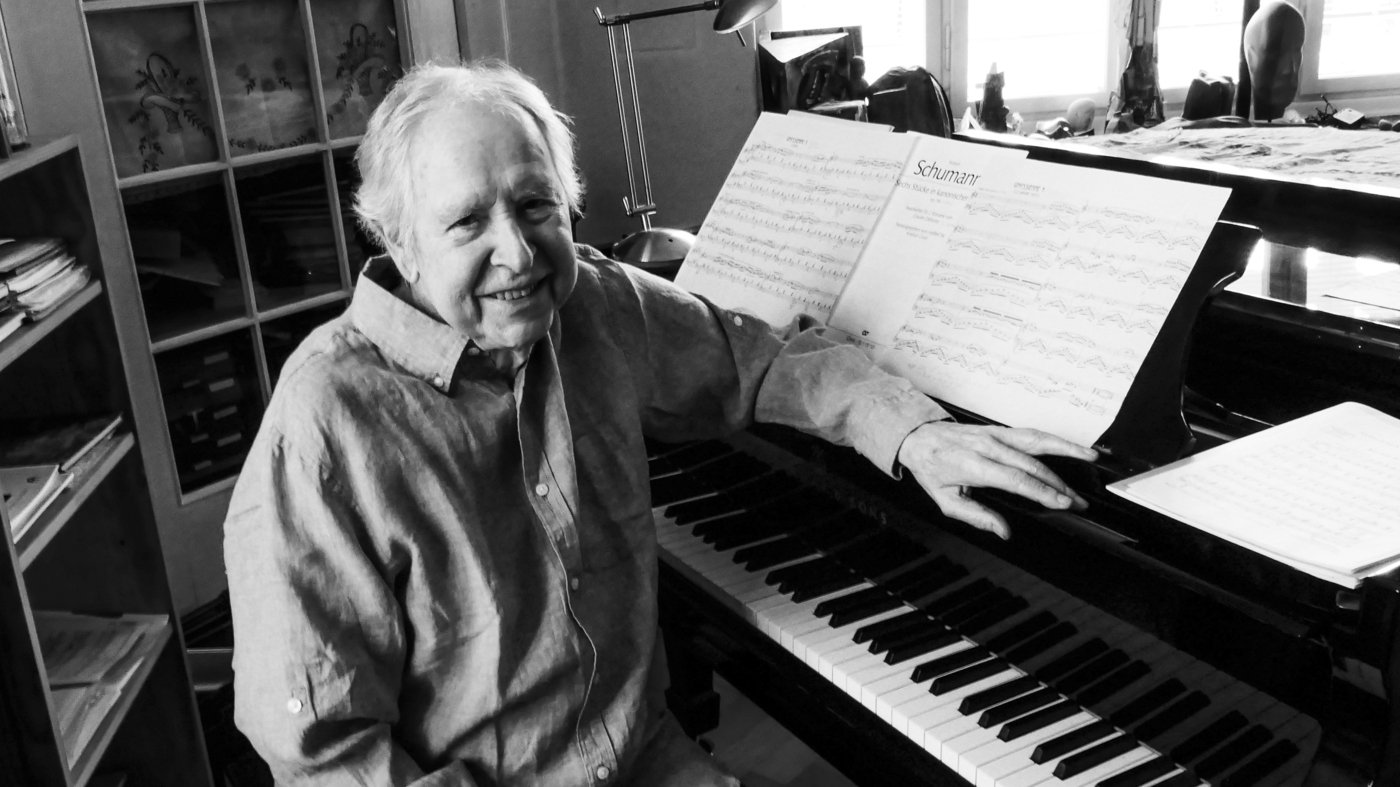
It may sound strange, but West Berlin seemed bigger back then. There was a kind of hothouse climate, culture had a prominent place, and that applied to punk and Neue Wilde as well as to the higher orders. Aesthetics and politics were not a contradiction in the culture of the 1970s and 1980s and for a time after the fall of the Wall. Urich Eckhardt was right in the middle, at the forefront, one of the dominant figures at the time. He has now died at the age of 91.
Eckhardt, born in Rheine in Westphalia, was a lawyer and trained in piano playing and conducting. And he combined it with virtuosity. From 1973 to the end of 2000 he was director of the Berlin Festival. Eckhardt shaped her. Matthias Pees, who has headed the institution since 2022, said about the death of his legendary predecessor: “Ulrich Eckhardt not only wrote cultural-political city history, but also designed pioneering, courageous artistic programs for the whole of Germany and internationally and set socially relevant topics. He was a brilliant networker.”
Bridge to the east
Music was his passion. Under his aegis, the festival weeks in September developed into an internationally important festival, with hardly a famous orchestra missing; now it’s time for a music festival. At the same time, he set cultural and historical priorities such as the Prussian exhibition in the Gropius Building in 1981; a political issue at the time. Eckhardt maintained contacts in East Berlin and beyond. Culture was the bridge. One remembers guest appearances from Poland and the Soviet Union in West Berlin, with greats like Andrzej Wajda and Anatoly Wassiljew. From today’s perspective, in the depressing current world situation, many things seem like utopia.
Eckhardt was considered the master of ceremonies in the western part of the city. He organized the 750th anniversary celebrations and many other official events. Theater meetings, jazz festivals and other festivals are part of the traditional offering of the Berlin Festival, which is a federal institution. Since 2001, the festival has had its own venue, the former Freie Volksbühne on Schaperstrasse.
For a long time, Eckhardt lived in an office in the Bikinihaus on Budapester Strasse, near the Memorial Church. Visits to the director of the Berlin Festival had something of an audience. And how different: Eckhardt has seen a number of cultural senators and governing mayors in office, a grand seigneur in a city where political talent was almost always imported. He seemed superior to most people.
He was a mover and shaker in the city’s intellectual affairs, an agency for ideas. He kept the intellectual operating system in Berlin running.
Peter Klaus Schusterformer general director of the State Museums, about Ulrich Eckhardt
Peter Klaus Schuster, the former general director of the Berlin State Museums, said of Ulrich Eckhardt: “He was a mover and shaker in the city’s intellectual affairs, an agency for ideas. He kept the intellectual operating system in Berlin going. One of his advantages was finding the balance between the spirit of the time and what outlasts the spirit of the time.”
Engine for new things
Christoph Stölzl, the cultural politician who died two years ago, once aptly paid tribute to Eckhardt: “His cultural idealization was also so disarming because he had higher political goals in his luggage: first the detente in the Cold War, then the redefinition of Berlin after unification.”
© imago stock&people/imago stock&people
It was Eckhardt’s idea to secure the place at the Gropius Bau for the Topography of Terror, something that remains. He was also responsible for the film festival for many years. He had a wealth of cultural-political power that one can hardly imagine today. He exercised it quietly and powerfully, with diplomatic skill. In 1989/90 he served as interim director of the Berlin Philharmonic and accompanied Claudio Abbado’s appointment as chief conductor.
Whether meta-music or student theater meetings, Berlin lessons or Horizons – Festival of World Cultures: The Berlin Festival functioned like an engine of innovation. This is primarily thanks to Eckhardt’s employees, who were able to assert their ideas and visions in the comparatively small company. Gereon Sievernich, later director of the Gropius Bau, brought the non-European to Berlin and curated groundbreaking exhibitions.
Torsten Maß and Francesca Spinazzi organized outstanding theater and dance events for the Berlin Festival. Once things went differently. Ulrich Eckhardt was not responsible for the avant-garde program of the European City of Culture E 88, but Nele Hertling and Börries von Liebermann. Berlin should present itself in a newer, fresher way.
It was music that drove him until the end. He played the organ in the Jesus Christ and St. Anne’s Church in Berlin-Dahlem. He was fascinated by historical instruments in the churches in the surrounding area. The organ was also his profession in a cultural-political sense. It’s no exaggeration to say: he pulled out all the stops.