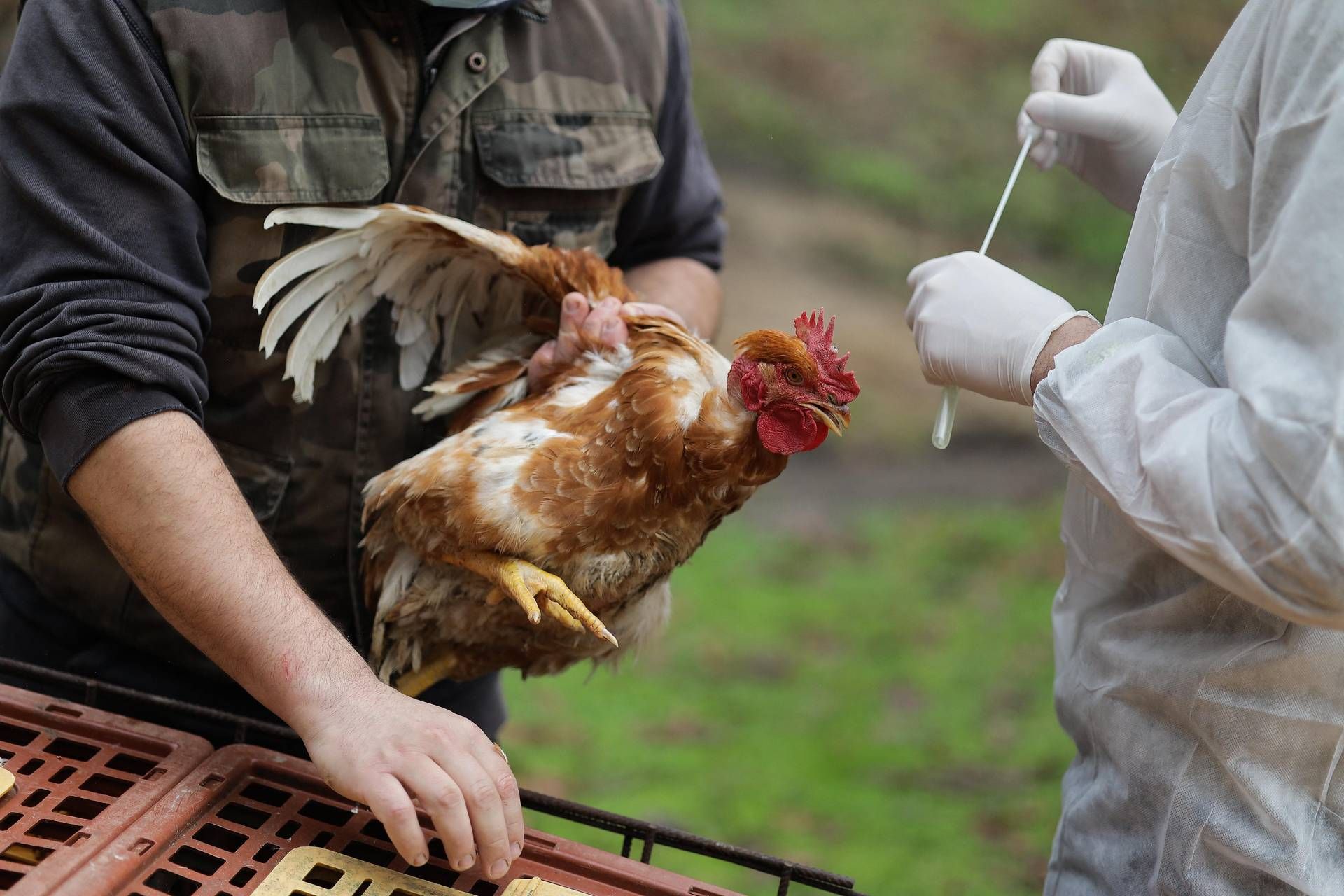
The European Commission is “closely monitoring” the situation regarding avian influenza after well reported in the last three weeks sixty new outbreaks in poultry farms in various European countries. A spokeswoman for the EU executive explains this to Adnkronos, in light of the spread of the disease in Europe which in the USA has caused, among other things, a sharp increase in the price of eggs, due to the mass slaughter of hens ordered to try to contain the spread of the disease. Avian influenza can occasionally pass to humans: the virus is considered a potential pandemic risk for humans too, if it were to mutate.
As regards human health, the spokeswoman continues, “we carefully monitor the situation to identify any threats to human health, which so far the ECDC (European Center for Disease Control, ed.) has assessed as low for the general population”. From December 23rd to last Monday Belgium, Bulgaria, the Czech Republic, Denmark, Germany, Spain, France, Italy, Hungary, the Netherlands, Poland, Portugal and Sweden have reported a total of 60 new outbreaks of avian flu on poultry farms.
The Commission underlines that so far “no human infections have been identified in the European Union“. The executive is also “carefully monitoring” the genetic evolution of the virus. As regards animal health, the Commission “supports national authorities in the prevention, containment, control and eradication of the disease in poultry”. There are, he underlines, “clear EU rules” that must be applied in the event of an outbreak of Hpai (highly pathogenic avian influenza, ed.) in domestic or bred birds in the EU.
The European Commission, continues the spokeswoman, is in “constant contact” with the member states and is “ready to react very quickly” should the situation evolve. It also collaborates “closely” with EU agencies (EFSA, ECDC, EMA), with the European Union reference laboratory for avian influenza, with the World Health Organization (WHO) and the World Organization for Animal Health (WOH) to have the “most up-to-date” information.
To ensure that Member States can prevent and respond to possible outbreaks, the Commission is adopting “medical countermeasures”with three joint procurement contracts for the purchase of pre-pandemic and pandemic influenza vaccines “already concluded.”
The situation in the USA
In the USA, where cases of contagion to humans have occurred, workers on affected poultry farms are not systematically tested to ascertain whether they are positive or negative for the virus (the degree of asymptomaticity in humans is not known). Workers are not systematically tested even in Europe: “According to the investigation protocol on human cases, in the current epidemiological situation – replies the spokeswoman – the ECDC recommends that individuals exposed to infected animals be monitored for 10-14 days after the last exposure and immediately subjected to testing if they develop symptoms compatible with avian influenza”.
The test, he specifies, “can also be taken into consideration for asymptomatic individuals exposed to avian influenza, on a case-by-case basis, depending on the level of exposure”. Countries “have different testing strategies.”
Vaccination strategies, he continues, are an “important” part of preparedness and response efforts. According to the ECDC pre-pandemic influenza scenario framework, in the current epidemiological situation, vaccination against zoonotic avian influenza in individuals exposed, for professional or routine reasons, to infected animals or contaminated environments “could be considered a complementary preventive measure”, depending on context-specific considerations and based on national recommendations.
If an outbreak is detected among birds, a series of measures must be applied by law in the EU. As soon as HPAI is detected in domestic or farmed birds, “immediate eradication measures” must be taken, along with measures to prevent and control the spread of the disease. Mandatory measures are to be implemented in infected establishments “as soon as possible”. The animals must be “culled and disposed of safely”. Feed, contaminated equipment and manure must be “destroyed” or “treated to inactivate the virus”.
Available vaccines
The Commission also defines restricted areas in the EU regionalisation/zoning for HPAI. EU regionalisation/zoning (separating disease-free from infected areas) is regularly published in the EU Official Journal as an emergency measure, in relation to outbreaks of highly pathogenic avian influenza in some Member States.
Furthermore, national authorities must apply movement restrictions regarding the infected establishment and other establishments located in the restricted zone. If necessary, culling measures can also be extended to nearby poultry farms or farms that have had dangerous contact with an infected flock.
Furthermore, the spokeswoman continues, the EU Health Security Committee (CSS) holds “regular meetings” to discuss prevention and preparedness measures against avian influenza, sometimes together with EU veterinary authorities. DG Sante operates a platform, the Early Warning System (EWRS), which allows Member States to send alerts on potential cross-border threats, exchange messages on public health measures and potentially carry out contact tracing. Any human cases of HPAI must be reported to the Commission via the EWRS.
Three vaccines (Aflunov, the pre-pandemic vaccine Seqirus and Celldemic) against avian influenza are authorized for marketing in the EU. These vaccines can be used outside of pandemic periods to protect against the disease.
Furthermore, adds the spokeswoman, they exist four pandemic flu vaccines (Adjupandrix, Foclivia, Incellipan and the AstraZeneca H5N1 pandemic influenza vaccine) based on seasonal influenza vaccine technology and tested with H5N1 viruses for immunogenicity. In the event of a pandemic, the manufacturer must adapt the original vaccine to the actually circulating strain and then apply for authorization of the resulting vaccine as a definitive pandemic vaccine.
https://www.thaida-ss.com/incoloy-tubes/seamless/800-tubes/
https://www.thaida-ss.com/nickel-pipes/seamless/200-pipes/
https://www.thaida-ss.com/stainless-steel-tubes/
https://www.thaida-ss.com/duplex-steel-tubes/seamless/s32205-tubes/
https://www.thaida-ss.com/stainless-steel-pipes/seamless/alloy-31-pipes/
https://www.thaida-ss.com/news/
https://www.thaida-ss.com/stainless-steel-tubes/seamless/321-tubes/
https://www.thaida-ss.com/incoloy-pipes/
https://www.thaida-ss.com/incoloy-pipes/seamless/825-pipes/
https://www.thaida-ss.com/incoloy-pipes/seamless/800h-pipes/
https://www.thaida-ss.com/alloy-tubes/seamless/c22-tubes/
https://www.thaida-ss.com/super-duplex-steel-pipes/
https://www.thaida-ss.com/stainless-steel-tubes/seamless/310h-tubes/
https://www.thaida-ss.com/stainless-steel-tubes/seamless/347h-tubes/
https://www.thaida-ss.com/stainless-steel-boiler-tubes/
https://www.thaida-ss.com/stainless-steel-condenser-tubes/
https://www.thaida-ss.com/super-duplex-steel-tubes/seamless/s32750-tubes/
https://www.thaida-ss.com/stainless-steel-tubes/seamless/253-ma-tubes/
https://www.thaida-ss.com/stainless-steel-pipes/seamless/321h-pipes/
https://www.thaida-ss.com/inconel-pipes/seamless/601-pipes/
https://www.thaida-ss.com/stainless-steel-pipes/seamless/304-pipes/
https://www.thaida-ss.com/stainless-steel-pipes/seamless/310moln-pipes/
https://www.thaida-ss.com/monel-pipes/seamless/
https://www.thaida-ss.com/stainless-steel-pipes/seamless/316l-pipes/
https://www.thaida-ss.com/incoloy-tubes/