In the white emergency room at Ufa city hospital, Bashkortostan Republic (Russia), the silence is sometimes scarier than the sound of a ventilator.
That is where Ms. Vu Thi Lam, 60 years old, is in a deep coma after a serious stroke in 2019. Doctors shook their heads, predicting that her life was only measured in hours. Outside the quarantine door, Mr. Vu Xuan Truong, his 62-year-old husband, faced the toughest battle of his life. On January 14, Mr. Truong recalled that it was a battle without guns and bullets, with only fragile faith conveyed through a hastily written piece of paper: “Dear wife, I and our two children are both in Ufa. You are in the emergency room so no one can visit. Try your best! Love you very much.”
That piece of paper, which he urgently asked the doctor to bring in, seemed to become the rope that anchored Mrs. Lam to life. Three days later, she woke up, a miracle that doctors call the response of the subconscious, and Mr. Truong calls it “the power of love”. According to the American Heart Association (AHA), social and emotional support from loved ones plays a key role in improving the survival and rehabilitation rates of stroke patients, a factor that is sometimes as important as medical intervention.
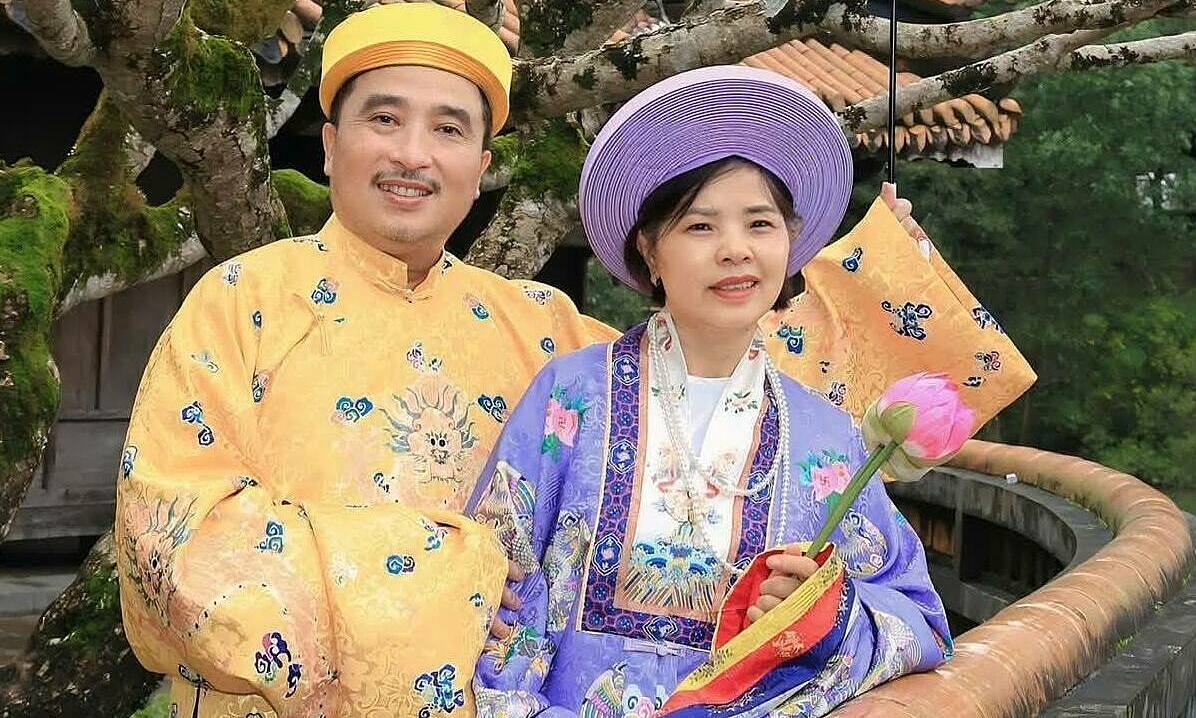
Mr. Truong and his wife on a trip to Hue. Image: Character provided
Before the incident happened, their life in the land of birches passed smoothly for more than three decades. Graduating as an automotive engineering officer and working in Russia in the late 80s, Mr. Truong met Ms. Lam – then a female worker in the group he was in charge of. They got married, became naturalized citizens and built a family. Throughout that journey, Mrs. Lam was the “pillar of health”, always proactive, in contrast to her often sick husband. But fate ironically reversed their roles one afternoon, when Mrs. Lam collapsed right after her daughter returned to Vietnam.
His soldier’s instincts and fluent Russian language helped him immediately identify signs of a distorted mouth, slurred speech, and hemiplegia. He calmly helped his wife to bed, called an ambulance, and accurately described the symptoms. At the hospital, the doctor shook his head: “The prognosis is very bad, the family should prepare mentally.” According to the World Health Organization (WHO), each year globally there are about 15 million strokes. Of these, 5 million people died and another 5 million suffered permanent disabilities, placing a huge burden on families and society.
For 5 days, she was in a special isolation room for dialysis and a ventilator, and he felt like he was sitting on a fire. Afraid that his wife would panic if she woke up between four white walls and didn’t understand the local language, he begged the doctor to give her a handwritten note.
Finally, after 7 days of resuscitation and surgery to remove blood clots, the wife kept her life but her body was completely exhausted. She cannot speak, has to eat through a nasal tube, and depends on relatives for all activities. Looking at his wife from the resourceful woman who suddenly lay motionless, her eyes clearly showing negativity, he understood that medicine could only cure the body, but he had to cure his wife’s “mind”.
Mr. Truong turned his apartment in Russia into a miniature hospital with full exercise equipment. Not only providing care, he “studied the religion” to become a professional nurse. He learned massage and acupressure, practicing every day so that his wife’s body would not atrophy. He filmed every move of the doctor at the hospital, recorded pronunciation exercises, and tongue pulling exercises to go home and “practice” with his wife. To encourage his wife to diet, he voluntarily followed her diet.
The note Mr. Truong asked the doctor to send to his wife who was in emergency in 2019. Photo: Character provided
A 2018 study published in the journal Stroke found that stroke patients with a strong emotional support system from family recovered 40% faster than those who lacked care. Mr. Truong did not know this number, but his husband’s instinct told him that Mrs. Lam needed love more than medicine.
For many years, the former officer did everything from changing diapers, pumping food, cleaning the house to cooking. When she got a little better, he went to work for half an hour and then rushed home. On holidays, even though his wife was still in a wheelchair or hobbling, he never forgot a flower branch and a small gift to remind her: “You are still the most beautiful woman in my life.”
Her husband’s devotion became the biggest motivation for her revival. From having to eat through a tube, the woman begins to practice swallowing, pronunciation, and then take her first steps. She told herself that she had to try to “help her husband”, because in Russia there were no maids, everyone just relied on his shoulders.
In mid-2024, when her health gradually stabilized, the couple began their journey to travel to China and across Vietnam from North to South. They go for 3 to 7 days and then come back to rest and slowly enjoy life. The joy doubled when in October 2025, the son officially got married. Seeing their children settle down, grandparents have more motivation to continue their trips.
When stopping in Vung Tau, realizing that the climate was mild, not too hot or too cold, very good for people who had suffered strokes, they decided to buy a house, planning to arrange their work in Russia to come back here to fully recuperate.
Looking back on his nearly 7-year journey of “fighting” with his wife’s illness, Mr. Truong contemplated: “When fighting for his wife’s life, I realized that impermanence can happen to anyone. Love and sympathy are the greatest sources of encouragement for people to overcome death.”
For him, taking care of his wife is not a matter of debt but “cultivating oneself and accumulating virtue”. He said: “Do good deeds and avoid evil karma, then good things will come.” As for Mrs. Lam, every step she takes today is imprinted with the shadow and sweat of her husband who did not leave her in the darkest times.
The love between Mr. Truong and his wife makes many people admire. Image: Character provided
https://www.startus.cc/company/sam-ash
https://www.provenexpert.com/sam-ash/?mode=preview
https://bizidex.com/en/sam-ash-musical-instruments-774226
https://www.find-us-here.com/businesses/Sam-Ash-Hicksville-New-York-USA/34334149/
https://www.storeboard.com/samash
https://www.successcenter.com/hicksville/services/sam-ash
http://usafeatured.com/directory/sam-ash-profile-78013.aspx
https://supplyautonomy.com/samash2.us
https://smallbusinessusa.com/listing/sam-ash.html
https://www.adpost.com/us/business_products_services/1118969/
https://zumvu.com/samashhicksville/
http://usapromoted.com/directory/sam-ash-profile-59941.aspx
http://www.place123.net/place/sam-ash-hicksville-united-states
http://nationfeatured.com/directory/sam-ash-profile-69958.aspx
https://www.mylifegb.com/united-states/hicksville/shopping/sam-ash
http://stateadvertised.com/directory/sam-ash-profile-47033.aspx
http://www.eliteservicesnetwork.com/classifieds/sam-ash
http://postizze.com/directory/sam-ash-profile-47519.aspx
https://adfty.biz/business/sam-ash-hicksville/
https://www.golocalezservices.com/professional-services/sam-ash
http://usaizze.com/directory/sam-ash-profile-44569.aspx
https://www.a-zbusinessfinder.com/business-directory/Sam-Ash-Hicksville-New-York-USA/34334149/
https://wakelet.com/@SamAsh638
https://www.blurb.com/user/samashusa?profile_preview=true
http://localposted.com/directory/sam-ash-profile-28197.aspx