Malaysia is classified as a country with stable politics, low immigration risks and relatively transparent institutions – important factors that help the passport destination rank highly.
In the rankings Henley Passport Index 2026 (HPI) announced on January 13, the Malaysian passport ranked 9th globally, above the US (10th) and many European countries such as Monaco, Vatican, Bulgaria. Malaysian citizens are exempt from visa or need to apply for a border visa or ETA (electronic travel permit) in 180 countries and territories.
Malaysia becomes one of 5 Asian representatives in the top 10 powerful passports in 2026, along with Singapore (1st), South Korea and Japan (tied for second place), and the UAE (5th). The rankings announced in January showed a clear improvement of the Malaysian passport compared to 2025, ranked 12th.
|
Top 10 passports in 2026
|
According to the Malaysian Immigration Department, the high position in the rankings reflects Malaysia’s strong international position and the level of trust that other countries have in Malaysia. New Straits Times reported.
In the 20 years of publishing HPI’s rankings, 2014 became the year Malaysia had the highest passport ranking, 8th. In 2006 and 2013, the Malaysian passport ranked 9th, in the remaining years, the order fluctuated around 10-14th position, showing the stability of the destination.
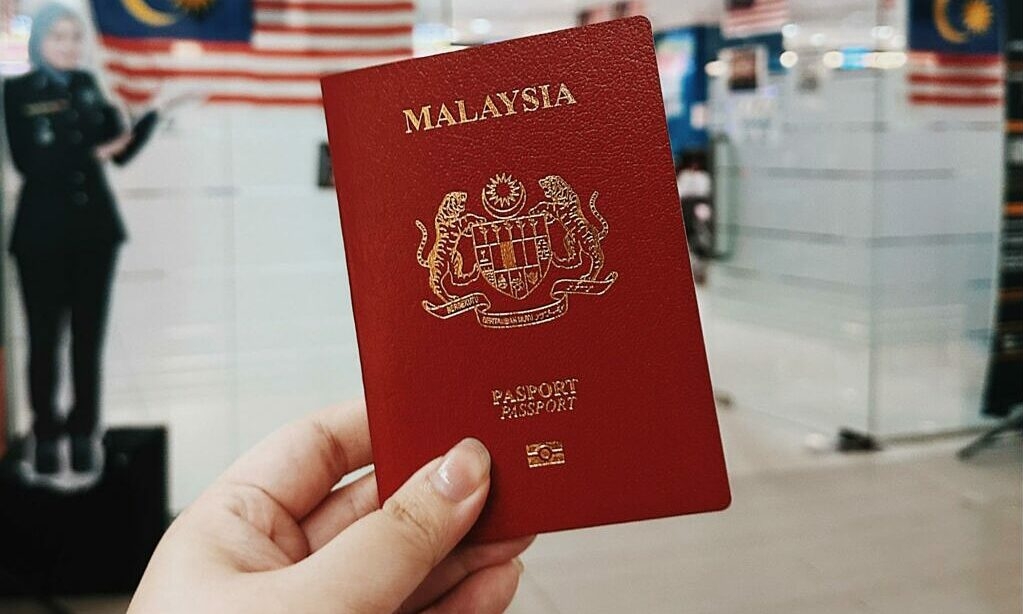
Malaysian passport has a dark red cover. Image: Smart Local
Analysts say that passport strength not only reflects travel convenience but also shows how the world evaluates a country’s governance capacity, reliability and diplomatic effectiveness.
Malaysia is classified as a country with stable politics, low immigration risks and relatively transparent institutions. Malaysian citizens are considered by immigration authorities to be low-risk, law-abiding visitors, thus enjoying many visa exemption policies.
Economic prestige is one of the important factors that enhance passport status. Malaysia is currently the production and trade center of the region, possessing a qualified workforce, stable purchasing power and a responsible tourism image. These factors contribute to strengthening international trust in Malaysian citizens.
If economics creates prestige, diplomacy has a role in maintaining and expanding it. Malaysia promotes multilateral diplomacy, expanding access to the Middle East, South Asia, and Africa, while maintaining close relations with the West. In terms of international openness, Malaysia ranks 13th when it comes to visa exemption, or granting border visas, ETAs to citizens from 167 countries and territories.
Theo Seasiafor many Malaysians, a high passport ranking is a matter of national pride. On social networks, many opinions say that the Malaysian passport “can take the holder almost anywhere in the world without a visa”.
A strong passport not only has symbolic meaning, but also brings practical benefits. Malaysian tourists can skip the cumbersome visa application procedure, no need to queue at the embassy or wait for application review, and save hundreds of dollars on visa costs per trip.
This flexibility allows them to easily hunt for cheap last-minute tickets and take impromptu trips without worrying about visa barriers – an increasingly important advantage in the context of a rapid recovery in global tourism.
HPI is a ranking that evaluates the passport strength of countries, based on the number of destinations that the holder can enter without first applying for a visa. The rankings are built from exclusive data from the International Air Transport Association (IATA) combined with analysis by the Henley & Partners research team.
https://www.kickstarter.com/profile/1019116013/about
https://unsplash.com/@alphasoftwareusa
http://businessesceo.com/directory/listingdisplay.aspx?lid=99126
https://alphasoftwareusa.hashnode.dev/alpha-software
http://professionalzz.com/directory/alpha-software-profile-76442.aspx
https://robustgoods.webflow.io
https://www.cybo.com/FI-biz/robustgoods
https://www.brownbook.net/business/54136787/robustgoods/
https://www.bunity.com/robustgoods
https://www.localstar.org/robustgoods
https://directory9.net/listing/robustgoods.html
https://www.storeboard.com/robustgoods
https://itrustit.com/robustgoods
https://trueen.com/business/listing/robustgoods/601027
https://www.youbiz.com/listing/robustgoods.html
https://www.revealbusinesses.com/listing/robustgoods/
https://www.trustindex.io/reviews/robustgoods.com
https://www.wegotaguy.net/shopping/helsinki/uusimaa/robustgoods
https://www.startus.cc/company/robustgoods
https://thelocal.directory/business-directory/robustgoods/
https://www.provenexpert.com/robustgoods/?mode=preview
https://localwebdirectori.com/listing/robustgoods/
https://www.callupcontact.com/b/businessprofile/RobustGoods/9750544
https://bizidex.com/en/robustgoods-shopping-centers-774399
https://zumvu.com/robustgoods/