About one million couples are infertile, of which about 50% are under 30 years old, affecting the overall fertility rate in Vietnam.
This number was announced by the Ministry of Health with an estimated infertility rate of 7.7% in young couples, equivalent to 700,000-1 million couples, based on research of more than 14,000 couples of reproductive age (15-49 years old) in 8 provinces and cities over many years. Previously, there has been no research in Vietnam on the rate of infertility in the community. However, doctors note that the reality at the hospital shows that more and more couples come for infertility treatment, showing an increasing and rejuvenating trend.
MSc. Le Thi Thu Hien, Professional Director of Hanoi Andrology and Infertility Hospital, said that the infertility rate in Vietnam is high and contributes to affecting the overall fertility level of the country.
“The infertility rate in Vietnam is high while fertility is on a low trend, leading to many consequences such as population decline, lack of labor, especially young workers, aging population and increased social security burden,” Ms. Hien said at the strategic cooperation signing ceremony between the hospital, Long Chau pharmacy and vaccination center system, and Merck Healthcare Vietnam, on the afternoon of January 14 in Hanoi.
In 2025, the general fertility rate in Vietnam is 1.93 children/woman of reproductive age, while the replacement fertility rate needs to be 2.1 children/woman. Only 3/34 provinces and cities have high fertility rates, 13 provinces have fertility levels below the replacement level. The 5 provinces with the lowest fertility rates in the country are Ho Chi Minh City, Tay Ninh, Can Tho, Ca Mau and Vinh Long, with a rate of 1.43-1.6 children/woman.
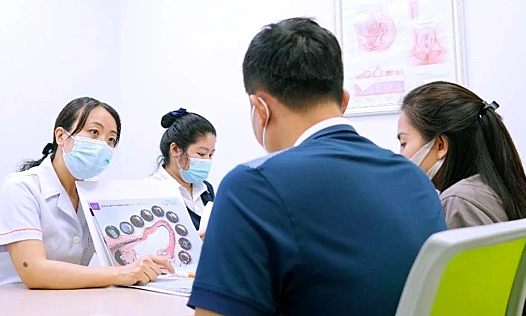
MSc. Le Thi Thu Hien advises patients. Image: Hospital provided
The World Health Organization (WHO) rates infertility as the third most dangerous disease in the 21st century, after cancer and cardiovascular disease. WHO’s 2023 report shows that about 17.5% of the world’s adult population, or nearly one in six people, has experienced infertility. The lifetime infertility rate is 17.8% in high-income countries, 16.5% in low- and middle-income countries.
Vietnam is considered one of the countries with high infertility rates in the world. Of these, according to the Ministry of Health, the causes of infertility are about 40% for women, 40% for men, 10% for both spouses and 10% for unknown causes.
Common causes of infertility in women are blocked fallopian tubes, polycystic ovary syndrome, and endometriosis. Patients do not ovulate due to congenital conditions, advanced age, consequences of surgery or chemical treatment. Life experiences pressure, stress, genital tract abnormalities… causing ovulation disorders.
Infertile men often have no sperm due to testicular failure, retrograde ejaculation or blockage of the ejaculation system. People with weak, few, or abnormal sperm due to congenital genetics, as a result of mumps or orchitis. Drinking and smoking habits also affect sperm quality.
To solve the above situation, Vietnam has implemented many open policies such as single women having the right to access assisted reproductive techniques including egg freezing and in vitro fertilization (IVF) if they have the need and desire. In addition, birth promotion policies such as improving the regime for employees to take maternity leave and raise children. Especially many policies related to providing medical support for infertile and infertile couples.
In fact, infertility is on the rise and getting younger. Meanwhile, financial, psychological, time and fear barriers cause many couples to delay examination and miss out on effective intervention. Therefore, according to Ms. Hien, it is necessary to effectively connect medical resources, solve urgent problems of reproductive health care, and improve infertility in the community.
At the event, the parties announced the pillars of strategic cooperation. Specifically, the three units will coordinate to organize many educational programs to raise public awareness about reproductive health, infertility prevention and treatment, contributing to promoting a more proactive and healthier lifestyle.
http://northlandfeatured.com/directory/lou-square-profile-59210.aspx
https://www.salespider.com/c-45356824/lou-square
http://localliked.com/directory/lou-square-profile-32858.aspx
https://www.qdexx.com/US/FL/Miami/Accountants/US-FL-Miami-Accountants-Lou-Square-Lou-Square
http://citypromoted.com/directory/lou-square-profile-63232.aspx
https://www.nextbizthing.com/united-states/miami/merchants-28retail29/lou-square
http://postizze.com/directory/lou-square-profile-53395.aspx
https://www.golocalezservices.com/classifieds/lou-square
http://businessezz.com/directory/lou-square-profile-127399.aspx
https://www.iformative.com/product/lou-square-p2907338.html
http://promoizze.com/directory/lou-square-profile-47041.aspx
https://batchgeo.com/map/lousquare
https://www.thebusinessminded.com/retail/lou-square
http://featureizze.com/directory/lou-square-profile-44602.aspx
https://www.kickstarter.com/profile/lousquare/about
http://cityizze.com/directory/lou-square-profile-48533.aspx
https://penzu.com/public/39640b4f3f653985
http://localstorefronts.com/directory/lou-square-profile-104806.aspx
https://dzone.com/users/5463048/lousquareusa.html
http://postingzz.com/directory/lou-square-profile-80140.aspx
https://www.whatsyourhours.com/united-states/miami/general-retail/lou-square
http://locallifestyled.com/directory/lou-square-profile-30694.aspx
https://giphy.com/channel/lousquareusa
http://informizze.com/directory/lou-square-profile-59386.aspx
https://www.flipmyyard.com/classifieds/lou-square