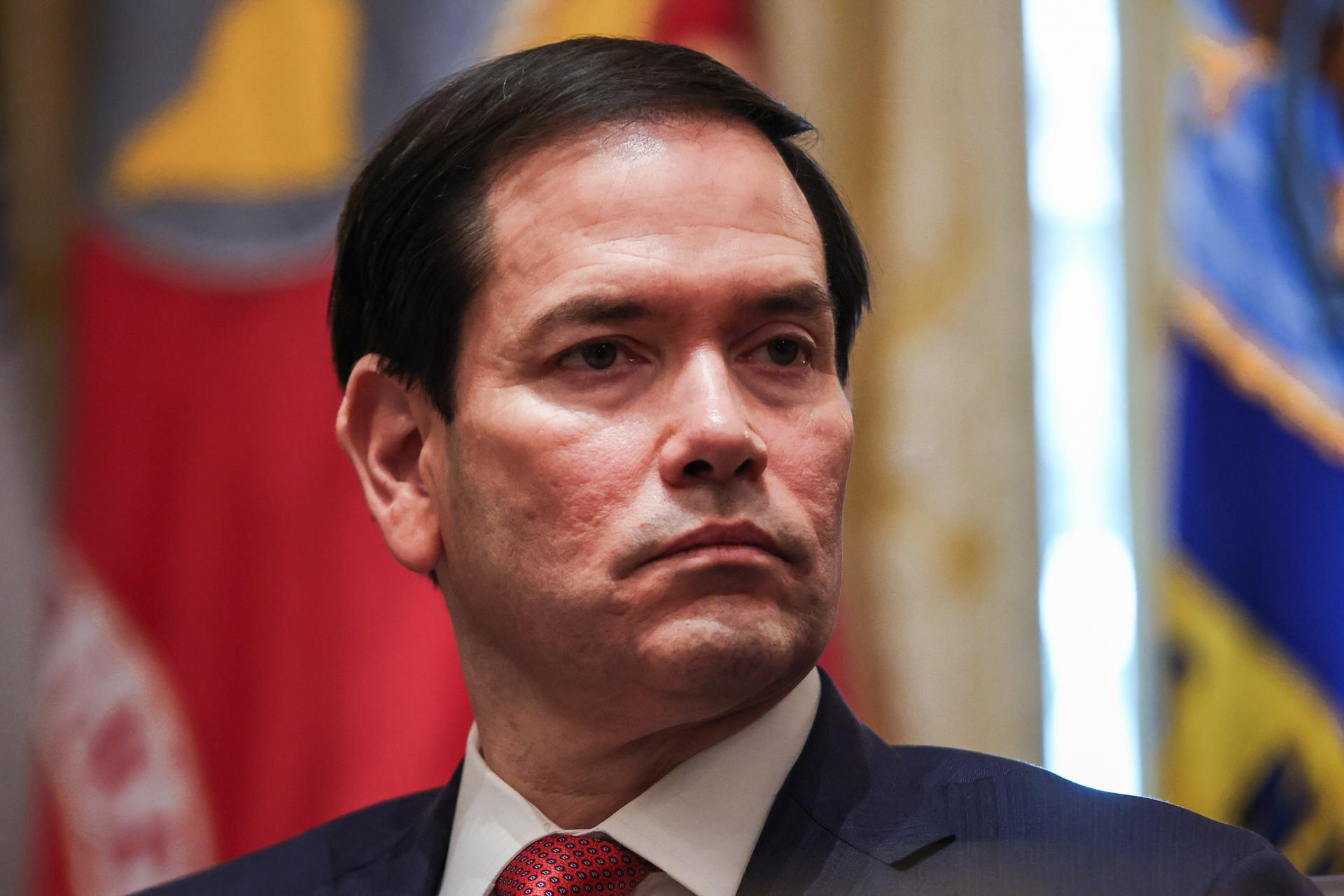
US Secretary of State Marco Rubio gave details of the White House’s plans for Venezuela this Wednesday (28) during a speech in the Senate.
The objective of Donald Trump’s government after the capture of Nicolás Maduro, according to the head of diplomacy, is to achieve a “friendly, stable, prosperous and democratic Venezuela”, where “free and fair elections” are held. One of the first steps taken by Washington was the creation of a mechanism to finance the delivery of basic services to the population, such as sanitation and policing.
“They were facing a fiscal crisis. They needed money immediately to finance police officers, urban cleaning workers and the daily operations of the government,” Rubio informed senators participating in the Foreign Relations Committee.
During the hearing, Rubio warned that this goal will not be achieved in a matter of weeks, but will require “some time.” According to him, financing will come from revenue from sanctioned Venezuelan oil, which is being sold at market prices.
“The ultimate goal is that we want to reach a transition phase where we have a friendly, stable, prosperous and democratic Venezuela, where all sectors of society are represented in free and fair elections,” he said.
Rubio emphasized that even if elections can be held, they will not be free or fair if the opposition does not have access to the press or cannot participate fully.
After Maduro’s departure, Rubio explained, the US’ immediate priority was to avoid a scenario of instability, given the possibility of a civil war or a mass exodus to Colombia.
With this, the White House established direct and respectful conversations with the interim authorities, referring to the acting dictator, Delcy Rodríguez.
“This short-term mechanism stabilizes the country and ensures that revenue from sanctioned oil benefits the Venezuelan people, and not the previous regime,” he argued.
The second phase, according to the Secretary of State, aims at the economic recovery and normalization of the oil industry, which has the largest reserves in the world, promoting sales free of corruption and favoritism.
In this sense, Rubio applauded the Venezuelan Parliament’s recent elimination of many restrictions on hydrocarbons for private companies.
He also emphasized the need to open political spaces for the opposition, noting that there are still almost 2,000 political prisoners in the country.
On this point, he acknowledged that the releases are occurring more slowly than desired, but assured that “they are being released.”
Asked if he was aware that the Drug Enforcement Administration (DEA) was investigating Delcy Rodríguez for her alleged links to drug trafficking, Rubio responded that, unlike Maduro, the interim dictator is not being investigated by the US judicial system.
In a written statement sent to the Senate Foreign Relations Committee, Rubio threatened the “use of force” if the new administration of Delcy Rodríguez does not fully cooperate with the Trump administration.
His presence before the Senate coincides with the meeting scheduled at the State Department with the leader of the Venezuelan opposition, María Corina Machado, who met with Trump two weeks earlier and presented him with the Nobel Peace Prize medal.
https://www.ifesatiles.com/azulejos/salon/marmol/
https://www.ifesatiles.com/azulejos/salon/pasta-blanca/
https://www.ifesatiles.com/azulejos/salon/madera/
https://www.ifesatiles.com/azulejos/piscina/piedra/
https://www.ifesatiles.com/azulejos/piscina/madera/
https://www.ifesatiles.com/azulejos/cocina/porcelanicos/
https://www.ifesatiles.com/azulejos/piscina/porcelanicos/
https://www.ifesatiles.com/azulejos/piscina/cemento/
https://www.ifesatiles.com/azulejos/cocina/piedra/
https://www.ifesatiles.com/azulejos/cocina/pasta-roja/
https://www.ifesatiles.com/azulejos/bano/piedra/
https://www.ifesatiles.com/azulejos/cocina/marmol/
https://www.ifesatiles.com/azulejos/bano/marmol/
https://www.ifesatiles.com/azulejos/bano/pasta-blanca/
https://www.ifesatiles.com/azulejos/bano/madera/
https://www.ifesatiles.com/azulejos/bano/rusticos/
https://www.ifesatiles.com/azulejos/bano/hidraulicos/
https://www.ifesatiles.com/azulejos/bano/pasta-roja/
https://www.ifesatiles.com/azulejos/bano/grises/
https://www.ifesatiles.com/azulejos/bano/decorativos/
https://www.ifesatiles.com/azulejos/bano/blancos/