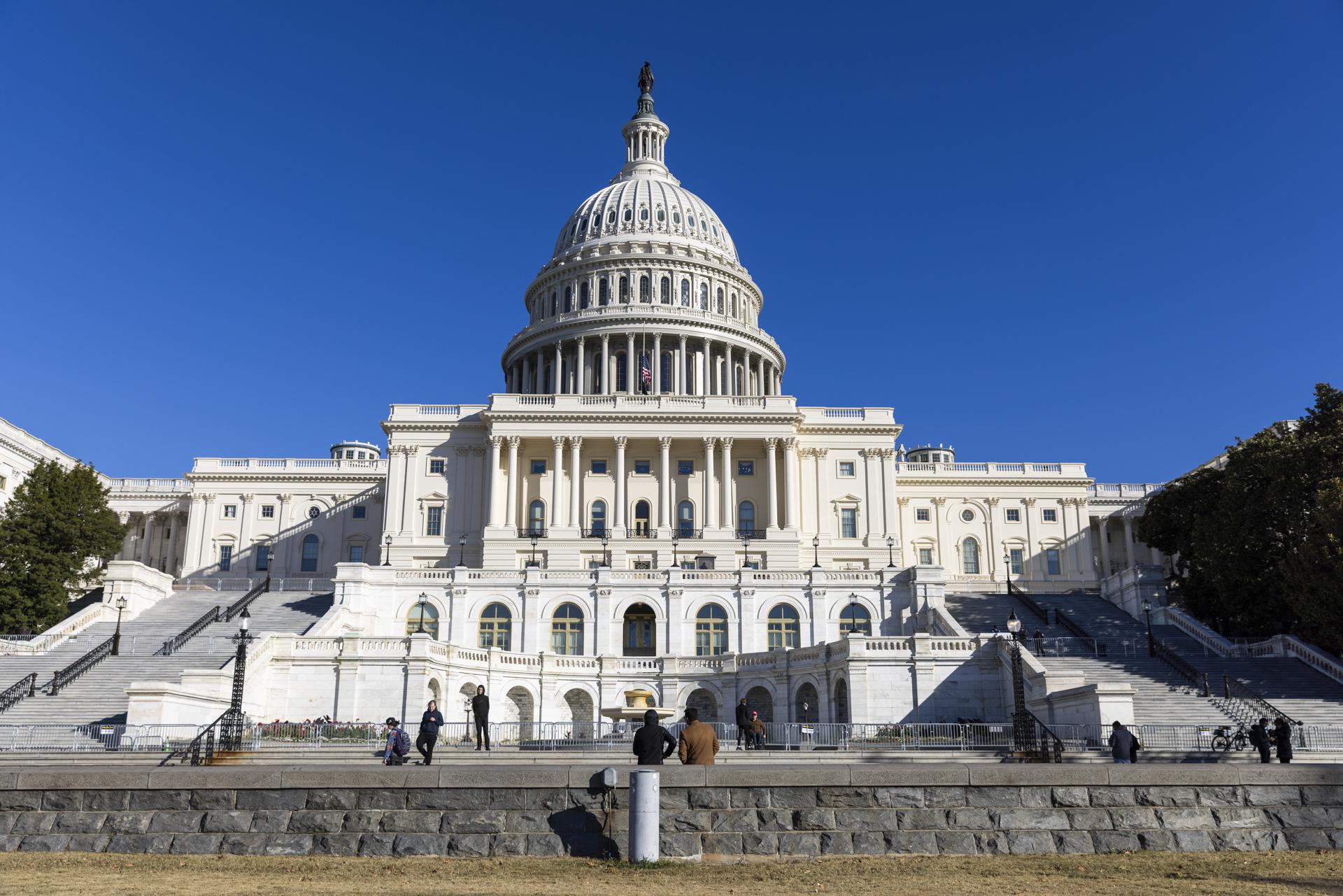
This Saturday (31) the USA entered its second partial shutdown of federal agencies (the so-called shutdown) under the government of Donald Trump, but this time with the expectation that the budget impasse will be resolved early next week, when the House of Representatives will meet for the final vote after an agreement with the White House.
On Monday (2), the House will receive the multi-agency funding bill, which includes maintaining current funding unchanged for two weeks for the Department of Homeland Security (DHS), after the agency faces amendments in the Senate due to disputes arising over this agency’s operation in Minneapolis, where two residents were shot by immigration agents, sparking massive protests.
The vote in the Senate took place this Friday and its sending to the Chamber of Representatives was postponed until Monday, which caused a partial stoppage since midnight last night.
Uncertainty over whether the closure would be prolonged ended after a bipartisan agreement between Democrats and Republicans, supported by President Donald Trump, gave the green light to five appropriations bills and a temporary extension of funding for the controversial DHS.
Given that the House will not meet until Monday, the Pentagon and most national agencies, including the IRS tax agency, have temporarily closed their doors.
The House Rules Committee plans to meet this Sunday to prepare for Monday’s vote, which will require a two-thirds majority and a significant number of Democratic votes.
Although Republican House Speaker Mike Johnson has indicated that they will try to pass the package of bills when lawmakers return on Monday, the vote will not be easy as lawmakers from both parties have expressed their differences over DHS funding.
On the one hand, Republicans said they oppose changes to the agency’s budget, for which they had already voted, while Democrats seek greater oversight of the security agency, but will support the remaining five of the six projects that will be voted on.
“I will not vote for a DHS bill that does not fully fund and empower ICE,” warned Texas Republican Representative Dan Crenshaw.
In turn, the spokesman for the Democratic minority, Hakeem Jeffries, stated that it is necessary to “address the issue of controlling ICE and the Department of Homeland Security with the utmost urgency”, according to the newspaper The Washington Post.
Democrats demanded a series of measures to pass the budget, such as ending roving immigration patrols, tightening rules to require search warrants for immigrant homes, banning agents from wearing masks and requiring them to have proper identification and body cameras.
Republicans also have their list of demands, as they demand to push their own changes in the negotiations, including an offensive against so-called “sanctuary cities”.
If the House can reach an agreement, the package of six funding bills would be sent to President Trump for ratification, at which point the government shutdown would end.
Weekend shutdowns, like this one, are quite common and do not have the same impact as the one at the end of 2025 which, between October 1st and November 12th, set a historic record in the USA by lasting more than 43 days.
https://bookwyrm.social/user/ElijahLewis14
http://www.biblesupport.com/user/797888-leviwalker32/
https://photohito.com/user/profile/216709/
https://www.shippingexplorer.net/en/user/jackking36/244090
https://maxforlive.com/profile/user/iplvzqmicd?tab=about
https://gitflic.ru/user/iplvzqmicd
https://www.chordie.com/forum/profile.php?section=about&id=2452308
https://www.gta5-mods.com/users/LukeWilson48
https://www.divephotoguide.com/user/RyanNelson79
http://www.fanart-central.net/user/iplvzqmicd/profile
https://disqus.com/by/iplvzqmicd/about/
https://profile.ameba.jp/iplvzqmicd
https://motion-gallery.net/users/899792
https://allods.my.games/forum/index.php?page=User&userID=227336
https://swaay.com/u/iplvzqmicd/about/
https://www.intensedebate.com/people/MaverickKing69
https://hedgedoc.envs.net/s/SQ80Z3PaY
https://pinshape.com/users/8890784-gabrielmorgan56?tab=designs
https://graph.org/httpswwwinnerbuddiescomproductsmicrobiome-test-01-21-4
https://www.linkcentre.com/profile/gabrieladams57/
https://www.rwaq.org/users/hsemqeibnr-20260121030847
https://forum.bug.hr/forum/user/iplvzqmicd/147180.aspx
https://www.siteinspire.com/profile/26092-innerbuddies
https://www.callupcontact.com/b/businessprofile/innerbuddies/9945204
https://telegra.ph/httpswwwinnerbuddiescomproductsmicrobiome-test-01-21-3