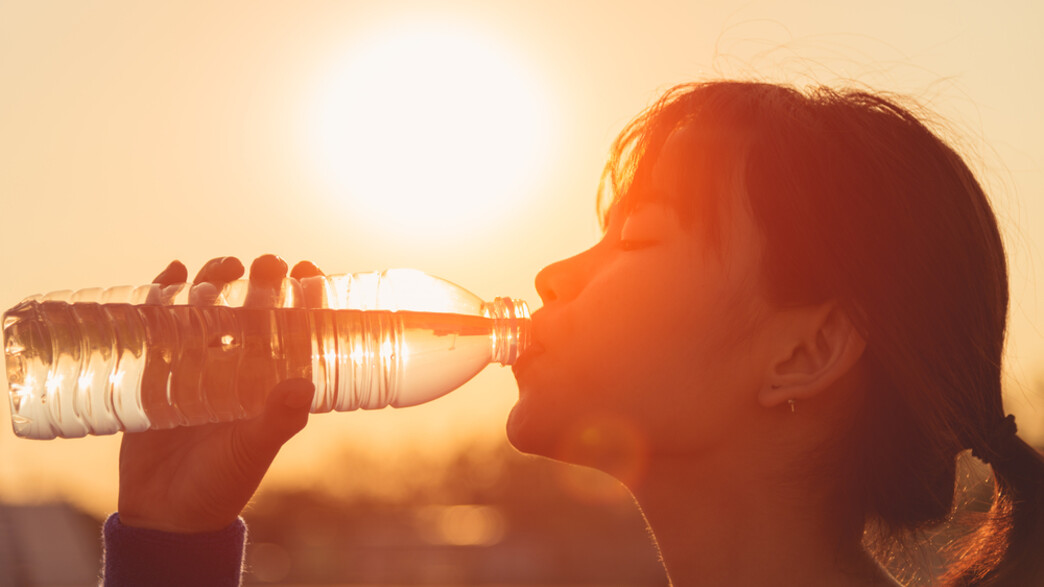
From ancient times to the present day, one of the biggest challenges for humanity has been and remains obtaining water of a good enough quality to drink. For this purpose, humans tended to settle near water sources. In recent years, the pressure on quality water sources has been increasing, whether due to an increase in the population in relatively dry areas or due to climate changes, which cause areas that were wet to dry out. Already today, the number of people who do not have regular access to potable water is increasing is about 2.2 billionand is expected to rise to 5 billion Until the year 2050. It is understandable, then, that the challenge is sometimes referred to as the “water crisis”, although it is important to remember that the “water crisis” does not concern water in general – as there is still enough water on Earth, and this situation is not expected to change in the near future – but rather water that is suitable for humans to drink and within reach.
dictation Originally published on the Davidson Institute for Science Education website
Fortunately, right under our noses (and above and around it) there is a place with a not inconsiderable amount of good quality water – the air. Everywhere on Earth, especially close to the ground, the atmosphere is moist, meaning it contains some amount of water. Sometimes, for example in the dry desert, it is a small amount, and in other cases it is so large that you can see small drops of water floating in the form of a cloud or fog. If possible, extracting water from the air is expected to provide a particularly attractive solution in places far from the sea, there Desalination of salt water is not a relevant solution, or in places far from an organized water transmission infrastructure. For many years various start-up companies and research groups, including of 2025 Nobel Prize Winner in Chemistry Omer Yaghito face the challenge of extracting water from the air. now, in research Published in the journal Nature Water, an international group of researchers from MIT may have made significant progress toward such a solution.
Adsorption systems
The solution advanced by the group of researchers is based on Adsorption systemsand is particularly suitable for dry climates, where simpler solutions, such as condensation systemsare not effective. Adsorption system works in two stages. In the first stage, the systems adsorb the water vapor into a material with high adsorption capacity, such as salt or an organometallic framework, a porous material composed of carbon molecules and metal ions. This stage usually happens at night, when the relative humidity high in the air In the second stage, the systems evaporate the water from the substances that adsorbed it, so that it can condense as liquid water suitable for drinking. This stage usually occurs during the day, utilizing the sun’s heat to evaporate the water from the adsorbents. But alongside the prominent advantage of the absorption systems – producing water in a dry climate at a low energy cost – they have a number of limitations. The first limitation is that they work effectively in a limited humidity range, often low, to suit a dry environment. However, even in dry places there are days when the relative humidity is high, so a system that operates in a wider humidity range is required. The second limitation is that the absorption systems include the use of substances that may be harmful to health, in particular rare salts such as lithium chloride, which may penetrate the produced water and impair its quality. It seems that the new solution, known as the “Atmospheric Water Harvesting Window”, manages to overcome these limitations.
The group of researchers developed a hydrogel that functions as an absorbent and combines polyvinyl alcohol (PVA), lithium-chlorine salt, glycerol and black ink, which contributes to maximum light absorption. This composition allows for the absorption of moisture at night, and evaporation and then recondensation while maintaining a low and safe level of salts in the water. To turn the material into a system that works in the field, they combined the hydrogel in a device the size of a typical home window that has a vertical hydrogel panel inside and a glass pane in front of it. At night the hydrogel absorbs water from the air, while during the day under the heat of the sun the vapor condenses on the windshield, drips down and collects at the bottom of the device. In the article, the group of researchers states that the device operates in a wide range of humidity values in the air, between 18 percent and more than 90 percent. Also, according to them, the produced water has a negligible amount of salts and lithium ions, so that it meets strict health standards. Although it is only a proof of feasibility, the device the researchers developed made it possible to produce up to 160 milliliters of water per day in Death Valley in California, which is famous for its low humidity values. Even if it doesn’t sound like much, this system sets a new bar for water production capacity. We can only hope that after further improvements and an increase in the output capacity of the device, solutions will be developed that allow the production of even higher amounts of water, even in the dry desert.
https://brand-management.netlify.app/guide/brand-management-ai-automation-intro
https://brand-management.netlify.app/guide/modern-brand-management-creativity-automation-vision
https://brand-management.netlify.app/guide/strategic-brand-management-smart-templates
https://brand-management.netlify.app/guide/data-driven-brand-reputation-insights-to-execution
https://brand-management.netlify.app/guide/brand-kits-self-serve-marketing-templates
https://brand-management.netlify.app/guide/enterprise-design-automation-marketing-operations
https://www.datazzle.com/services-data-science
https://www.datazzle.com/services-data-engineering
https://pandorawiki.org/How_to_GET_FREE_COINS_in_WebNovel_Unlock_EVERYTHING_NOW
https://cineg.org/wiki/index.php/(unlock_books)_WebNovel_Free_100000000_Coins_to_Unlock_Chapters_1_Year_Pass
https://pyra-handheld.com/wiki/index.php/(unlimited)_WebNovel_Free_1M_Coins_to_Unlock_Chapters_Pass_ios_android
https://africa-rising-wiki.net/(real)_WebNovel_Free_Coins_to_Unlock_BOOKS_Chapters_Pass_IPA_APK
https://ahay.org/wiki/LEGIT_MOD_for_WebNovel_app_GET_Free_Coins_to_Unlock_Chapters_Pass
https://dywanywitek.pl/blog/jak-i-czym-czyscic-dywan-kompletny-przewodnik
https://www.universe.com/events/teamwork-training-for-managers-tickets-LWJ3QP
https://www.reddit.com/r/PublicSpeaking/comments/1ixg77w/how_is_everyone_becoming_a_millionaire_from/
https://microsoftedge.microsoft.com/addons/detail/the-lincoln-lawyer-wallpa/bgjmbkinmhgkkhmpndomamfebohmflog
https://microsoftedge.microsoft.com/addons/detail/ark-ascended-wallpaper-ne/ompfgonnfnmcbdpjmkpinbajpdkjdgcm
https://sternclientcheats.vercel.app
https://simcongo.com/2026/02/17/turnamen-poker-panduan-lengkap-untuk-pemula/
https://wellbeingmakeover.com/how-to-attract-international-real-estate-buyers/
https://www.intelligenthq.com/top-5-link-building-agencies-for-saas-companies/
https://www.alltechbuzz.net/top-5-ai-digital-marketing-agencies-for-law-firms/
https://digital.marketing/blog/customer-success
https://digital.marketing/blog/benefits-of-utilizing-a-crm-system-for-sales-projection