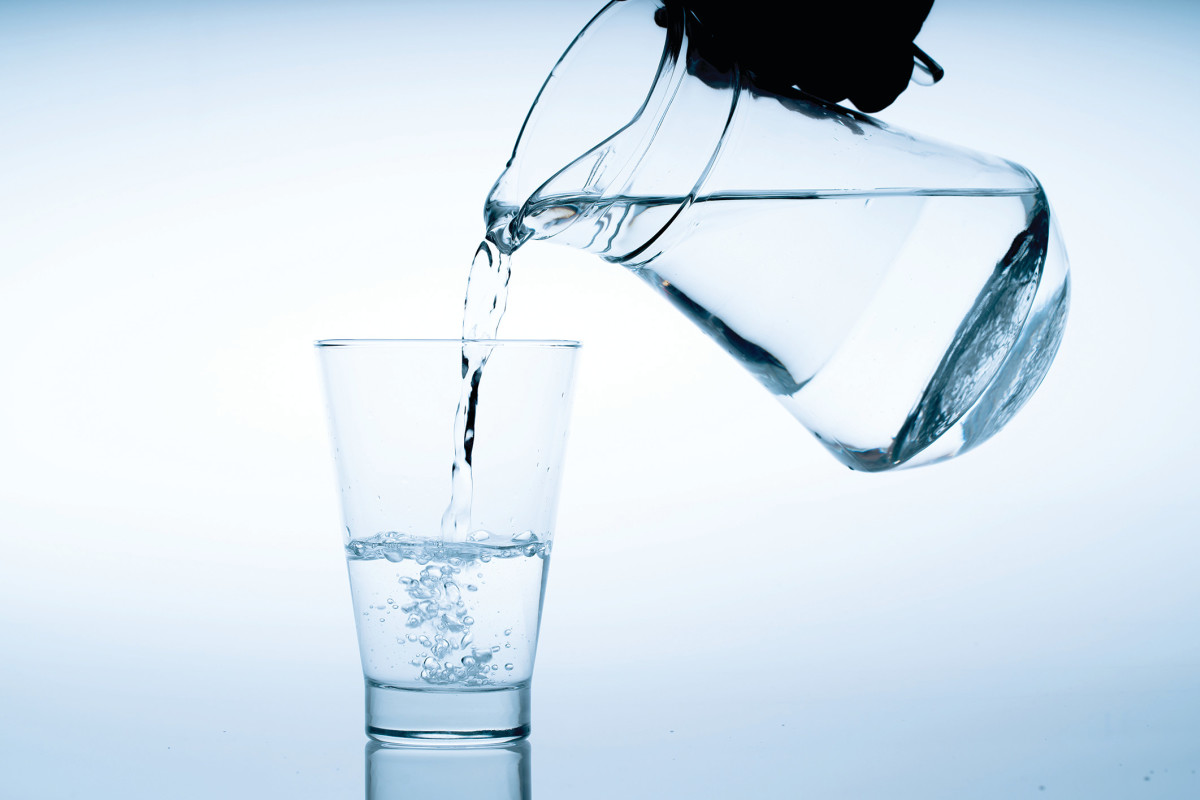
Most of us count glasses of water. Few count the water in the plate, yet, the complaint “I don’t drink enough water” is common and familiar and usually accompanied by a feeling of guilt. Many try to force themselves to drink, and sometimes even use an app that reminds them to drink every hour. But what not everyone knows is that a significant part of the fluid balance in the body (what is known in the professional language as “hydration”) comes from a source that we almost ignore: the food we eat.
A large-scale international study, published in the professional journal “Science” in 2022, measured the rate of water turnover in the body among more than 5,600 participants. The study emphasized how fluid balance is affected not only by drinking but also by the composition of the diet.
The European Food Safety Agency (EFSA) states that the recommendations for fluid consumption – about 2.5 liters per day for men and about 2 liters for women – refer to total consumption from drinks and food together. In other words, eating food rich in liquids contributes to the water balance in the body, but does not replace the need for proactive drinking of water and beverages.
the drinker’s food
A cucumber is about 95% water, a tomato about 94%, and a watermelon more than 90%. Soups reach 85% and even more. Leading organizations such as the World Health Organization (WHO) estimate that food contributes about 20% of total fluid consumption. In a diet rich in salads, vegetables and fruits – as is customary in Israel – the contribution can be higher.
It is important to remember: even if a cucumber is 96% water, a typical portion of salad (200 grams) contributes about 190 ml of water – less than one glass. That is why we said that food contributes, but does not replace drinking water and beverages.
But not every food rich in water contributes equally to fluid retention in the body. Studies on the “hydration index” of drinks and foods indicate that milk, soups and foods with a combination of water along with mineral salts (sodium, potassium, calcium) and carbohydrates preserve the fluids in the body for a longer time than plain water. They affect the removal of fluids from the body, so in some studies it was found that they remain in the blood for a longer time compared to water alone – that is, they are cleared more slowly through the urine and contribute to a longer stability of the blood volume, which in a healthy person is generally considered an advantage.
A common myth claims that coffee “doesn’t count” as a daily drink because it is a diuretic. Studies from recent years show otherwise: drinking up to three cups of coffee a day does not significantly increase the amount of urine compared to plain water, among people who are used to caffeine consumption. That is, your coffee – and in a reasonable dose – contributes to the daily fluid balance.
A simple way to check adequate drinking is the color of urine. Light and almost transparent urine indicates a normal fluid balance, while dark urine indicates the need to drink more. However, foods such as beets or vitamin B supplements can change the color of urine.
When the mind is confused
A question that is often asked: “Is the feeling of hunger real or is it actually a feeling of thirst?”. This is not a folk myth. Studies show that the areas of the brain that regulate thirst and hunger (in the hypothalamus area) are close to each other, and their neural circuits partially overlap. In addition, mild dehydration causes a decrease in blood volume, which can lead to fatigue, which we often interpret as a need for energy – that is, food.
However, studies show that among healthy people, this overlap does not consistently lead to overeating. And to be proactive, when you experience “hunger”, especially if less than two hours have passed since the last meal, you should try to drink a glass of water and wait 15 minutes. If the sensation is gone, it may have been thirst. If not, it’s probably real hunger.
Studies that demonstrated the volume of the stomach show that water creates mechanical stretch and a feeling of fullness. However, unlike food containing calories, they do not activate the hormonal satiety mechanisms in the digestive system as strongly. Therefore, drinking water before a meal may temporarily reduce the feeling of hunger, but does not replace the physiological feeling of satiety that comes from the meal itself.
When is more less?
While most people are concerned that they are not drinking enough, there are populations that should actually pay attention to limiting fluid intake. People with heart failure, chronic kidney disease or liver cirrhosis may suffer from fluid accumulation in the body and should follow the instructions of the attending physician. Some medications also change and require adjustment of fluid intake. In addition, extremely high consumption in a short period of time, especially in combination with prolonged effort, can lead to a rare but dangerous condition called “water poisoning” or hyponatremia (low concentration of sodium in the blood). This is especially relevant for athletes in marathons or prolonged efforts who drink large amounts of water without balancing with mineral salts.
http://cqr3d.ru/user/foamplough44/
https://hedgedoc.nrp-nautilus.io/s/Ah3rV5PvEN
https://docvino.com/members/levelmonth5/activity/1361295/
https://dok.kompot.si/s/ABkMksZhkz
https://community.m5stack.com/user/farmaciadeguardiaen
https://paripesa-chile.com/paripesa-jokers-jewels-cash/
https://myspace.com/postrythe/post/activity_profile_43256865_d6aeb75a68dd4b7db02853a850901695/comments
https://trueluck-global.com/es-es/
https://pad.hackerspace.gent/s/JSPQaJ2fP
https://jbcasinobe.com/nl-be/mobiel/
https://hedgedoc.sysnove.net/s/6NAcdjlwZ
https://hd.wedler.me/s/viH2tlpiz
https://1win-chickenroad.in.net/
https://trueluck-global.com/de-de/mma/
https://md.emile.space/s/BRw-Lj24PE
https://bom.so/gDcLrZ
https://jbcasinobe.com/app/
https://hedgedoc.team23.org/s/z5N9c-YZ3
http://megapari-egypt.org/megapari-western-slot/
https://broken-pads.zapf.in/s/e9x2fHj5I
https://sites.google.com/view/dentistarecomendadoentorredelm/p%C3%A1gina-principal
https://mostbetaviator.in.net/withdrawal/
http://megapari-egypt.org/cricket/
http://community.srhtech.net/user/closerise2
https://docs.grava.io/s/5CuvgC_9N