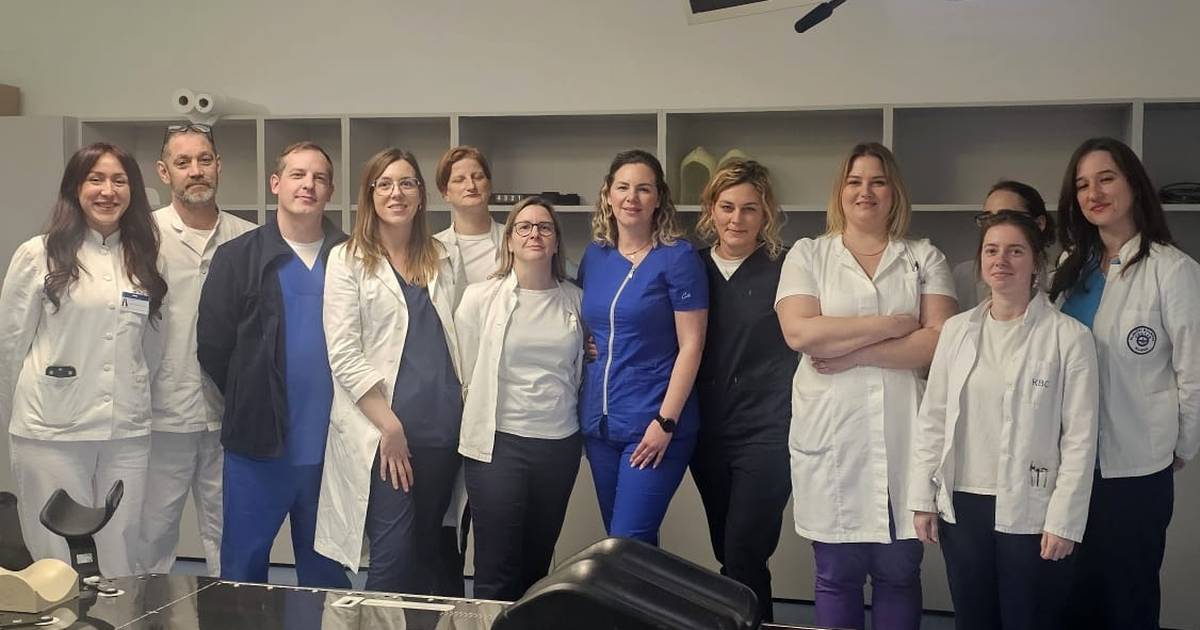
The KBC tumor clinic was the first in Croatia to introduce stereotaxic liver radiotherapy (SBRT), one of the most advanced methods of treating metastases and primary tumors, becoming the first institution in the public health system to perform this procedure, KBC announced.
Riverč is about a significant step forward in oncological care because, after stereotaxy of the brain and lungs, it is now possible to perform stereotaxic procedures on lesions of the whole body in the Rijeka KBC.
Liver stereotaxic radiotherapy is one of the most accurate methods of treating malignant changes. The therapy is carried out in a small number of fractions, most often three to five, during which high doses of radiation are applied with millimeter precision. A special challenge is the control of the position of the tumor due to the movement of the liver during breathing, as well as the maximum protection of healthy tissue.
The liver is a vital organ that performs more than 500 functions key to life, which is why radiation planning is extremely demanding. It is necessary to maintain a sufficient volume of healthy liver parenchyma that can take over all the necessary functions.
Head of the Tumor Clinic of KBC Rijeka Ivana Mikolašević she pointed out that the liver is one of the most common sites of metastases because the introduction of SBRT, in combination with modern systemic oncology therapy, can lead to very good treatment outcomes in some patients.
“It has also been shown that SBRT can activate the immune system, and it additionally enhances the effect of immunotherapy. The method is used in liver metastases and in primary tumors, such as hepatocellular and cholangiocellular carcinoma, as definitive treatment or as a bridge to liver transplantation,” Mikolaševi said.
She added that stereotaxy, along with modern systemic therapy and a multidisciplinary approach, changes the concept of treatment and prognosis of oncological diseases.
“Thus, we are aiming for the oncology disease to become chronic in an increasing number of patients”, she emphasized.
The introduction of this complex method was led by a team of oncology and radiotherapy specialists from the Tumor Clinic, with the support of radiological technologists, medical physicists and radiologists. Due to the complexity of the procedure, a special Department for advanced radiotherapy techniques and stereotaxy was established three months ago.
At KBC Rijeka, they say that now, with a detailed assessment by the expert team, stereotaxic radiosurgery is available for tumors in all parts of the body.
https://jeetbuzz1.in/registration/
https://jeetbuzz1.in/responsible-gaming/
https://jeetbuzz1.in/sample-page/
https://jeetbuzz1.in/slots/
https://jeetbuzz1.in/support/
https://jeetbuzz1.in/tennis/
https://jeetbuzz1.in/terms-and-conditions/
https://jeetbuzz1.in/verification/
https://jeetbuzz1.in/welcome-bonus/
https://jeetbuzz1.in/withdrawal/
https://penaltygame.com.br/
https://penaltygame.com.br/bonus/
https://penaltygame.com.br/codigo-promocional/
https://penaltygame.com.br/download/
https://penaltygame.com.br/melhores-apps-de-disputa-de-penaltis/
https://penaltygame.com.br/inscricao/
https://penaltygame.com.br/o-que-e-disputa-de-penaltis/
https://penaltygame.com.br/como-jogar/
https://penaltygame.com.br/dicas-e-estrategias/
https://penaltygame.com.br/sinais/
https://penaltygame.com.br/provedor/
https://penaltygame.com.br/deposito/
https://penaltygame.com.br/saque/
https://penaltygame.com.br/demo/
https://penaltygame.com.br/1win/