Nittobo’s T-glass fiberglass fabric technology, which is thinner than a human hair, is a “bottleneck” in AI chip production due to limited supply.
“T-glass is very difficult to produce. Competitors cannot make progress like Nittobo in the near future,” Mr. Noritsugu Hirakawa, analyst at Japan’s second largest financial and securities group Daiwa Securities, told WSJ.
High-quality T-glass fiberglass fabric is a little-known material but plays an important role in AI chip production. This is essentially low coefficient of thermal expansion (CTE) glass, prized for its dimensional stability, rigidity, and ability to promote high-speed data transmission. They are used in reinforcing layers below or around the chip, helping to prevent deformation as the processor heats up.
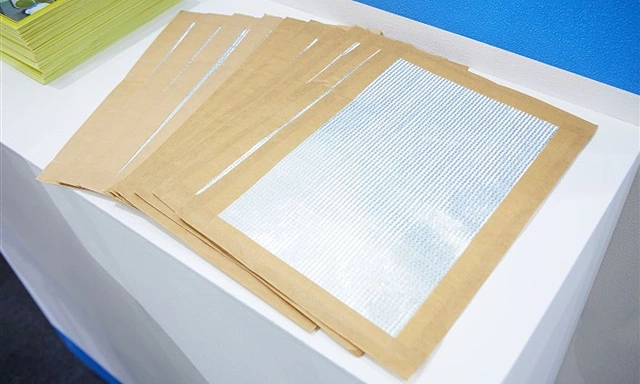
Nittobo T-glass panels. Image: Digitimes
Nittobo supplies glass fabrics to materials manufacturers such as Resonac and Japan’s Mitsubishi Gas Chemical to create copper-clad (CCL) panels. After that, units specializing in chip substrates and printed circuit boards such as Ibiden and Unimicron will use CCL to create high-end chip substrates, used to mount and package AI chips from Nvidia and others. In addition, premium fiberglass fabric is also essential for powerful memory chips and processors.
Nittobo (or Nitto Boseki) originated from a spinning factory founded in 1898, then officially merged into Nitto Boseki in 1923 and took this as the year of establishment. In the context of booming AI chip production, the company is mentioned more often as being behind T-glass.
Some industry experts assess that although the principles of fiberglass have been understood for a long time, only a few companies such as Nittobo have their own formula, combining specialized glass materials and fiber weaving methods to create exclusive materials.
Theo DigitimesT-glass shortages began in late 2024 when Nittobo was unable to increase production fast enough to meet high demand, leading to supply bottlenecks. At the end of last year, Nittobo continued to add more production lines as well as increase product prices but still could not meet demand.
“Putting new production lines into operation is not enough to narrow the gap between supply and rapidly growing demand,” a Nittobo representative told WSJ.
According to this person, the company has set a goal of tripling the capacity of 2025 by 2028. However, this speed is not considered fast enough, when customers like Nvidia or AMD need materials immediately.
Last month, Resonac – a “giant” in the fields of semiconductor materials, electronics, automobiles and industrial chemicals – said Nittobo had increased prices by more than 30% for certain products supplied to this company. Meanwhile, Citigroup analysts predict Nittobo could increase T-glass prices “by as much as 25% or more.”
Japan currently owns many companies that play an important role in semiconductor production. For example, Ajinomoto, the Japanese food company famous for commercializing MSG, took advantage of a unique chemical formula to create a specialized membrane for use on the bottom layer of the chip. Other businesses include Tokyo Electron, Screen, Advantest in the field of chip manufacturing equipment; Shin‑Etsu, Sumco create wafers; or Renesas and Rohm design high-power chips.
Experts assess that Japanese companies control many semiconductor materials at the upstream stage, but their traditional cautious approach can slow down the response to skyrocketing demand, is not strong enough to create a closed value chain strong enough with an integrated model and large scale, and lacks the necessary synergies to compete on a global scale.
“They are concerned that overly optimistic forecasts will eventually lead to oversupply,” said Taiwan Institute of Economic Research (TIER) researcher Shih Fang Chiu.
In fact, Nittobo himself mentioned cases in the past where customers made optimistic forecasts but suddenly withdrew them after the market went down. “Demand for artificial intelligence is growing rapidly, but we do not expect this growth rate to be maintained,” added a Nittobo representative.
Some competitors are looking to get ahead. Among them, Taiwan Glass, Taiwan’s largest glass manufacturer, revived its own low-expansion glass technology called TS-Glass, and is increasing capacity to serve the AI explosion. China’s Taishan Fiberglass is also emerging as a formidable competitor, especially to serve domestic demand.
However, according to experts, high-end T-glass is not something everyone can produce immediately, so Nittobo can maintain its important position in the supply chain for a while longer.
https://texascriminaldefensegroup.com/landing/nonav/google-ppc/garza/google-ppc-garza-drug/
https://texascriminaldefensegroup.com/landing/nonav/google-ppc/guadalupe/google-ppc-guadalupe-assault/
https://texascriminaldefensegroup.com/landing/nonav/google-ppc/guadalupe/google-ppc-guadalupe-drug/
https://texascriminaldefensegroup.com/landing/nonav/google-ppc/gray/google-ppc-gray-drug/
https://texascriminaldefensegroup.com/landing/nonav/google-ppc/gray/google-ppc-gray-assault/
https://texascriminaldefensegroup.com/landing/nonav/google-ppc/hale/google-ppc-hale-drug/
https://texascriminaldefensegroup.com/landing/nonav/google-ppc/harris/google-ppc-harris-drug/
https://texascriminaldefensegroup.com/landing/nonav/google-ppc/garza/google-ppc-garza-assault/
https://texascriminaldefensegroup.com/landing/nonav/google-ppc/hays/google-ppc-hays-drug/
https://texascriminaldefensegroup.com/landing/nonav/google-ppc/galveston/google-ppc-galveston-domestic-assault-spanish/
https://texascriminaldefensegroup.com/landing/nonav/google-ppc/howard/google-ppc-howard-drug/
https://texascriminaldefensegroup.com/landing/nonav/google-ppc/hood/google-ppc-hood-drug/
https://texascriminaldefensegroup.com/landing/nonav/google-ppc/hutchinson/google-ppc-hutchinson-drug/
https://texascriminaldefensegroup.com/landing/nonav/google-ppc/johnson/google-ppc-johnson-drug/
https://texascriminaldefensegroup.com/landing/nonav/google-ppc/kaufman/google-ppc-kaufman-drug-spanish/
https://texascriminaldefensegroup.com/landing/nonav/google-ppc/yoakum/google-ppc-yoakum-drug/
https://texascriminaldefensegroup.com/landing/nonav/google-ppc/lamb/google-ppc-lamb-drug/
https://texascriminaldefensegroup.com/landing/nonav/google-ppc/galveston/google-ppc-galveston-assault-spanish/
https://texascriminaldefensegroup.com/landing/nonav/google-ppc/lubbock/google-ppc-lubbock-drug/
https://texascriminaldefensegroup.com/landing/nonav/google-ppc/lynn/google-ppc-lynn-drug/
https://texascriminaldefensegroup.com/landing/nonav/google-ppc/medina/google-ppc-medina-drug/
https://texascriminaldefensegroup.com/landing/nonav/google-ppc/galveston/google-ppc-galveston-assault/
https://texascriminaldefensegroup.com/landing/nonav/google-ppc/midland/google-ppc-midland-drug/
https://texascriminaldefensegroup.com/landing/nonav/google-ppc/montgomery/google-ppc-montgomery-drug/
https://texascriminaldefensegroup.com/landing/nonav/google-ppc/montgomery/google-ppc-montgomery-drug-spanish/