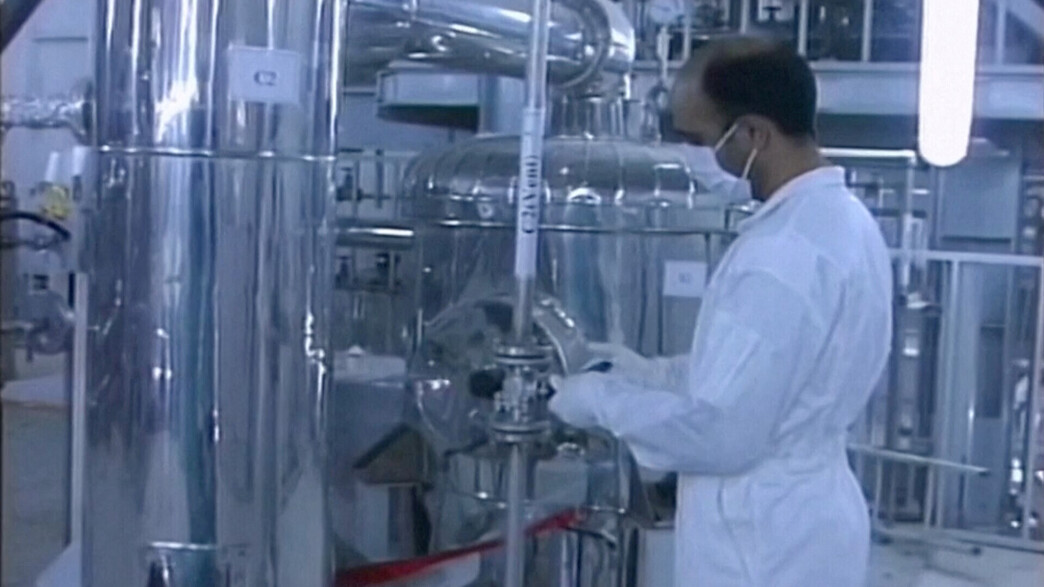
According to a Reuters report, the Atomic Energy Agency revealed for the first time the location of the uranium enriched to the level of 60%, a touching distance from a level that allows the production of a bomb.
A confidential report by the International Atomic Energy Agency (IAEA), sent today (Friday) to member states and obtained by the Reuters news agency, reveals that Iran is storing significant amounts of highly enriched uranium in an underground complex in Isfahan, in the center of the country. This is the first time that the agency has officially and accurately indicated the storage location of the most sensitive material in the Iranian nuclear program.
The data emerging from the report show that the uranium in question was enriched to a level of 60%, a level considered to be very close to the 90% level required for the production of nuclear weapons (Weapons Grade).
According to diplomats quoted by Reuters, the entrance to the tunnel complex in Isfahan was bombed during an operation with a dog last June as part of military strikes carried out by the US and Israel. However, it appears that the operational efforts did not achieve their ultimate goal. Despite the damage caused to the entrances to the tunnels, the new findings by the SBA indicate that the underground facility itself remained largely intact.
Rubble under brick roofs: the Iranian effort to hide the damage in Isfahan
In contrast to the ballistic missile array (as at the Shahrod site), where a rapid restoration of the production infrastructure was detected, the situation at the nuclear sites is quite different. As of today, the enrichment facilities in Natanz, Purdue and Isfahan remain largely non-operational, and the work in them is focused on hiding and shielding rather than returning to active production.
The visual analysis of the “Times” reveals a picture of “covering traces” at the Isfahan and Bentanz site: Over the rubble areas in Isfahan, brick roof buildings were erected. According to intelligence assessments, these were intended to prevent spy satellites from assessing the internal damage and to hide the work of clearing the destroyed equipment and centrifuges.
In Isfahan, piles of fresh dirt were recorded covering the entrances to the underground tunnels. Experts estimate that this is an attempt to protect the remaining “precious assets” – such as the enriched uranium reported by the SBA – from future waves of attack by the Trump administration.
Western intelligence sources point out that beyond clearing rubble and filling craters, there is almost no evidence that Iran has succeeded in restoring its technological ability to enrich nuclear fuel at these sites. However, deep concern is arising around the Perchin military site, where a mysterious construction of a 45 meter long cylindrical structure has been detected. Although its purpose is unclear, the very construction on a site that was previously used for nuclear weapons tests turns on red lights in the international intelligence community.
https://wheretoplay.ucoz.org/
https://github.com/PhillaSc/sultangames1/tree/main
https://azart1.moy.su/
https://phijkchu.com/a/sergnowaday/video-channels
https://culture-informatique.net/forum/profile/14765/
https://medium.com/p/659c2cb2a01b?postPublishedType=initial
https://forum.maistrafego.pt/index.php?action=profile;u=27070
https://ajda.neocities.org/
https://pubhtml5.com/homepage/zkptu/
https://2dzm7hc82.ukit.me/
https://thesleepinghusband.rolka.me/profile.php?id=2271
https://www.tripadvisor.in/Profile/Discover61830834386
https://www.awwwards.com/rendi/
https://golosknig.com/profile/sergnowaday/
https://www.blackhatworld.com/members/sergnowaday.2292046/#about
https://dreevoo.com/profile_info.php?pid=1168695
https://zoo-help.at.ua/index/8-1571
https://myanimelist.net/profile/rendicarpenther#lastcomment
https://florinka.at.ua/forum/20-44994-1
https://pl.pinterest.com/roybrownhere/_profile/
https://www.brownbook.net/business/54849417/sultan
https://www.azrockradio.com/profile/kelvinwrithe6326352/profile
https://www.notebook.ai/users/1286194
https://forum.napisy24.pl/memberlist.php?mode=viewprofile&u=4065