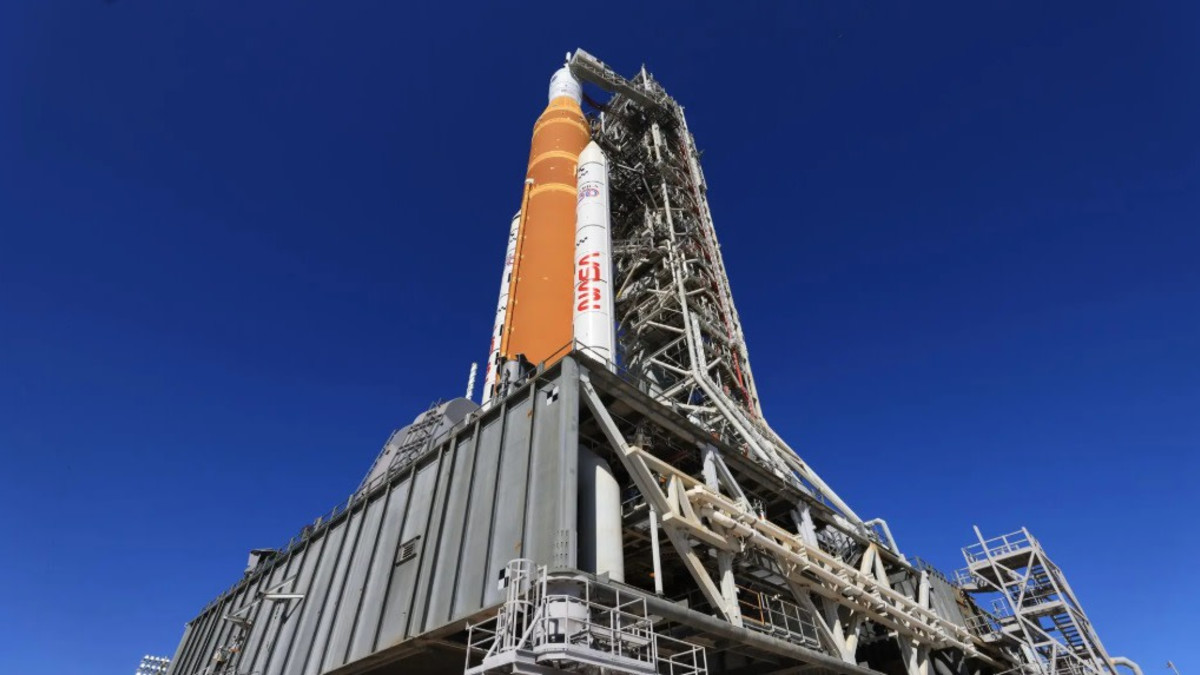
The Artemis program is not just a return trip to the past, but the next step in the conquest of deep space. The ultimate goal is to land the first woman and the first non-white person on the moon, but beyond symbolism, it is about establishing an infrastructure for ongoing research. The agency aims to establish the “Artemis Base Camp” and the “Gateway” space station in orbit around the moon, which will serve as a relay station for learning about living and working on another world, in preparation for manned missions to Mars in the coming decades.
The importance of the program goes beyond scientific boundaries and touches the core of the American economy and national security. In an era where countries like China declare similar intentions, control of the moon’s resources and the technologies required to reach it becomes a strategic asset. Artemis is designed to ensure technological leadership, encourage the growth of a groundbreaking commercial space industry, and inspire a new generation of scientists and engineers who will see space as the vanguard of the human future.
NASA’s announcement marks a significant turning point in the national program’s risk management. While the ground crews at the Kennedy Space Center are working to repair the propulsion systems of Artemis 2 in preparation for a possible launch this April, agency director Jared Isaacman clarified that the entire operational structure is undergoing a facelift.
The most fundamental change concerns the Artemis 3 mission, which until now was considered the mission that would return man to the moon. In the updated version, Artemis 3 will be an intensive test mission that will take place in 2027 in low Earth orbit. There, the astronauts will test the docking capabilities with the commercial landing vehicles, perform tests on the life support systems and test the new space suits for the first time. This approach is designed to reduce development and production risks before the historic step over the brick.
The manned landing itself will now take place as part of the Artemis 4 mission, planned for 2028. According to NASA officials, the decision arose from the need to return to the “wisdom of the generations” of the Apollo program engineers, who advocated a gradual capacity building without skipping critical safety steps.
Beyond the technological aspect, the background of things is the intense geopolitical competition with China. NASA operates under the directive to accelerate the pace of work and prevent unnecessary delays to ensure American leadership in space. The NASA administrator emphasized that increasing the rate of launches and using a uniform vehicle configuration are the ways in which the unbelievable was achieved in 1969, and this is the way it will be done again.
The Boeing Company, the main partner in the construction of the SLS launcher, also announced that its workforce and supply chain are prepared to meet the increased production requirements to support the ambitious schedule and the goal of annual landings on the moon.
https://forums.servethehome.com/index.php?members/mongoltechnews1.225420/#about
https://thangs.com/designer/mongol1
https://airbit.com/mongoltech
https://app.wedonthavetime.org/profile/mongol_tech
https://www.jetphotos.com/photographer/782824
https://www.pedalroom.com/members/mongoltechnews1
https://www.freecodecamp.org/mongol
https://forums.desmume.org/profile.php?section=essentials&id=420269
https://amazingradio.com/profile/mongoltechnews1
https://www.qualitydigest.com/user/138070
https://www.guydemarle.com/profil/mongoltechnews1-148366
https://portaly.cc/mongoltechnews1
https://www.senscritique.com/mongoltechnews1
https://www.sportmag.fr/membres-2/mongoltechnews1/activity/10824/
https://potofu.me/qzuds29n
https://community.m5stack.com/user/mongoltechnews1
https://codoc.jp/sites/ZxhO5VCGcQ/
https://www.vgmaps.com/forums/index.php?action=profile;area=account;u=54416
https://scrapbox.io/newsmgl/newsmgl
https://www.proko.com/@mongoltechnews1/activity
https://eeveeexpo.com/members/32462/#about
https://www.bookkeepers.org.uk/Forum/?user=wokilod574
https://forums.servethehome.com/index.php?members/wokilod574.226536/#about
https://thangs.com/designer/newsmgl
https://airbit.com/wokilod574