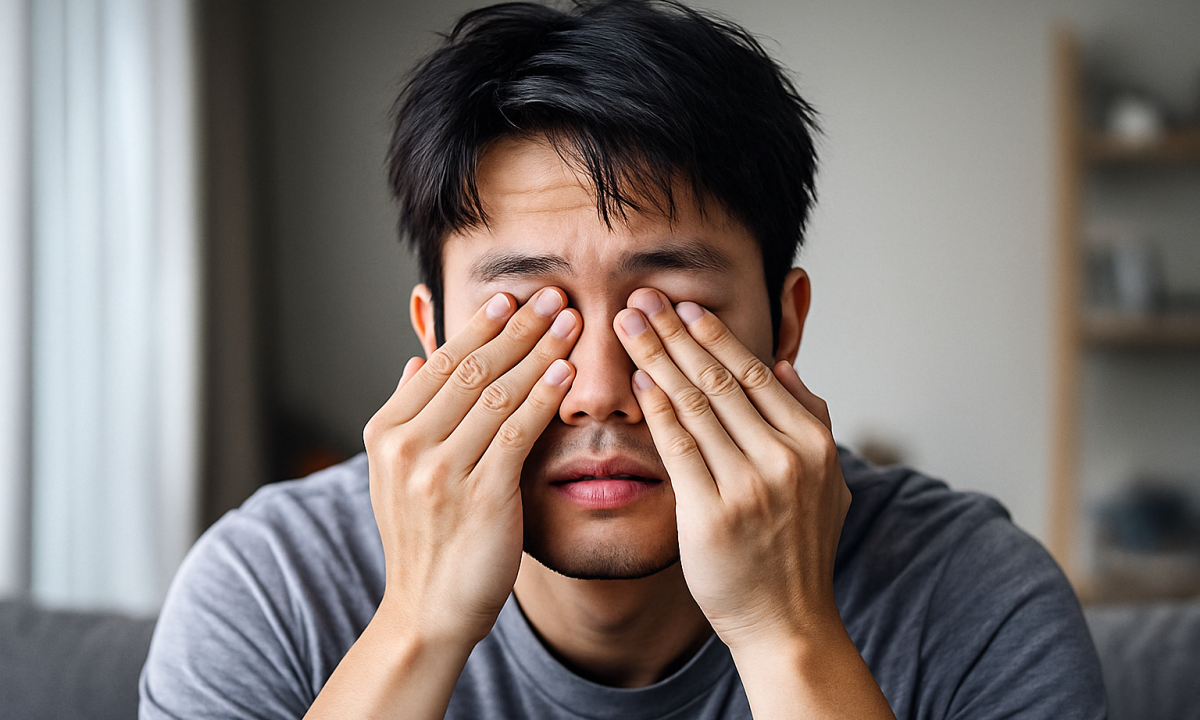
Stinky eyes are often caused by dry eyes, scratches, infections, corneal ulcers, and many other health problems.
Some causes of eye irritation are benign, but others require medical intervention to prevent vision loss. Below are common causes and how to treat them.
Corneal scratches
The cornea is a dome-shaped layer of transparent tissue on the front surface of the eye. The cornea can be damaged, for example by accidentally scratching a fingernail, a makeup brush or a foreign object. This condition can cause a scratchy feeling like there is a foreign object even though nothing is visible in the eye.
Treatment: According to the American Academy of Ophthalmology (AAO), small scratches usually heal in 1-3 days, large ones can take about a week. Patients are often prescribed antibiotic drops to prevent infection and artificial tears to soothe the cornea.
Corneal tear
This is a cut that is deeper than a scratch and can tear part or all of the cornea, often caused by injury from a sharp object.
Treatment: A corneal tear is a serious condition that requires emergency treatment to avoid loss of vision. Patients should cover their eyes with a protective object (for example, the bottom of a plastic cup) and see an eye specialist as soon as possible. Do not wash your eyes with water, avoid picking at foreign objects, pressing on your eyes or taking medications because some can increase bleeding.
Corneal ulcers
Open ulcers on the cornea can be caused by severe dry eyes, infection, or another condition. Symptoms include red eyes, severe pain, feeling like there is a foreign object, tearing, pus discharge, blurred vision, photophobia, eyelid swelling, white spots on the cornea…
Treatment: Depending on the cause, your doctor may prescribe antibiotic, antifungal or antiviral eye drops. Corticosteroids are only used in certain cases and require close monitoring. Severe cases, deep ulcers or threats of corneal perforation may require surgical intervention or a corneal transplant.
Fungal keratitis
Fungal corneal infections, often related to incorrect contact lens use, allergies, or trauma. Symptoms of fungal keratitis often include pain, red eyes, blurred vision, photophobia, tearing, discharge…
Treatment: Use antifungal medication for many months. In case of unresponsiveness, a corneal transplant may be needed.
Sjögren’s syndrome
The autoimmune disease damages the lacrimal and salivary glands, leading to dry eyes and mouth and a feeling of sand in the eyes. The disease is common in women over 50 years old. Typical symptoms in other eyes include itching, burning, blurred vision, and light sensitivity.
Treatment: Use artificial tears, nighttime gels, prescription eye drops, and punctal occlusion in severe cases.
Dry eyes
Dry eyes occur when tear production decreases or evaporates quickly. The risk is higher in people over 65 years old, women, people who live in dry climates, take antihistamines, antidepressants, blood pressure medications or have autoimmune diseases.
Treatment: Use artificial tears without preservatives, increase environmental humidity, drink enough water, blink frequently…
Conjunctivitis
The disease, also known as pink eye, occurs when the membrane covering the surface of the eyeball is inflamed. In addition to red eyes and discharge being typical symptoms, conjunctivitis can also cause a foreign body sensation, morning stickiness, itching, and swollen eyelids.
Treatment: Depending on the cause, your doctor may prescribe artificial tears or antibiotic drops if bacteria are suspected.
https://www.smartmoneymatch.com/HealthyData
https://hedgedoc.arch-linux.cz/s/Ts0PbfCZP8
https://wellfound.com/company/rmiq
https://www.droneros.com.ar/es-ES/estudioarquitecturaa
https://toolbattles.com/product/linkki-ltd/
https://ssnote.skku.edu/s/B8rzzYK7q
https://jobs.westerncity.com/profiles/7920310-arquitectos-cerca-de-mi-alicante
https://notes.rabjerg.de/s/BycqubYd-g
https://partecipo.prato.it/profiles/veterinariosanpedro/groups
https://datos.estadisticas.pr/user/descubre-como-poner-un-localizador-en-un-coche
https://pads.dgnum.eu/s/m77G20VGTC
https://barcelonadema-participa.cat/profiles/gestion_de_mantenimi/activity
https://notes.fabiomanganiello.com/s/UrC2m7f9v
https://participacion.aytobetancuria.org/profiles/fontanero24horasM/following
https://hedge.grin.hu/s/dQwT410Si
https://www.heartbeatofkauai.com/?post_type=ad_listing&p=195115
https://participa.gijon.es/profiles/camiseta_umbro_vinta/activity
https://hedgedoc.stura-ilmenau.de/s/ku5MF3yLrx
https://mastodon.social/@tokiotours/115733069690538416
https://pad.hs-ldz.pl/s/fX4h0YTLn
https://ceeivalencia.emprenemjunts.es/?op=52&id=242014&opc=1
https://magnitt.com/startups/la-law-injury-accident-attorney-91223
https://md.cortext.net/s/pkNkduChg
https://pad.stadtfabrikanten.org/s/pLxyBeXMbs
https://participacion.tuineje.es/profiles/tashunails/activity