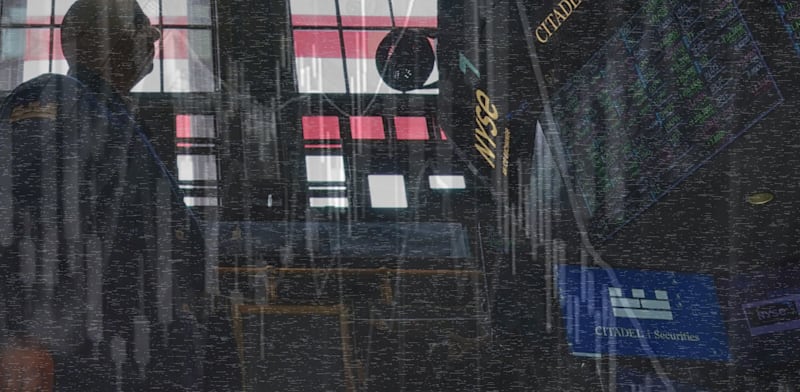
Today, the first trading day of the second war between Israel-USA and Iran, is another historic day for investors in the Tel Aviv Stock Exchange. The Tel Aviv 35 index jumped 4.6% to a new record (its 20th since the beginning of the year), and records the sharpest daily increase in the local stock market in 6 years, since April 2020, the beginning of the recovery in the stock markets from the corona epidemic. The current increase is so significant that it constitutes half of the entire increase recorded in the Tel Aviv Stock Exchange during Operation “Am Khalabi”, the previous campaign against Iran last year. In fact, in a normal year, this is a return that can be expected in half a year in the stock market.
● Want to know why the stock market jumps? Read this article
● From Qatar to Turkey: falls in stock markets throughout the Middle East
But it’s also a trading day that investors who have diverted their money to the tracks of the S&P 500 in recent years would prefer to forget – because they didn’t enjoy all those gains. A positive return gap of 6.5% in one day in favor of investors in Tel Aviv is a spectacle that you don’t see every day. And you have to remember, this is more than NIS 250 billion, even though in recent months the funds are starting to leave there and move to other routes.
This large gap is due to the fact that the effects of the war are much more positive on Israel than on the world. Thus, the stock exchange in Tel Aviv jumped by 4% today, when investors are pricing in a significant geo-strategic change in the Middle East.
The shekel is trading at historic record levels
The various investment managers explain that the investors see the military success of Israel-USA in the war, the elimination of all the heads of the terrorist state and the “head of the snake” who has harmed the citizens of Israel repeatedly in the last decades, through his affiliates in the terrorist organizations such as Hezbollah, Hamas, Islamic Jihad and others.
Investors also see that Iran is actually bombing its neighbors, the other Gulf states, and assume that this may promote them more into the arms of the West, towards the continuation of additional “Abraham agreements” with Israel. And this of course joins the collapse of the Assad regime last year.
But all this goodness does not come to investors in the American index. The reason is twofold. One is that the shekel also jumps today by almost 1.8% and trades for about 3.09 shekels to the dollar, due to the exact same reasons. In doing so, the shekel traded at historic record levels seen here only in 1995, when foreign exchange trading was not yet free but ‘managed’ from above by the state.
The second reason is that trading on Wall Street is going down, at the same time as an 8% jump in world oil prices, against the background of concerns about a global energy supply problem following the closing of the Straits of Hormuz by the Iranians, which is considered a very central axis in the transfer of energy in the world.
An ongoing trend
These declines are not only occurring in the US but all over the globe. In Germany the DAX loses 2.5%, the Eurostox 50 also plunges by a similar rate, the French CAC falls by 2% and Spain by almost 3%. Sharp declines were also recorded in Asia in the morning.
This trend, it should be said, has been going on for quite some time. In the last year, those who put their money only in the US achieved a zero return (a return of -0.1%) compared to 16% in the general route and 27% in the equity route. In the span of three years, the picture is no less sharp: the general route yielded 43%, not so far from the S&P 500 route. Above all, the equity route stands out, which produced an incredible return of 80% during the last three years.
But it should be remembered that these returns do not reflect the average and the senior investment managers also explain that it is not worth building on the fact that we will see them in the years to come. In addition, it is worth remembering that there were also periods, in the not-too-distant past at all, when investors in the American index achieved significantly higher returns than investors in Tel Aviv.
For your attention: The Globes system strives for a diverse, relevant and respectful discourse in accordance with the code of ethics that appears in the trust report according to which we operate. Expressions of violence, racism, incitement or any other inappropriate discourse are filtered out automatically and will not be published on the site.
https://hedgedoc.digilol.net/s/HaemaZidRu
https://ckan.tirana.al/es/user/motodonia
https://bsky.app/profile/emergencehuman.bsky.social
https://gifyu.com/grapadoras
https://hedgedoc.nixc.us/s/oSo3I2PcK
https://doc.dcrich.net/s/MJQJrwXFn9
https://pad.kanthaus.online/s/J8-oIBkFa
https://md.emile.space/s/qMygqsRYtK
https://www.apextraderfunding.global/uk/trading-tools-resources/best-futures-trading-platforms-uk
https://gravatar.com/emergencehuman
https://app.blackbox.ai/share/176093b5-a415-475b-b7aa-a90b775eb8a9
https://md.klykken.com/s/Se_aYw3ID
https://editor.painelcupula.com/s/c4dGCEXpB
https://doc.micr0.dev/s/Jl_qd4D1f
https://lawebdedeskidea.mypixieset.com/
https://www.flux.ai/dreamcash-referral-code-8s6dj7
https://notes.rabjerg.de/s/ByLiZe1Ybe
https://docs.localcharts.org/s/oKzaPg5m_
https://pad.pixie.town/s/KQmdGLNYS-
https://ckan.sister.it/user/academia-de-conducir-cerca-de-mi
https://gettr.com/user/e221992565174927360
https://write.as/17e66wnyoyg7a.md
https://www.shoppe98.ca/group/shoppe98-group/discussion/ba134ddd-1a26-4276-89c7-51f433c1c4bc?commentId=62233ca3-b43e-4b25-9009-e446abff710c
https://editor.painelcupula.com/s/mI7hNOhvr
https://pad.hs-ldz.pl/s/ofrrTFIJb